Samsung Electronics Holds Less Than 4 Trillion KRW in Domestic Cash
Most of 15 Trillion KRW Financial Products Sold for Operating Funds
Investment Maintains Last Year's Level
[Asia Economy Reporter Park Sun-mi] Samsung Display, which has abundant cash reserves and strong performance, is playing a solid supportive role for its parent company Samsung Electronics, whose investment funds have become tight.
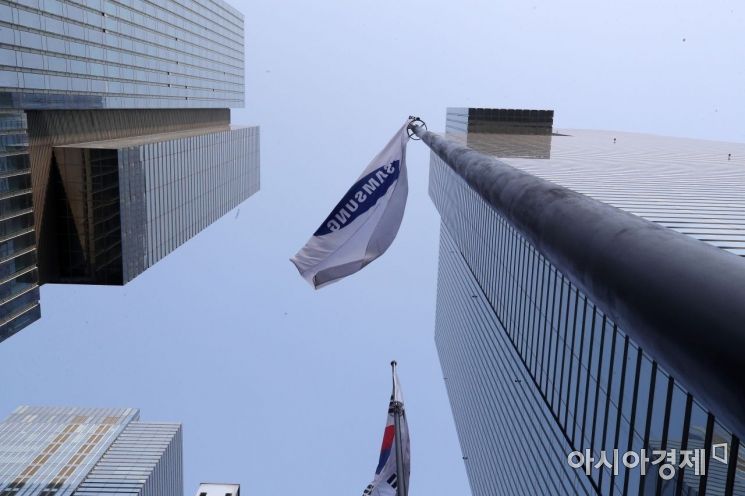
On the 17th, Samsung Display executed a loan of 20 trillion won in operating funds to Samsung Electronics. Samsung Electronics will borrow 20 trillion won at an annual interest rate of 4.6% for 30 months until August 16, 2025. Samsung Electronics plans to use the 20 trillion won for semiconductor investments such as foundry (semiconductor contract manufacturing).
Samsung Display was able to provide financial support for Samsung Electronics' semiconductor investments because it had abundant cash in Korea. According to Samsung Display's 2021 audit report, it holds 24.77 trillion won in domestic cash equivalents, including cash in short-term financial instruments. Including cash accumulated in its Vietnam and China subsidiaries, the total cash holdings reach 25.2 trillion won.
Considering that it recorded record-high profits last year, the cash and cash equivalents as of the end of last year are expected to increase by several trillion won. Samsung Display improved its profitability by more than 33% compared to 4.46 trillion won in 2021, with nearly 6 trillion won in operating profit last year. Although it has a lot of cash, there is not much investment capital needed immediately. Of Samsung Electronics' total facility investment of 53.1 trillion won last year, 47.9 trillion won was concentrated in the semiconductor sector, and 2.5 trillion won in displays, with 90% focused on semiconductors.
Samsung Electronics plans to maintain this year's facility investment at a level similar to last year as part of future preparations. The problem is funding. As of the end of last year, Samsung Electronics held over 114 trillion won in cash. However, most of this cash is held by Samsung Electronics' overseas subsidiaries and affiliates in the US, Europe, China, etc., so bringing it back to Korea requires consideration of complex factors such as foreign exchange risk.
Cash held by overseas subsidiaries is used for overseas investments such as the foundry plant in Taylor City, USA, or to earn interest from higher-yielding overseas financial products, so there is no compelling reason to bring it back to Korea. As a result, the cash and cash equivalents and short-term financial instruments that Samsung Electronics can purely use domestically total less than 4 trillion won.
Until the end of 2021, 15 trillion won was deposited in short-term financial instruments, but almost all were sold off except for 137 million won to cover last year's investments. While securing operating funds by selling short-term financial instruments, it is not easy to prepare funds for future investments. The IT market slowdown continues, and operating profit, which was 43.38 trillion won last year, is likely to fall short of 20 trillion won this year. This reality is the background for Samsung Electronics borrowing operating funds from Samsung Display, which has sufficient domestic cash reserves.
Meanwhile, Samsung Display is also leasing factories to Samsung Electronics. Samsung Electronics is currently operating a state-of-the-art semiconductor packaging line at Samsung Display's Cheonan plant, which used to produce small- and medium-sized liquid crystal display (LCD) panels. Samsung Electronics, which started leasing the factory in 2019, signed a contract on the 1st of this month to extend the lease of Samsung Display's Cheonan plant in Chungnam for five years until the end of January 2027. The annual rent is 45.59 billion won.
© The Asia Business Daily(www.asiae.co.kr). All rights reserved.

















