Open Run for Elementary School Backpacks a Year Before Enrollment
Average Spending of 500,000 Won... But Local Governments Also 'Distribute for Free'
[Asia Economy Reporter Jeon Jinyoung] In Japan, the season for elementary school backpacks called 'Randoseru' has returned. With enrollment scheduled for April next year, parents have started the so-called 'Ranhwal (Randoseru + Hwal)'?a trend of visiting stores to buy their preferred Randoseru as early as a year in advance. Some high-end brands, priced over 1.8 million won, have even faced criticism for creating social disparities.
According to Japan's TBS broadcast on the 15th, the average purchase price of Randoseru, as compiled by the Japan Randoseru Industry Association, is 56,425 yen (540,000 won), which is about 20,000 yen higher than in 2001. The most commonly purchased price range was above 65,000 yen (620,000 won).
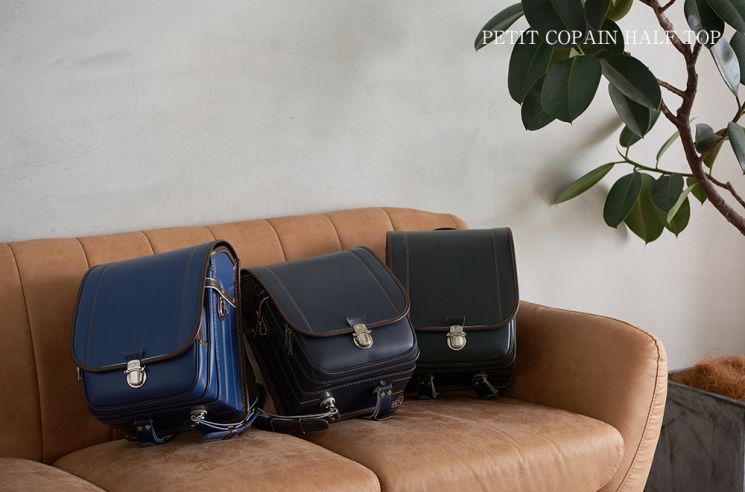
So-called 'workshop-type' high-end products, said to be handmade by artisans, use premium materials such as cowhide or horsehide and are sold at high prices exceeding 190,000 yen (1.83 million won).
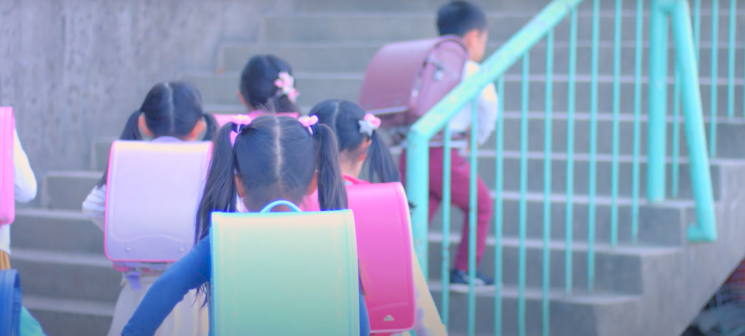 Part of the promotional video of Randoseru Industrial Association. (Photo by Randoseru Industrial Association official website, Japan)
Despite these expensive prices, Japanese parents are engaging in 'open runs' to purchase Randoseru. Famous Randoseru brands are targeting this demand by announcing limited-time pop-up stores from March to August. Limited edition products in collaboration with well-known brands have also been released, leading to a long queue of reservation requests.
The timing of purchases is also getting earlier. The Randoseru Industry Association stated, “Usually, the most active purchase period is from May to August of the year before enrollment, but recently, responses indicating purchases from March to April have increased,” adding, “The purchase timing is getting earlier every year, showing that the craze is intensifying.”
TBS analyzed that the background of this price increase includes the rising amount spent per child due to low birth rates and the sharp rise in raw material prices. A Japanese internet media outlet reported, “When asked who pays for the Randoseru purchase, more than half of respondents answered grandparents,” indicating an ‘eight-pocket’ phenomenon where parents, grandparents, uncles, and the entire family spend money on one child.
Last October, Chiba Prefecture Governor Kumagai Toshihito sparked controversy by posting on social media (SNS), “Parents bear a heavy burden, so should we insist on the culture of buying Randoseru?” However, the Randoseru buying craze has not subsided.
Some local governments have even pledged to distribute Randoseru for free. In Ibaraki Prefecture, 15 out of 44 towns and villages distribute Randoseru free of charge, and Hitachi City gives away about 1,000 Randoseru annually. This practice began as a way to overcome difficulties during the oil shock, but as high inflation made the policy popular, it started spreading to other cities.
Politicians have also been elected on pledges to provide ‘free Randoseru.’ In April last year, in the mayoral election of Chichibu City, Saitama Prefecture, Mayor Kitabori Atsushi was elected on a pledge to provide free Randoseru, stating, “We cannot pass on adults’ economic disparities to children.” After his election, he reportedly provided 50,000 yen in support funds for Randoseru purchases to local families.
Experts are raising their voices to reduce household burdens amid high inflation. Tomomi Nagai, senior analyst at Toray Management Research Institute, pointed out, “According to last year’s National Livelihood Survey released by the Ministry of Health, Labour and Welfare, 60% of parents responded that they live without financial leeway,” adding, “Can parents really spend 60,000 yen on an elementary school backpack amid high inflation? It is time for the education sector to consider reducing the burden on parents.”
© The Asia Business Daily(www.asiae.co.kr). All rights reserved.
![Clutching a Stolen Dior Bag, Saying "I Hate Being Poor but Real"... The Grotesque Con of a "Human Knockoff" [Slate]](https://cwcontent.asiae.co.kr/asiaresize/183/2026021902243444107_1771435474.jpg)

















