Directions for Responding to Prices and Livelihood Economy
Alleviating Gas and Electricity Bill Burdens
Freezing Public Utility Rates in the First Half of the Year
[Asia Economy Sejong=Reporters Jusangdon, Lee Dongwoo, Song Seungseop] The government plans to make the home-use cashback program, first implemented this winter season, a permanent annual winter initiative and broaden the eligibility criteria. This measure aims to minimize the financial burden on low-income households amid the 'heating cost bomb' crisis. Additionally, toll fees on highways, KTX, metropolitan water supply, and postal charges will not be increased until the first half of the year.
On the 15th, President Yoon Suk-yeol chaired the 13th Emergency Economic and Livelihood Meeting to discuss the 'Price and Livelihood Economy Situation and Sectoral Response Directions' containing these measures.
The government expects the inflation rate to be around 5% this month but forecasts a gradual slowdown to the 4% and then 3% range due to stabilization of raw material prices and base effects. However, it noted that the spread of local public utility fee hikes for taxis and buses, as well as price instability in agricultural, livestock, fishery products, and processed foods, could act as upward factors.
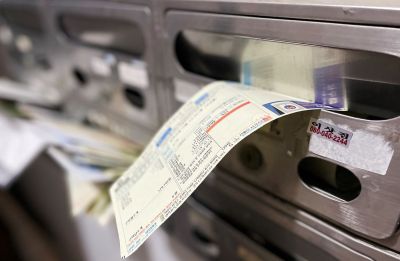
Accordingly, to reduce the burden on low-income households caused by the heating cost crisis, the government decided to expand energy cashback for gas and electricity fees. For gas, the 'home-use cashback' program, which was first introduced this winter to refund users who reduce consumption by more than 7% compared to the same period last year, will relax the requirement to a reduction of 3% or more. Until now, refunds were 30 KRW per cubic meter for reductions of 7% or more, 50 KRW for 10% or more, and 70 KRW for 15% or more.
For electricity, the subscription method will be simplified from 'individual household application' to 'automatic enrollment upon complex subscription,' and the payment procedure will be unified into a fee deduction method.
Support for vulnerable groups will also be strengthened. The gas fee discount level for basic livelihood security recipients and near-poverty groups using kerosene and liquefied petroleum gas (LPG) this winter will be expanded to 592,000 KRW.
Additionally, the installment payment option, previously available only to basic livelihood security recipients and near-poverty groups, will be extended to applicant households such as small business owners.
To stabilize prices, the government will manage public utility fee increases, which have a high public impact, by refraining from hikes. Fees for highways, railways, postal services, and metropolitan water supply will be frozen in the first half of the year, and stability will be encouraged for local public utility fees.
To ease living expenses, the maximum number of uses for the Altteul Transportation Card, which can be used for subways and buses, will be increased from 44 to 60 times per month. Furthermore, the credit card income deduction for public transportation use will be expanded from 40% to 80%, with efforts to extend support through the second half of the year. The student loan interest rate (1.7%) will be frozen in the first half, and living expense loan support for student loan borrowers will increase from 3 million KRW to 3.5 million KRW per person annually.
Telecom Companies to Provide Additional Data Throughout March
Moreover, the burden of telecommunications fees will be eased. To temporarily alleviate the data usage burden on the public, each operator will voluntarily provide data benefits. SKT and KT will provide an additional 30GB to users aged 19 and older, while LGU+ will offer data coupons equivalent to the basic data allowance of the subscribed plan to all users.
The government also plans to expand users' choice of plans and promote market competition based on service quality and reasonable fees. First, to help users reduce telecom fees according to their data usage, the range of plans will be diversified. Discussions with telecom companies are underway to launch additional plans in the first half of the year for currently insufficient ranges, such as 5G data offerings between 40 and 100GB. Senior plans, which are cheaper than general 5G plans, will also have benefits segmented by age group.
Efforts to foster competition will also be made. Periodic telecom service quality evaluation results will be disclosed, and support will be provided for launching affordable 5G MVNO (Mobile Virtual Network Operator) plans to enhance MVNO competitiveness. Promotion of telecom fee reduction programs for vulnerable groups will be strengthened. Information about fee reduction programs will be included on telecom bills, and in cooperation with the Ministry of Health and Welfare, text messages will be sent to eligible vulnerable groups. For a limited time, additional data will be provided to mobile subscribers of each company throughout March to ease data usage burdens.
Lowering Emergency Living Expense Loan Interest Rates and Strengthening Principal and Interest Reductions for Vulnerable Groups
The interest rate on the 'Emergency Living Expense Loan,' which had been criticized for its high rates, will be lowered from the existing 15.9% to as low as 9.4% depending on creditworthiness. This loan system allows the government to lend up to 1 million KRW to vulnerable groups who have difficulty using private loans due to reasons such as delinquency. The rate drops to 12.9% for six-month repayment and 9.9% for one-year repayment, with an additional 0.5 percentage point reduction for completing financial education. It will be linked with employment and welfare self-support programs and the Credit Recovery Committee's debt adjustment system.
Preemptive debt adjustments, including principal and interest reductions for vulnerable groups, will also be strengthened. Vulnerable groups facing repayment difficulties due to low credit, unemployment, long-term hospitalization, or disaster damage will have their interest rates cut by 30-50% even before delinquency occurs. Borrowers with objectively insufficient repayment capacity, such as basic livelihood security recipients, will receive full interest waivers and up to 30% principal reductions, comparable to long-term delinquents.
Measures to reduce excessive dependence on interest income based on an oligopolistic structure were also introduced. Representative efforts include promoting business practice and structural improvements that shift interest rate fluctuation risks away from consumers. To this end, fixed-rate loans will be expanded, and measures to prevent increased borrower burdens due to rising interest rates will be introduced. Competition will also be promoted to encourage new players such as fintech innovators to expand various services for vulnerable groups. Supervisory enhancements will be conducted in parallel, including operating compensation committees, inspecting performance-based pay systems, conducting audits on the adequacy of loan loss provisions, and checking social contribution achievements.
Additionally, banks will voluntarily propose measures to improve financial accessibility and reduce interest burdens for vulnerable groups through new or additional contributions. Detailed plans will be announced later by the Korea Federation of Banks.
The repayment burden of principal and interest on mortgage loans for the middle class will also be reduced. A special fixed-rate Bogeumjari Loan at around 4% interest has been supported with a total of 39.6 trillion KRW for one year since the 30th of last month. If mortgage loan repayment is difficult, principal repayment deferral of up to three years will be granted. To support the recovery of vulnerable businesses such as self-employed and small enterprises, a total of 84 trillion KRW will be provided. In particular, the refinancing loan support for self-employed individuals will be expanded to all self-employed by March, and refinancing of a certain scale of household credit loans will be allowed within the second half of the year.
© The Asia Business Daily(www.asiae.co.kr). All rights reserved.


















