Samsung Borrows 20 Trillion Won from Samsung D
Exceptional Move Amid Investment Capacity Shortage
National Assembly Ignores Industrial Crisis... Political Strife Continues
Lower Chances of Revising Special Tax Act This Month
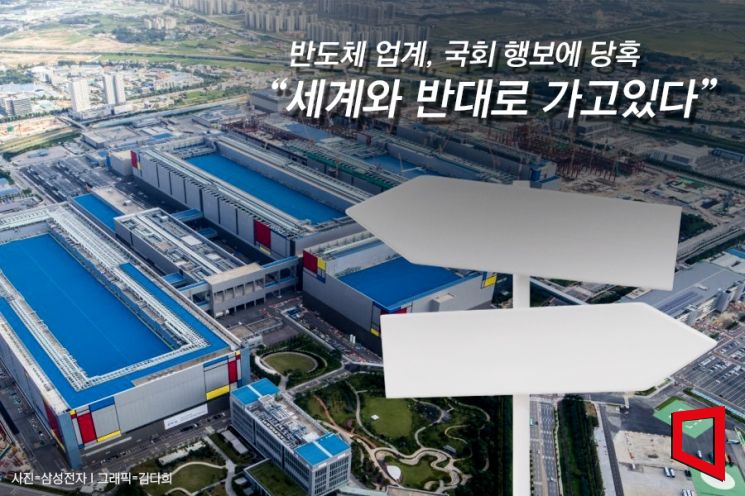
[Asia Economy Reporter Kim Pyeonghwa] Samsung Electronics is borrowing 20 trillion won from its subsidiary to maintain the scale of its semiconductor investments. Due to the sharp decline in semiconductor prices shrinking its earnings, the company has taken this unusual step. A sense of crisis is growing inside and outside the semiconductor industry. However, the political sphere seems unable to empathize with the industry. A bill to raise the investment tax credit rate to help the semiconductor industry in crisis is wandering through the National Assembly.
Samsung Electronics announced on the 14th that it will borrow 20 trillion won from Samsung Display to secure operating funds. This was resolved and disclosed at a board meeting held that morning. The loan is a short-term borrowing maturing in August 2025, with an interest rate of 4.60% per annum.
Samsung Display is a subsidiary in which Samsung Electronics holds an 85% stake. The parent company, Samsung Electronics, has unusually turned to its subsidiary for funds. It borrowed money to maintain the scale of business investment amid a situation where earnings have shrunk due to the semiconductor market downturn.
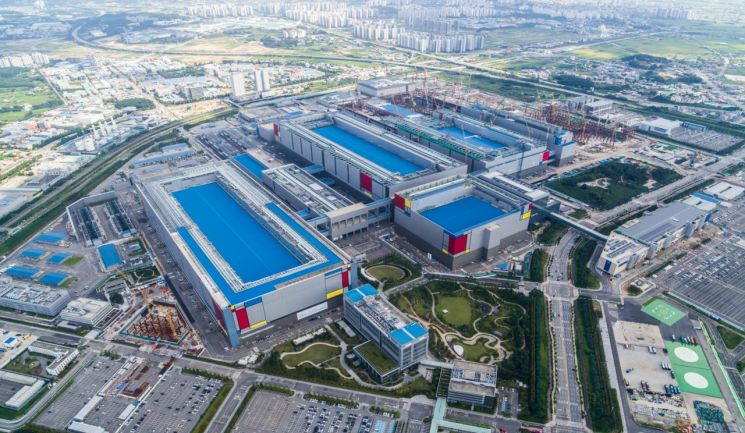
Earlier, Samsung Electronics announced during its Q4 earnings conference call last month that it plans to maintain this year's semiconductor investment scale at a level similar to last year. Samsung Electronics' capital expenditure last year was a record high of 53.1 trillion won. Of this, 90%, or 47.9 trillion won, was invested in the semiconductor business.
According to financial information firm FnGuide, Samsung Electronics' operating profit forecast for this year is 16.8966 trillion won, which means profits are expected to shrink by 61.05% compared to the previous year. It may be difficult to cover the investment amount with earnings alone. Samsung Electronics holds about 120 trillion won in cash assets, but most of it is tied up in overseas subsidiaries such as those in the U.S., making immediate use difficult.
The reason Samsung Electronics is trying to maintain the scale of semiconductor investment despite the difficult situation is to secure competitiveness. To solidify its dominant position as number one in the memory semiconductor market, it must secure leading-edge technology. In the system semiconductor market, where it is chasing the leader, it must continue fierce competition with rivals.
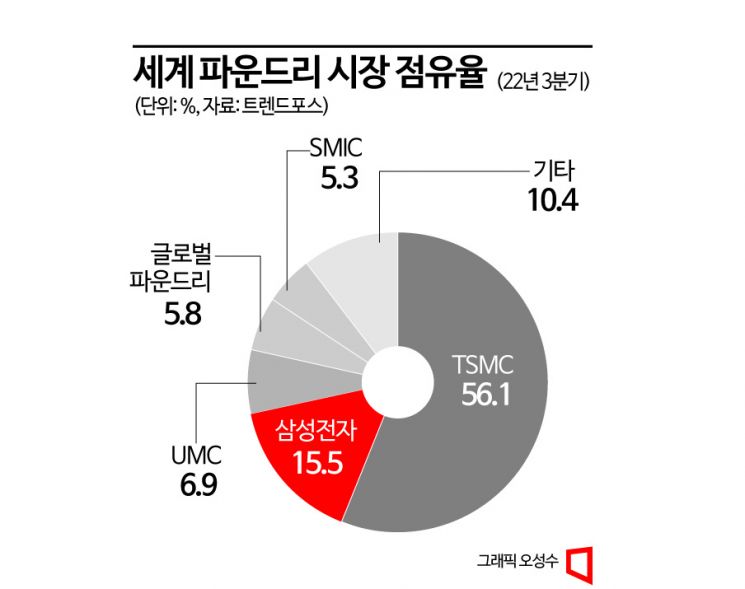
In the foundry (semiconductor contract manufacturing) market, Samsung Electronics is engaged in tough competition with Taiwan's TSMC, the undisputed number one player. In the foundry business, the larger the production capacity (capacity), the more orders from customers can be received. Capacity expansion directly translates to business competitiveness. Accordingly, Samsung Electronics announced last year that it plans to increase investment in production lines by about 10 times by 2027. In this case, capacity will triple.
This semiconductor price crash is considered the worst ever. Coupled with fierce global competition, a sense of crisis is growing inside and outside the industry. However, the political sphere seems not to fully recognize this situation. Problems have arisen in processing the bill to raise the tax credit rate to secure competitiveness in the semiconductor industry.
The National Assembly's Planning and Finance Committee reviewed the amendment to the Restriction of Special Taxation Act submitted by the government on the 14th but failed to reach a conclusion. The bill was presented at the plenary session that day and then discussed in the tax subcommittee, but no conclusion was reached due to disagreements between the ruling and opposition parties. The discussion was expected to conclude that day to allow for passage in the National Assembly plenary session this month.
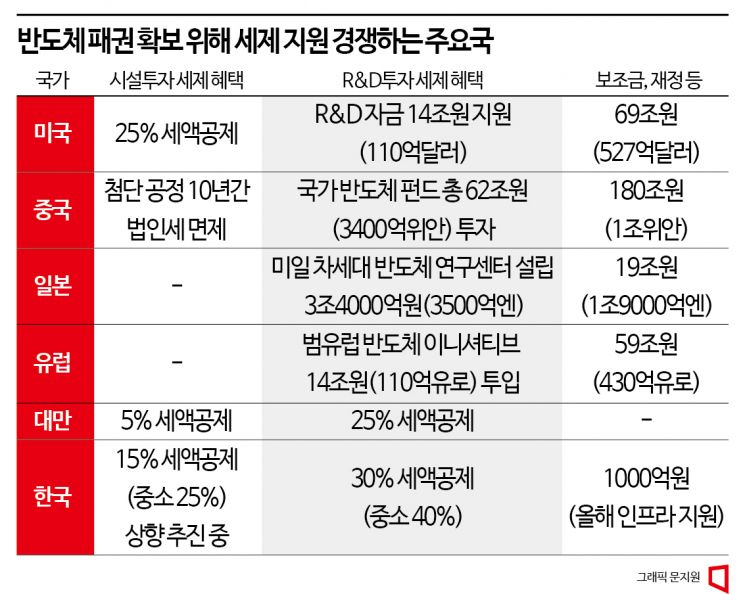
Earlier, the Ministry of Economy and Finance revised the amendment to the Restriction of Special Taxation Act, which had passed the National Assembly plenary session in December last year, and resubmitted it to the National Assembly. The original bill included raising the semiconductor investment tax credit rate for large corporations from 6% to 8%. However, since the support scale was insufficient compared to competing countries like the U.S. (25%), criticism followed. Accordingly, the Ministry of Economy and Finance proposed a revised bill to expand the rate from 8% to 15%.
The semiconductor industry cannot hide its frustration as the National Assembly continues political strife rather than securing national competitiveness. Lee Chang-han, Vice Chairman of the Korea Semiconductor Industry Association, said, "It is very regrettable," adding, "The global economy is moving to the right, but it feels like only we are moving to the left, which is unfortunate."
© The Asia Business Daily(www.asiae.co.kr). All rights reserved.



















