Yongsan-gu Processes Demolition Commencement Report for Hyundai Motor Future Mobility Research Center Site
Wonhyo-ro 4-ga 114-36 and 12 other parcels, 18 buildings, total floor area 9,944㎡
Demolition commencement report processed on the 14th... Review of commencement report and on-site inspection by structural engineer
Strict management of demolition site to minimize resident inconvenience and prevent major accidents
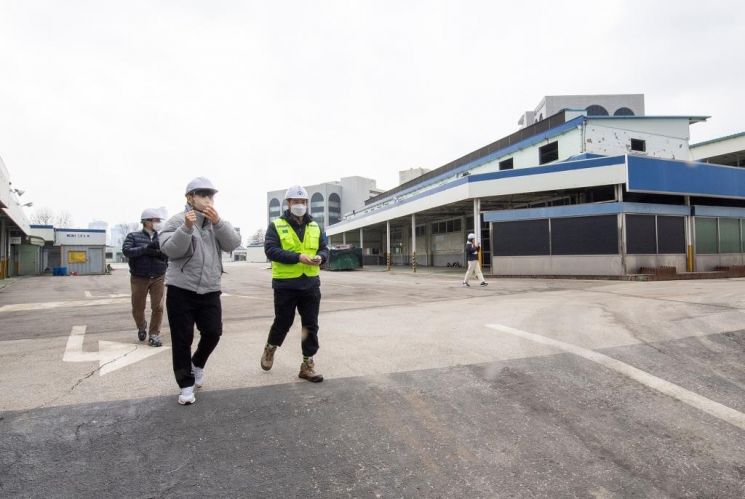
[Asia Economy Reporter Park Jong-il] Yongsan-gu processed the demolition commencement report for the Hyundai Motor Future Mobility Research Center site on the 14th.
The Hyundai Motor Future Mobility Research Center site is located at Wonhyo-ro 4-ga 114-36 and 12 other parcels. The demolition scale includes 18 buildings ranging from a minimum of one basement floor to a maximum of four above-ground floors, with a total floor area of 9,944.01㎡. The demolition contractor is Shinwon ENG Development. The project is expected to take three months after commencement.
The district reviewed the demolition plan last November and requested revisions in December. In January of this year, the demolition plan revisions were confirmed, and the demolition commencement report was submitted in February.
On the 13th, structural engineers, architects, and the head of the architectural support team conducted an on-site inspection. During the inspection, the district focused on verifying whether the demolition plan sufficiently reflected site conditions and safety measures. (Photo)
The site is surrounded by Gangbyeonbuk-ro and Wonhyo-ro and has no retaining walls or slopes. Adjacent buildings touching the site include the Yongsan-gu Recycling Sorting Center and a general building (Wonhyo-ro 4-ga 114-63). Nearby buildings include Hyundai Motor Wonhyo-ro Annex at a 13m boundary distance, Pungjeon Apartment Building A at 14m, and Hyundai Motor Wonhyo-ro Headquarters at 25m.
The contractor will install temporary fences around the site perimeter and steel pipe scaffolding around the demolition buildings (structures assembled on construction sites to provide elevated work platforms and passageways inaccessible from the ground or floor level) and place signal personnel near the main entrance.
The demolition work will proceed in the following order: installation of boundary fences, temporary electricity and water supply connections, asbestos demolition and removal, removal of interior finishing materials and piping, jack support reinforcement, installation of system scaffolding and soundproof panels, building demolition, and waste removal.
The district plans to supervise and monitor the contractor to ensure compliance with the plan throughout the construction, including ▲low noise ▲low vibration ▲dust reduction ▲consideration for pedestrians and passing vehicles ▲safety accident prevention measures.
Kim Seon-su, Acting Mayor of Yongsan-gu, stated, “Demolition site accidents can lead to harm not only to workers but also to citizens' lives and property, so thorough management at the level of new construction sites is necessary. We will strictly guide and supervise to ensure this project, which will serve as a catalyst for the development of the stagnant Wonhyo-ro area, proceeds smoothly.”
In 2021, the district established a district unit planning zone for the Hyundai Motor Service Center site in the Wonhyo-ro area. While maintaining the zoning (Type 2 General Residential Area), restrictions on floor area (less than 3,000㎡) and other use limitations were relaxed. The zone area is 24,413.2㎡, designated as a Historical and Cultural Special Scenic District, with a maximum height of seven floors.
Seodaemun-gu Enhances Mobility Convenience for the Transportation-Disadvantaged with Installation of Inclined Elevator
15-passenger elevator installed on steep slope with over 50-degree incline in Bukahyeon-dong
Ascends and descends a 20m high hill over a 42m travel distance at an incline
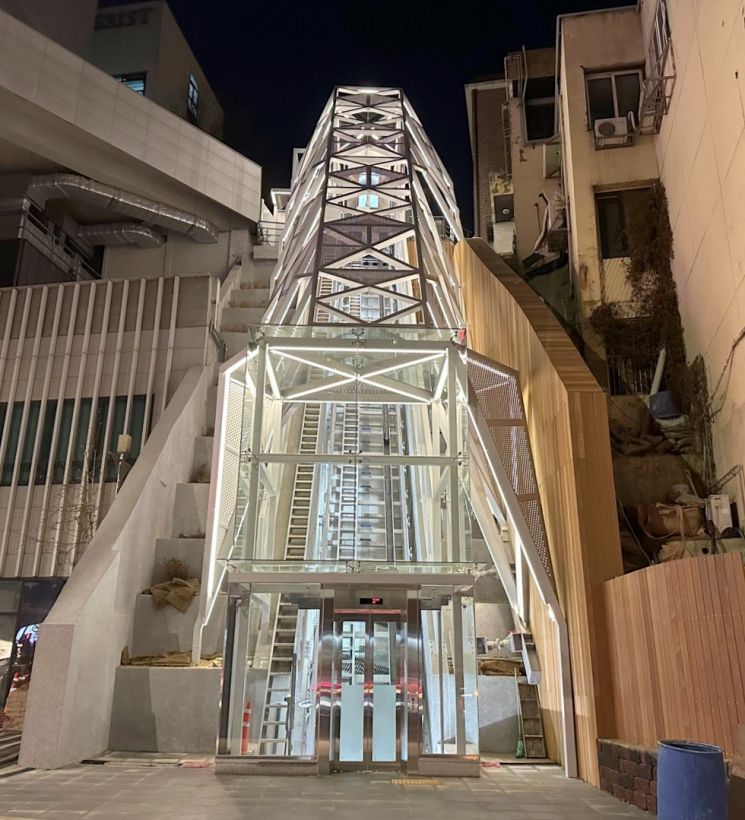
Seodaemun-gu (Mayor Lee Seong-heon) announced that it installed an ‘inclined elevator’ in the area of Bukahyeon-dong 251-292 to improve mobility convenience for citizens including the transportation-disadvantaged, and began operation on the 14th of this month.
This location is a steep cut slope with an incline of over 50 degrees, where an old unauthorized senior center and houses were originally situated.
The district secured approximately 3.5 billion KRW in project funds through Seoul City's hillside mobility improvement project and installed a 15-passenger elevator and rebuilt the senior center.
The elevator ascends and descends a 20m high hill over a 42m travel distance at an incline.
Previously, nearby residents had to walk over 400m around steep stairs or slopes to reach Edae Station on Subway Line 2 or bus stops.
However, with the completion of this project, walking distance has been reduced to less than approximately 150m, significantly lowering the risk of falls and traffic accidents for pedestrians.
Additionally, the district demolished the old tiled building of the former Dongsim Senior Center and rebuilt it, providing users with a larger and more comfortable space for activities.
The district overcame several challenges to complete this project. Due to the steep construction site, soil erosion occurred, and construction was halted for about six months to conduct reinforcement design for safety assurance.
Moreover, great effort was made in design and implementation to make the elevator a local landmark, and efforts were made to secure sufficient project funds.
As a result, the inclined elevator and senior center construction were completed in 16 months, and after inspection by the Korea Elevator Safety Agency, the elevator began operation.
Lee Seong-heon, Mayor of Seodaemun-gu, said, “In addition to this project, we will continue to promote projects to improve residents' mobility convenience, such as reviewing the feasibility of installing escalators at Hongje Station Exit 2, which has seen no progress for over 10 years.”
Dobong-gu Creates ‘Green Transportation City’ for Convenient Electric Vehicle Use
District establishes and implements comprehensive plan to expand electric vehicle adoption and charging infrastructure
Goal to supply 10,000 electric vehicles and expand 2,000 charging stations by 2026
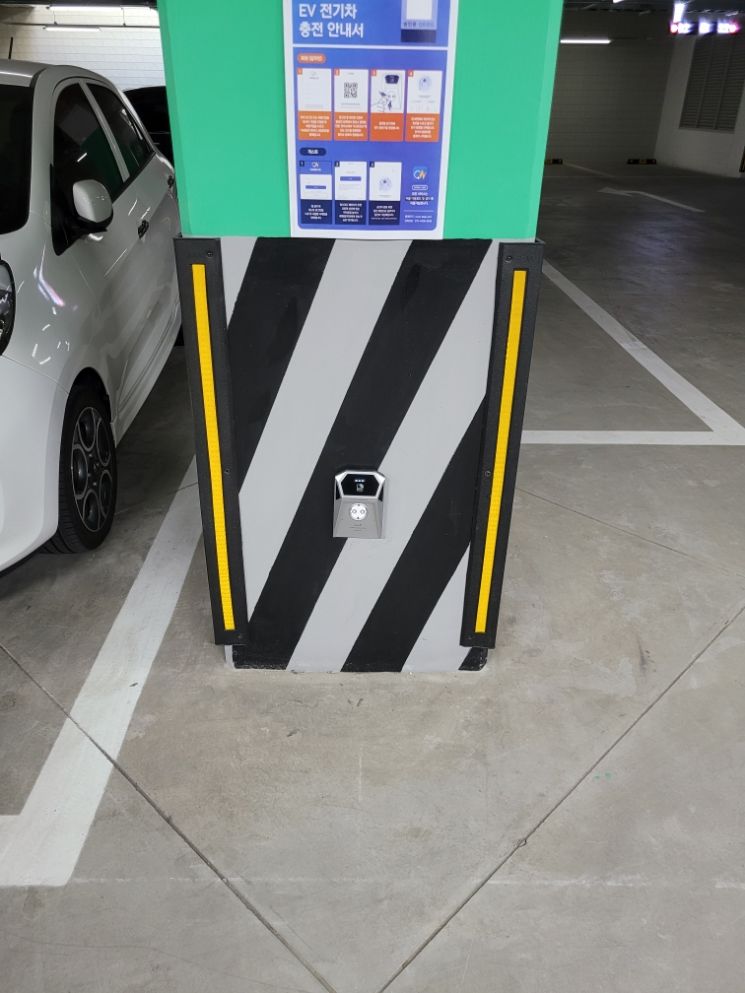
Dobong-gu (Mayor Oh Eon-seok) has established and begun full implementation of a comprehensive plan to expand electric vehicle adoption and charging infrastructure to create a green transportation city where eco-friendly vehicle use is convenient.
With the vision of ‘Dobong, a green transportation city convenient for electric vehicle use,’ the district aims to supply 10,000 electric vehicles (including hydrogen vehicles) by 2026 (1,141 vehicles as of December 2022) through three main strategies: ▲expanding electric vehicle adoption ▲expanding charging infrastructure ▲cultivating a charging culture. The plan includes building a total of 2,000 charging stations: 130 fast chargers, 700 slow chargers, and 1,170 outlet-type chargers.
To this end, Dobong-gu will lead mandatory adoption of electric and hydrogen vehicles in the public sector, and promote eco-friendly vehicle transition in the private sector through national and city subsidies and tax benefits.
Additionally, in collaboration with related organizations such as the Ministry of Environment and Seoul City, the district will significantly expand charging infrastructure to facilitate electric vehicle use. Customized infrastructure will be provided at mobility hubs such as public offices, public parking lots, and public facilities, as well as residential hubs like apartments and houses. Concentrated charging stations equipped with multiple fast chargers will be established at regional landmarks such as the Changdong Startup Culture Complex.
In particular, as the number of electric vehicles rapidly increases and charging obstruction incidents become frequent, the district will strengthen enforcement against illegal acts and promote proper charging etiquette among electric vehicle users to foster a healthy charging culture.
Oh Eon-seok, Mayor of Dobong-gu, said, “Transitioning to electric vehicles is essential to address environmental issues such as greenhouse gas reduction. We will expand charging infrastructure and cultivate a proper charging culture to create a green transportation city where electric vehicles can be conveniently used.”
Currently, Dobong-gu operates 715 electric vehicle chargers at 168 locations, including 76 fast chargers and 639 slow chargers (including outlet-type). Detailed locations and information can be found on the Zero Emission Vehicle Integrated Website.
Meanwhile, a hydrogen charging station, which has been absent in the northeastern Seoul area, is expected to be completed around August. The Dobong Hydrogen Charging Station, privately developed with Ministry of Environment approval, is located on Pyeonghwa-ro, an eight-lane road connecting northern Seoul and northern Gyeonggi, and is expected to play a significant role in hydrogen vehicle adoption in the northern metropolitan area.
© The Asia Business Daily(www.asiae.co.kr). All rights reserved.



















