[Asia Economy Yeongnam Reporting Headquarters Reporters Jonggu Song, Wook Kim] On the 14th, Assemblyman Kim Young-seon was appointed as the chairman of the ‘Special Committee on Population Crisis.’
The Special Committee on Population Crisis was formed to respond to changes and crises in population structure such as population decline and aging due to the continued low birthrate trend. It reviews government measures related to low birthrate, population cliff, and local extinction, and discusses ways to support institutional improvements and related policies to respond to the population crisis.
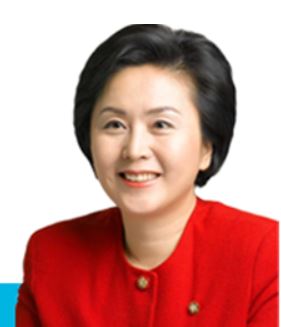 Kim Young-sun, member of the People Power Party.
The Special Committee on Population Crisis consists of 18 members of the National Assembly, including Chairman Kim Young-seon: 7 from the People Power Party, 10 from the Democratic Party of Korea, and 1 from a non-negotiating group, and carries out policy tasks for responding and adapting to the population crisis.
South Korea’s issues of low birthrate, population decline, and aging are at a serious level, expected to have widespread impacts on the economy and society including education, military service, regional economy, and welfare systems. The country’s total fertility rate fell to 0.81 in 2021, ranking last for two consecutive years among 198 countries worldwide.
The scale of population decline is also among the highest globally, with a decrease of 12.41 million people projected from 2020 to 2070, ranking second among 39 OECD countries. Additionally, from 2045, the proportion of elderly is expected to be the highest in the world, and the old-age dependency ratio is projected to increase the most worldwide, ranking first out of 236 countries by 2070.
The six core tasks selected by the Special Committee on Population Crisis are: ▲ creating a work-life balanced and discrimination-free childbirth and parenting environment ▲ work-life balance policies for the youth ▲ expanding care systems by life cycle including infants, children, and the elderly ▲ initiating discussions on extending employment for the elderly and reforming welfare systems ▲ adapting to the decline in school-age population and effectively responding to local extinction ▲ supplementing and redesigning systems through policy effectiveness evaluation. By focusing on these core tasks, the committee aims to enhance the effectiveness of population policies.
Assemblyman Kim said, “It is important not only to effectively review government-wide measures but also to look beyond institutional and policy issues to values and culture,” adding, “I ask fellow assembly members to demonstrate their wisdom and capabilities so that we can achieve results in expanding the economically active population and preparing for an aging society.”
© The Asia Business Daily(www.asiae.co.kr). All rights reserved.
















