ISOCELL HP2... The Secret Behind Galaxy Phones Seeing Well 'Even in the Dark'
Image Sensor, Versatile Uses in AR, VR, Laptops, Tablets
Currently 200MP... "Creating 570MP, the Human Eye's Limit"
[Asia Economy Reporter Moon Chaeseok] Samsung Electronics declared that it will continue to challenge the limits of human vision just two weeks after announcing the image sensor 'ISOCELL HP2,' which serves as the eye of the Galaxy S23 Ultra camera. Beyond the 200-megapixel level of the ISOCELL HP2, Samsung is aiming for the highest resolution perceivable by the human eye, 576 million pixels. The market for image sensors with over 100 million pixels is expected to grow at an average annual rate of about 20% until 2026.
On the 14th, Samsung Electronics posted the story of the birth of the ISOCELL HP2 on its newsroom. An image sensor is a semiconductor that functions as the human eye. The higher the performance of the image sensor, the better the camera image quality. Samsung unveiled the Galaxy S23 Ultra equipped with the ISOCELL HP2 on the 1st. The ISOCELL HP2 is a chip containing 200 million pixels, each 0.6μm (micrometers, one-millionth of a meter) in size.
 The key developers of ISOCELL HP2. From the left, Seungjin Lee, PL of Samsung Electronics Sensor Design Team; Soyoon Choi, Pro of Sensor Marketing Team; Kyungho Lee, Executive Director of Pixel Development Team, Sensor Business Team.
 [Photo by Samsung Electronics]
The ISOCELL HP2 reduced the pixel size by about 56% compared to the existing 108-megapixel sensor in the Galaxy S series. At the same time, it dramatically increased pixel storage capacity. To achieve this, Samsung developed the 'Dual Vertical Transfer Gate' technology. Lee Kyungho, Executive Vice President of Samsung Electronics' Sensor Business Team, said, "Using this technology, we can realize images without afterimages and a wide range of brightness," adding, "We presented this technology at VLSI, one of the top semiconductor conferences, and swept the Samsung Paper Award and the DS (Device Solutions) Paper Award."
Samsung Electronics self-assessed the ISOCELL HP2 as the highest-level product among Samsung image sensors. Executive Vice President Lee said, "(The ISOCELL HP2) can be said to be the best among the 200-megapixel image sensor products we have released so far," explaining, "Even when operating at 50 million or 12 million pixels, it is designed with a shake-free structure to deliver high image quality not only in bright places but also in dark environments."
 Lee Kyung-ho, Executive Director of the Pixel Development Team, Sensor Business Team, Samsung Electronics. [Photo by Samsung Electronics]
The ISOCELL lineup features not only 200-megapixel sensors but also various resolutions such as 50 million and 12 million pixels. Min Soyoon, a professional in Samsung Electronics' Sensor Marketing Team, said, "Samsung plans to further solidify its leadership in the ultra-high-resolution image sensor market through its product lineup including ISOCELL HM3 (108 megapixels), HP1 (200 megapixels), HP3 (200 megapixels), and HP2 (200 megapixels)."
The image sensor market is expected to grow explosively. The estimated growth rate for the market over 100 million pixels is over 20% annually. Above all, the attractiveness lies in the fact that image sensors are used in various devices. Min Soyoon explained, "The applications for image sensors are endless," adding, "In addition to mobile devices and automotive image sensors, we are continuously preparing new products for AR (Augmented Reality), VR (Virtual Reality), laptops, and tablet PCs to expand the market."

Samsung Electronics plans to continue technology development without being satisfied with 200 megapixels. Executive Vice President Lee Kyungho said, "The maximum effective pixel count of the human eye is known to be about 576 million pixels, and Samsung is pursuing beyond that."
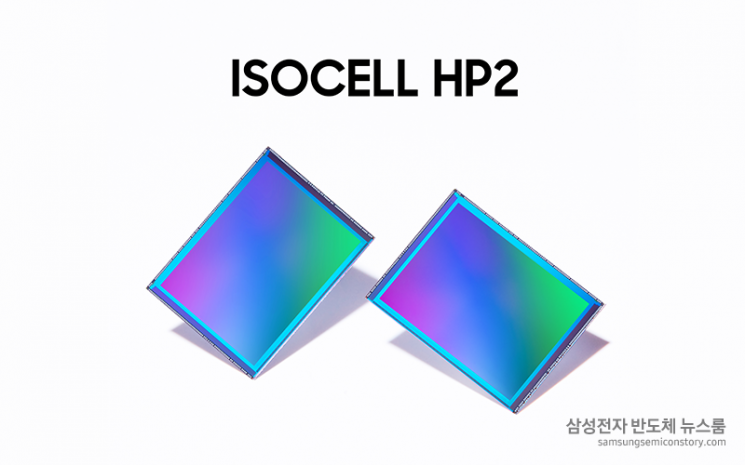
Samsung Electronics plans to continue technology development without being satisfied with 200 megapixels. Executive Vice President Lee Kyungho said, "The maximum effective pixel count of the human eye is known to be about 576 million pixels, and Samsung is pursuing beyond that."
© The Asia Business Daily(www.asiae.co.kr). All rights reserved.
![Clutching a Stolen Dior Bag, Saying "I Hate Being Poor but Real"... The Grotesque Con of a "Human Knockoff" [Slate]](https://cwcontent.asiae.co.kr/asiaresize/183/2026021902243444107_1771435474.jpg)













