Low Birthrate China Sperm Bank SNS Announcement
Additional Benefits Including Rewards Provided
"Misguided... Childcare and Women's Issues Come First"
Facing a low birthrate crisis, a sperm bank in China has sparked controversy by explicitly stating the conditions for sperm donors.
On the 10th, a nonprofit sperm bank in Beijing posted on social media (SNS), "We are looking for men aged 20 to 40 who are currently university students or hold a bachelor's degree or higher, have a height of over 170cm, maintain clean habits, have no genetic diseases, and do not suffer from severe hair loss."
The sperm bank explained the reason for encouraging sperm donation, stating, "The infertility rate among married couples in Beijing and Tianjin reaches 15%, and 40% of these cases are due to sperm-related issues."
It added, "Couples currently wishing to donate sperm have to wait up to two years," and "A compensation of about 5,000 yuan (approximately 930,000 KRW) is provided, so we encourage many to participate."

On the 13th, Hong Kong's South China Morning Post (SCMP) reported that China experienced a population decline for the first time in 61 years last year, with the birthrate dropping to an all-time low. As a result, appeals for sperm donation have been made not only in Beijing but also in various regions across China, including Shandong, Yunnan, and Hainan.
Although there are regional differences, the Chinese government provides incentives through national subsidies to encourage donations.
If a donor is confirmed to have healthy sperm and donates at least 8 times and up to 12 times within three months, they receive between 4,500 and 6,800 yuan (approximately 840,000 to 1,260,000 KRW).
In addition to compensation, there are extra benefits. The sperm bank in Shandong Province stated that donors can have their sperm frozen and stored for 10 years and use it free of charge if needed. Also, the sperm bank in Shanxi Province announced that donors receive free health checkups, including chromosome tests and genetic disease screenings.
A representative from the Shanxi sperm bank said, "We are receiving nearly 300 reservation calls a day, and inquiries are surging," but added, "Sperm donations necessary to support infertile couples are still insufficient."
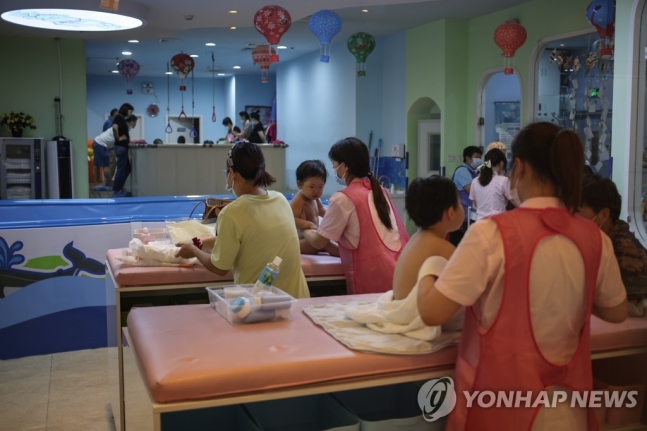
Last year, China's population was 1.41175 billion, a decrease of 850,000 compared to the previous year. Except for the population decline in 1961 caused by a combination of large-scale natural disasters and famine, this is the first time in history that a population decrease has occurred. One of the main reasons is the drop in newborns from 18.8 million in 2016 to 9.5 million last year. In response, China has introduced various birth promotion policies to raise the birthrate.
However, Yang Yuanzhuang, Director of the Population and Family Division at China's National Health Commission, pointed out in a Chinese health magazine that "infertility or sperm quality is not the main cause of the declining birthrate."
He emphasized, "The main constraints on the birthrate are concerns about childcare, economic burdens, and women's career development."
© The Asia Business Daily(www.asiae.co.kr). All rights reserved.


















