Professor Lee Kyung-jeon, Kyung Hee University, Department of Business Administration and Applied Big Data
"Chat GPT, which converses like a human, is an innovation akin to the emergence of search engines"
"New industries and services will arise... We must compete with proactiveness"
[Asia Economy Reporter Yuri Choi] The whole world is abuzz with the AI chatbot ‘Chat GPT.’ With AI technology evolving daily, companies’ stock prices are soaring. One day, we hear rosy future stories created by AI, and the next day, the world is in turmoil over concerns that AI might bring about a grim future. Lee Kyung-jeon, a professor of Business Administration and Big Data Application at Kyung Hee University and director of the User-Centered AI Research Institute, says, "The race has begun, so we must run without hesitation." Since unprecedented industries are opening up, we should aim to become the ‘Next Google.’ Asia Economy’s desks talked with Professor Lee about the future of AI.
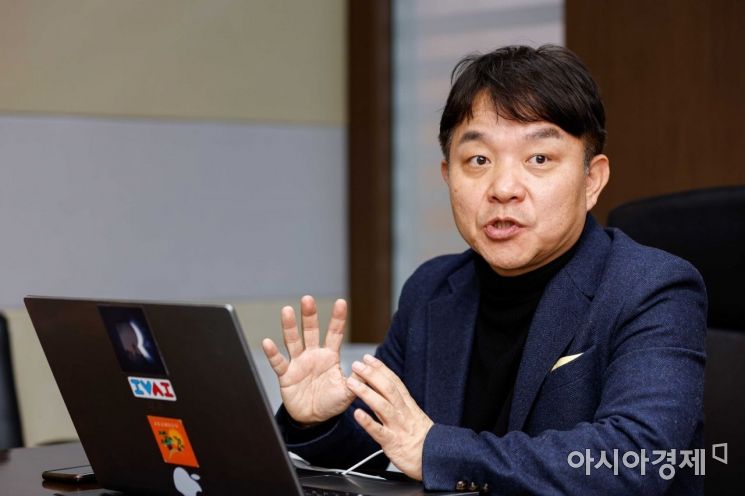 Professor Lee Kyung-jeon of Kyung Hee University is sharing opinions with attendees at the 'AI (ChatGPT) Roundtable' held on the 9th at Asia Media Tower in Jung-gu, Seoul. Photo by Kang Jin-hyung aymsdream@
-Asia Economy=Developers of conversational AI like the AI chatbot Simsimi say they need data made from refined language such as news or novels, but they struggle because such data is lacking. Also, when verifying the factuality of AI’s statements or writings, they must disclose their references, which raises copyright issues.
▲Professor Lee Kyung-jeon=OpenAI may have also trained on data without permission. Just like the copyright issues that arose when Soribada appeared 20 years ago, AI copyright issues are just beginning. OpenAI operates on a ‘no copyright’ basis. It doesn’t simply restate original information but generates new sentences. This is not to avoid copyright but a characteristic of language models.
-Asia Economy=Google’s AI chatbot ‘Bard’ caused a sharp drop in stock prices after giving incorrect answers.
▲Professor Lee Kyung-jeon=It’s not that Google’s technology is inferior; the problem is that the management failed to recognize this. OpenAI could make the same mistake.
-Asia Economy=Is the inability to provide accurate information a fundamental limitation of current generative AI models?
▲Professor Lee Kyung-jeon=Because they are still imperfect, they can be wrong on questions with definitive answers. Nevertheless, they are used because they are tools capable of conversation. Even if there are content errors, conversations can continue. If you point out a wrong answer, they acknowledge it. Interestingly, if you ask how to break into someone else’s house, initially they won’t tell you. This is because AI that judges whether an answer is appropriate has been created. However, if you ask to prepare against someone breaking into your own house, it will provide the method. It’s magical because it can converse like a human. This is due to human intervention through reinforcement learning. Humans score the AI’s answers. When asked ‘How many eyes are on a foot?’ GPT-3, which had no human intervention, answered two, but GPT-3.5 correctly answered that there are no eyes on a foot. Natural language processing has advanced this far thanks to the methodology introduced in the famous 2017 Google paper, ‘Attention Is All You Need.’
-Asia Economy=Are all methodologies being made open?
▲Professor Lee Kyung-jeon=Yes. Naver’s creation of the hyper-large AI ‘Hyper Clova’ was also by reading and following papers.
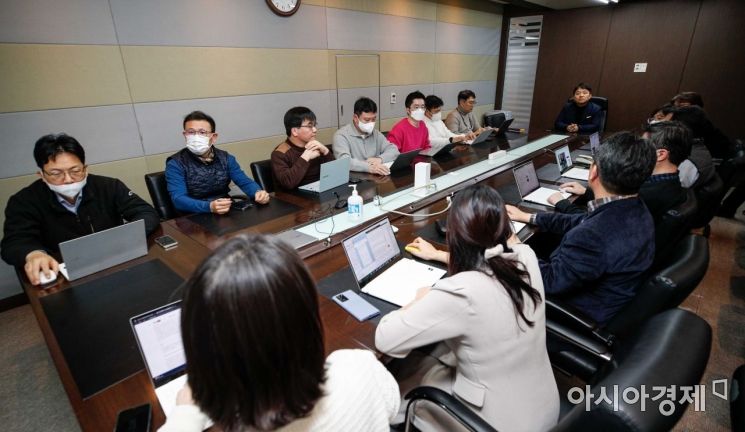 Professor Lee Kyung-jeon of Kyung Hee University is sharing opinions with participants at the 'AI (ChatGPT) Meeting' held on the 9th at Asia Media Tower in Jung-gu, Seoul. Photo by Kang Jin-hyung aymsdream@
-Asia Economy=When AI speakers first came out, they were called revolutionary, but interest has waned. Could Chat GPT also become a hype?
▲Professor Lee Kyung-jeon=Six years ago, I wrote a column saying I wouldn’t invest in AI speakers. I thought they would fail because they were shells without real conversation. But now, conversational technology has emerged with Chat GPT. Now that it’s confirmed, it’s time to run. It’s the early stage of competition, like when search engines like Yahoo first appeared. The signal of a world war asking who will become Google has been fired. It could become a service that changes the future. An acquaintance said they would gladly pay $20 a month to use Chat GPT. If various services are linked here and network effects are added, even more people can use it.
-Asia Economy=AI learns through language, but Korean has only 50 million speakers, fewer than English. Won’t Korean AI competitiveness decline over time?
▲Professor Lee Kyung-jeon=That could happen. But translation will also improve.
-Asia Economy=What will determine who wins the competition in AI?
▲Professor Lee Kyung-jeon=Since the technology (papers) is open, it’s all the same. Who wins is a management issue. Google had advanced related technology but couldn’t push forward. They held back, fearing it might cannibalize their main market, the search engine business. This is the so-called cannibalization or self-cannibalization problem. Large companies with related technology also face big tech regulations, legal risks, and various concerns. The company that aggressively pushes forward will take the throne. For search-related companies like Naver, they may need to spin off and compete with their headquarters.
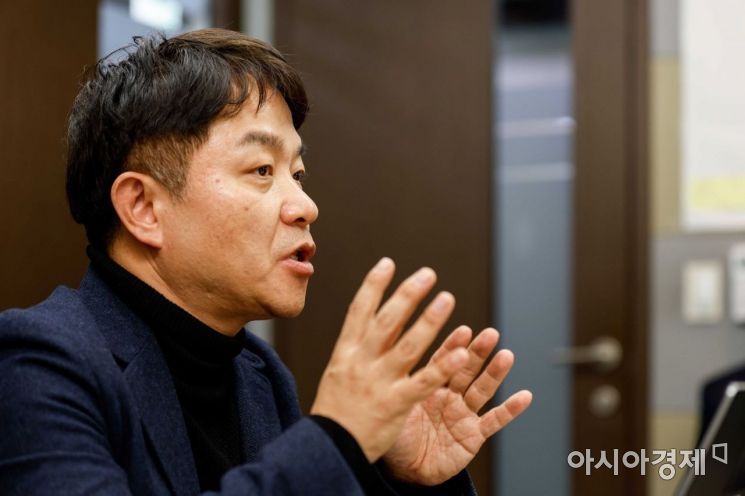 Professor Lee Kyung-jeon of Kyung Hee University is sharing opinions with attendees at the 'AI (ChatGPT) Roundtable' held on the 9th at Asia Media Tower in Jung-gu, Seoul. Photo by Kang Jin-hyung aymsdream@
-Asia Economy=How long will it take for Chat GPT to replace novelists, poets, journalists, and others?
▲Professor Lee Kyung-jeon=Productivity will definitely increase. Simply put, if it costs 1 million won for a person to produce one article, AI can produce one for 100,000 won. The same applies to paintings. Looking at AI-generated paintings, I think people who draw simple backgrounds will no longer be needed. If article prices fall and the media industry is a red ocean with no way to expand, there is no future. However, automation lowers labor costs and can grow the market. A new blue ocean of AI media companies could emerge. A new newspaper might come out that installs CCTV in Chungmuro and collects street stories. Although AI is said to eliminate jobs, that’s not true. Industries and services we never imagined will emerge.
-Asia Economy=Ultimately, if AI develops, will robots that can recognize voice and motion appear?
▲Professor Lee Kyung-jeon=Yes. If you think like science fiction, robots will appear. Robots that make robots could even emerge. However, companies must focus on products and services they can currently sell, so new technologies contribute to human welfare. If the current social system (market economy, democracy, rule of law) is maintained, development will proceed in that direction. The important thing is not to make wrong decisions to avoid losing immediate profits. In the past, Cyworld, an SK Group affiliate, did not quickly release an iPhone app competing with KT, which adopted the iPhone. Its position in the smartphone market shrank, and it eventually disappeared. It lost the opportunity to grow Cyworld into a global service like Facebook by only focusing on the domestic market. Competition must be through an open strategy.
© The Asia Business Daily(www.asiae.co.kr). All rights reserved.



















