Celebrities' Drug Use..."Effective for Insomnia"
Can Cause Breathing Difficulties and Shock
MFDS Designated as 'Narcotics' Since 2011
Actor Yoo Ah-in has been confirmed to have undergone police investigation for habitual use of propofol. As reports of habitual propofol use among celebrities and other famous individuals continue, concerns about the side effects and dangers of propofol are growing.
Feeling 'Refreshed' as if Just Waking Up
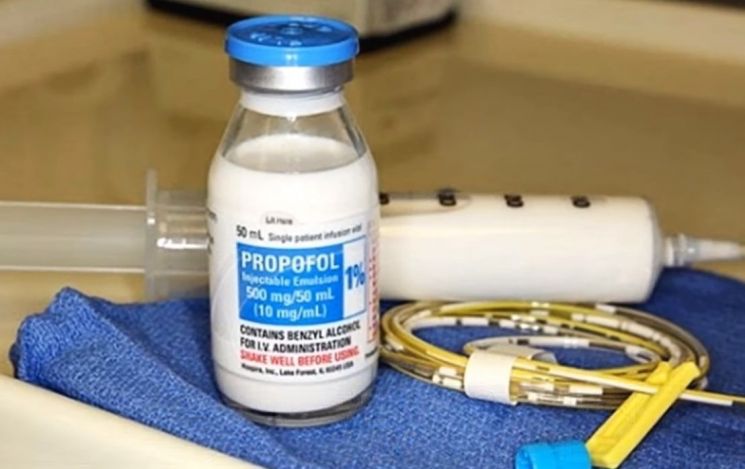
Propofol is an intravenous anesthetic used for sedation, presented as a white liquid, which is why it is also called the 'milk injection.' When it enters the bloodstream, it induces anesthesia, and its effects last about 10 to 15 minutes. Propofol enhances the brain's neurotransmitter GABA receptor (GABAA), blocking excitatory signal transmission and suppressing the central nervous system. This process reduces pain and induces sleep. It also increases dopamine levels, creating intense pleasure.
Propofol, approved for use in South Korea since 1992, was originally intended for rapid sedation during surgeries or endoscopic examinations. It allows for quick anesthesia and awakening, with almost no side effects such as nausea and vomiting that are common with general anesthetics like pentothal. Compared to other anesthetics, it enables a relatively refreshed awakening from anesthesia and is excreted directly through urine, leaving no residue in the body.
Especially, even sleeping for just 30 minutes can result in a refreshed and invigorated condition as if one had slept deeply for several hours. This is why celebrities easily fall into propofol abuse. Due to their irregular schedules and frequent insomnia, many entertainers seek propofol, which is more potent than any other sleeping pill.
Tolerance Develops and Addiction to Propofol

Propofol itself is not a dangerous anesthetic. It does not cause physical dependence such as withdrawal symptoms. However, it gives a feeling of 'waking up refreshed,' which leads to psychological dependence and repeated use. This is why most people under police investigation say they use propofol "to relieve fatigue."
When used habitually for satisfaction after administration, tolerance develops, and the usual dose no longer produces the desired effect. Addiction to propofol causes shrinkage of the frontal cerebral cortex, impairing cognitive function, judgment, and calculation ability. Moreover, misuse or overdose can cause respiratory distress, cardiovascular dysfunction, and airway obstruction, which in severe cases can lead to apnea and death during sedation without the person realizing it. Michael Jackson nicknamed propofol 'milk' and abused it, leading to his death in 2009. It is reported that he was administered 25 mg of propofol at the time of his death.
In 2011, the Ministry of Food and Drug Safety designated propofol as a narcotic under the Narcotics Control Act. Currently, the Ministry states, "Propofol produces euphoric hallucinations similar to narcotics, leading to very high psychological dependence and continuous use." Medical institutions are monitored and managed regarding their propofol usage.
Recently, with continuous incidents involving illegal drugs such as marijuana and cocaine, interest in narcotic analgesics has also increased. Experts warn that beyond simple sedation, repeated desire and dependence on propofol addiction and overdose must be prevented.
© The Asia Business Daily(www.asiae.co.kr). All rights reserved.


















