Limited to 300 Years of the 400-Year History
"The Period of Forced Labor of Joseon People Is Excluded"
The Japanese government, while promoting the UNESCO World Heritage listing of the 'Sado Mine,' went through a reapplication process due to incomplete documentation but maintained a strategy of excluding the history of forced conscription of Koreans.
On the 9th, Sawada Atsushi, Director of the Niigata Prefecture World Heritage Registration Promotion Office, stated in a written interview with Yonhap News Agency, "The outstanding universal value of the Sado Mine lies in the traditional gold production techniques and systems from the late 16th century to the late 19th century." He also asserted, "The history during the Pacific War is unrelated to the World Heritage value of the Sado Mine."
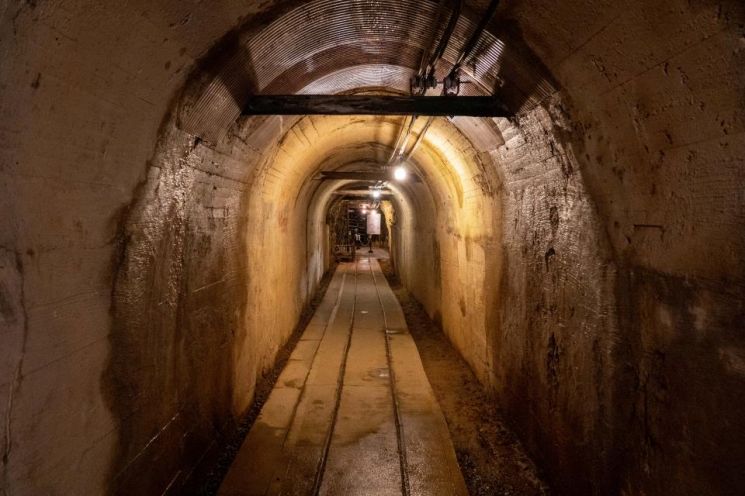 Japan claims that a large amount of gold was produced at the Sado Mine during the Edo period, emphasizing its cultural value as a World Heritage site, while hiding the fact of forced labor by Koreans.
 [Photo by Yonhap News]
Niigata Prefecture and the Japanese government decided to name the world heritage site 'Sado Island Gold Mine (金山).' They limited the essential condition of 'outstanding universal value' for selection as a World Heritage site to gold production during the Edo period (1603?1867).
Director Sawada said, "At the Sado Mine, the highest quality gold in the world was produced on the largest scale using a unique traditional handicraft method," and presented as supporting material the 1956 work by Fumoto Saburo, 'Sado Gold and Silver Mine (金銀山) Historical Story (史話)', which analyzed taxes paid to the Edo Shogunate. He added that this material shows that around 16020?1640, 1 to 2 tons of gold were produced annually on Sado Island.
The history of the Sado Mine spans nearly 400 years from 1601 to 1989, but the Japanese government claims that only about 300 years after the 16th century have World Heritage value. This act of ignoring the entire history of the heritage is analyzed as a deliberate strategy to exclude the forced labor of Koreans.
Meanwhile, the Korean government has expressed regret over the World Heritage application of the Sado Mine. Regarding this, Director Sawada said, "Issues related to diplomacy will be appropriately handled by the government," without providing a clear response.
© The Asia Business Daily(www.asiae.co.kr). All rights reserved.
![Clutching a Stolen Dior Bag, Saying "I Hate Being Poor but Real"... The Grotesque Con of a "Human Knockoff" [Slate]](https://cwcontent.asiae.co.kr/asiaresize/183/2026021902243444107_1771435474.jpg)
















