Emergence of AI That Draws Pictures... Industry 'Tense'
Freelancers Fear 'Rate' Drops
Copyright and Artist Backlash Remain Challenges
"What we hoped would never happen has finally come."
"I don't know what will happen from now on."
The 'artificial intelligence (AI) image generator' is causing subtle ripples in the domestic art industry. On YouTube and social networking services (SNS), industry professionals engage in daily debates, and illustrators, cartoonists, and concept art creators with over 5 to 10 years of experience often find themselves astonished by AI-generated works.
The 'generative AI' that can create images within seconds by simply inputting keywords raises gloomy prospects that it might threaten human jobs. There are also warnings that cheap AI-generated images could devalue artistic labor. Can human artists truly coexist with the 'mass content production society' initiated by AI?
"Can we compete with AI?"... Artists feeling a sense of deprivation
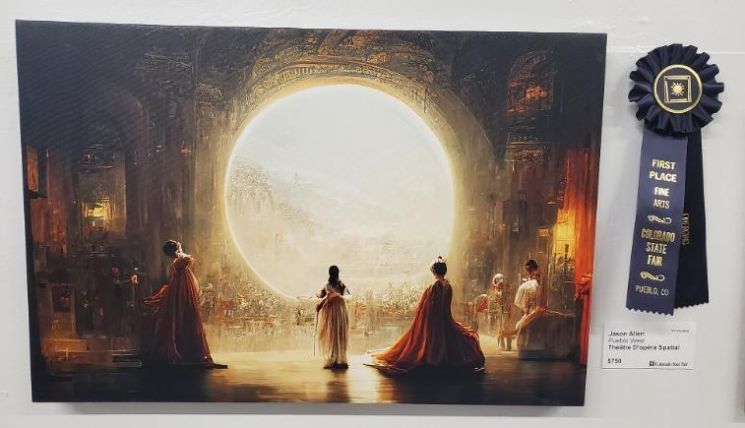 Last September, an AI-generated painting won the grand prize at an art exhibition held in the United States, sparking controversy. / Photo by Yonhap News
A university student A, majoring in content creation at a domestic cultural industry university, recently expressed concerns about career choices. As an aspiring webtoon cartoonist, A is unsettled by AI-generated images. A said, "If you wait just 30 to 40 seconds, you can produce images far superior to most amateurs' sketches," adding, "Although there are still shortcomings like backgrounds and hand details, once those are improved, I wonder if we can even compete with AI."
B (31), who works at a design company, is also paying close attention to AI technology trends. He said, "My field is video production, so I’m not too worried yet, but those who create industrial designs or concept art are really concerned," adding, "I never thought we’d live in an era where computers create art."
However, the intensity of competition with AI may vary depending on the worker. The content industry is divided into comics (webtoons), illustration, advertising, and more. Many amateur artists create cover images for famous web novels or game companies under contract, or work online receiving small commissions from clients to produce specific illustrations.
B predicted, "Freelancers will likely suffer the most damage from AI-generated images," explaining that as clients start receiving relatively cheap AI images, freelance contractors will have to adjust their 'rates' accordingly.
The era of AI images opened by Stability AI... Growing controversy in the content industry
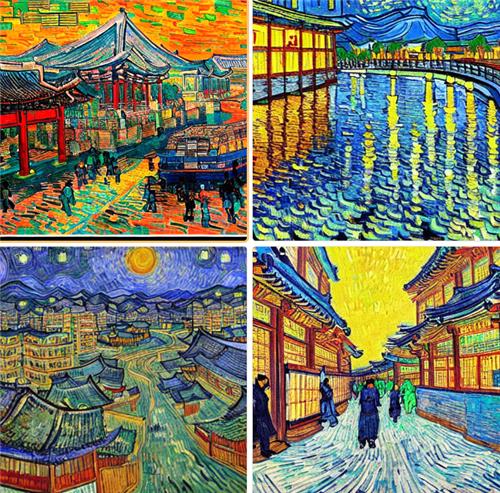
AI-generated images have become a hot topic in the content industry since last year. While the IT industry is abuzz with the American AI research company OpenAI’s text generation tool 'Chat GPT,' the biggest topic among art professionals is the 'Stable Diffusion' model developed by the British startup 'Stability AI.'
Stability AI was founded in London in 2018 by Imad Mostaque, a British entrepreneur of Bangladeshi descent. Last year, Mostaque released Stable Diffusion, an image-generating AI model that can be trained on a regular PC, and made the core source code freely available online. This was part of a plan to 'democratize AI.'
Since then, numerous derivative image generators like Midjourney and NovelAI have flooded the market based on Stable Diffusion. Stability AI, which provided the core technology, quickly attracted global investors and raised about $100 million (approximately 120 billion KRW) in funding.
While it launched the AI content industry, it also drew backlash from many artists. Some art exhibition communities have even introduced clauses to prevent AI-generated images from being registered.
Some argue "the usefulness is exaggerated"
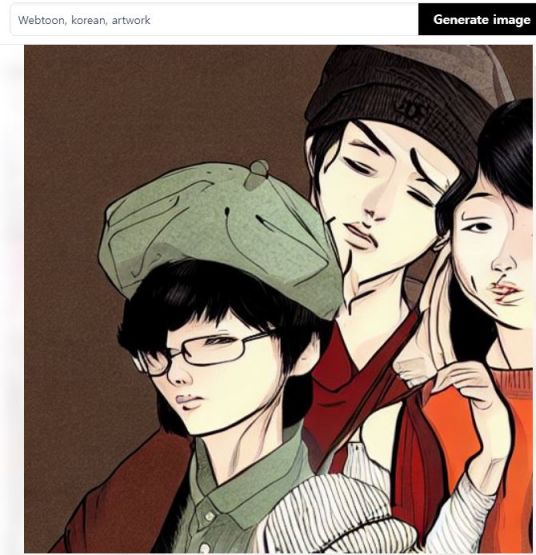 Text-to-image AI like Stable Diffusion recognizes prompt keywords as commands. The image created by a reporter using only three prompts?'korean', 'webtoon', and 'artwork'?did not achieve a level of completeness suitable for commercial use. / Photo by Stable Diffusion demo page
However, some claim that the effectiveness of generative AI is overstated. Amateur comic serial artist C, who requested anonymity, pointed out, "AI is much harder to handle than expected, and the quality of the results is inconsistent."
Models like Stable Diffusion are commonly called 'text-to-image' AI. When specific keywords are entered into a prompt window, the AI recognizes them and converts them into images. Therefore, the quality of AI-generated images largely depends on the keywords entered.
The problem is that it is difficult to predict which keywords will produce the best output. AI is a 'black box' that acquires image generation capabilities by learning from vast amounts of images on its own. For example, entering keywords like Korea, webtoon, and drawing will generate 'webtoon-style' images, but the quality is far from commercial standards. However, images finely tuned with numerous prompt keywords boast considerable quality.
Because of this, specialized websites sharing AI prompt keywords have recently been established, and 'prompt engineers' who study prompts exclusively are gaining attention. C said, "Ultimately, to handle AI well enough to make money, you need knowledge and research," adding, "The difference is just between mastering AI image generation and mastering drawing; the professional threshold won’t suddenly drop."
Copyright and artist backlash remain challenges
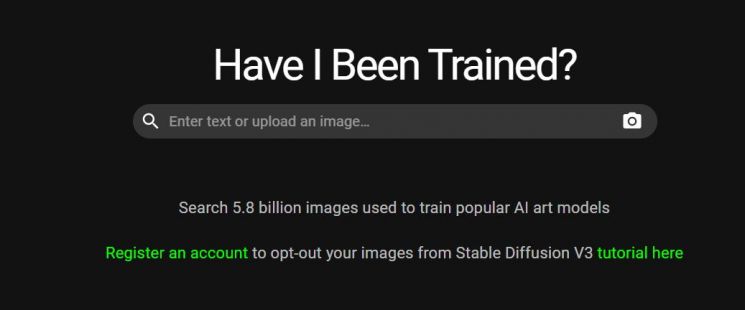 Website to Check Whether Your Artwork Has Been Used as AI Training Data / Photo by HaveIBeenTrained Capture
Copyright issues are also potential obstacles. Stability AI, the owner of Stable Diffusion, was sued last month by image sales company Getty Images for copyright infringement. It is alleged that millions of Getty Images’ pictures were used without permission in the image data used to train Stable Diffusion.
Organized movements by artists who do not want their works used as AI training tools are also spreading. Recently, a website titled 'Have I been trained?' was launched overseas, allowing artists to check if their works are included in AI training datasets.
Famous illustrators such as Sarah Andersen, Kelly McKernan, and Carla Ortiz have sued representatives of Stability AI and Midjourney for copyright infringement. Another American illustrator, Daniel Danger, expressed his opposition in a recent interview with CNN, saying, "I don’t want my work to be used to train AI that cheapens what I do."
© The Asia Business Daily(www.asiae.co.kr). All rights reserved.



















