2004 Roh Moo-hyun, 2023 Lee Sang-min... Political Variables
Commonality of Unprecedented Constitutional History, Suspension from Duty Due to Impeachment
Differences in Impeachment Reasons, Voting Scenes, and Public Opinion Trends
[Asia Economy Reporter Ryu Jeong-min] The passage of the impeachment motion against Minister of the Interior and Safety Lee Sang-min marks a turning point in the political landscape of the first half of 2023. The fact that a motion to impeach a Cabinet member, unprecedented in constitutional history, passed the plenary session of the National Assembly carries significant political meaning. The very occurrence of something that had never happened before is the focal point of attention.
The Presidential Office criticized on the 8th, saying it "will be recorded as a shameful history in legislative history." On the other hand, the Democratic Party of Korea countered, stating, "The passage of the impeachment is the stern command of the people."
The sharp confrontation between the ruling and opposition parties is not a recent phenomenon. Even when the relationship between the ruling and opposition parties was much more severe than now, why did the ministerial impeachment motion not pass the plenary session? This is closely related to the political burden of deciding to suspend a minister's duties. Another reason is that it was customary for ministers to resign voluntarily before impeachment to alleviate the president's political burden.
If a minister is impeached, the political burden on the opposition party leading the motion also intensifies. The Presidential Office is in the same position. Because it is a decision that burdens both sides, Korean politics has historically been cautious and sought a compromise before reaching the point of passing a ministerial impeachment motion. The political situation in February 2023 is therefore exceptional.
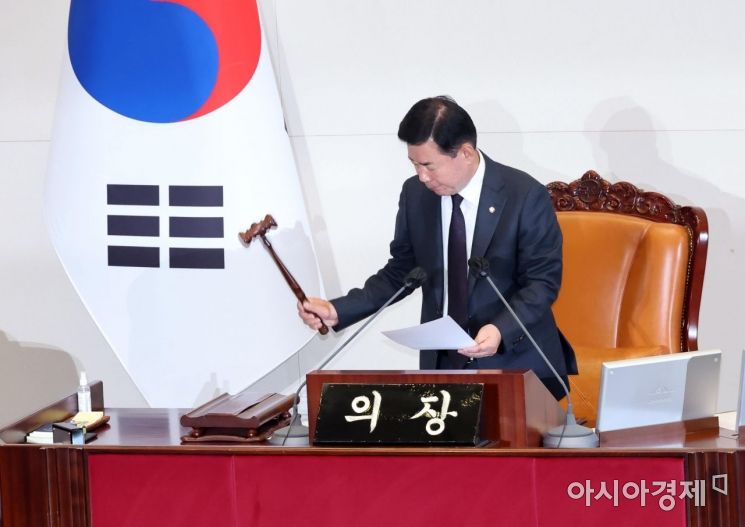 On the 8th, at the 4th plenary session of the 403rd National Assembly (extraordinary session) held at the National Assembly in Yeouido, Seoul, the impeachment motion against Lee Sang-min, Minister of the Interior and Safety, was passed with 293 members present, 179 in favor, 109 against, and 5 invalid votes. Photo by Kim Hyun-min kimhyun81@
Minister Lee said in a statement on the 8th, "I deeply regret causing concern to the people due to the National Assembly's decision to pass the impeachment motion against me today."
The phrase "unprecedented in constitutional history" combined with the word impeachment is most often associated with the March 12, 2004, impeachment of then-President Roh Moo-hyun by the National Assembly. Former President Roh became the first president in constitutional history to have an impeachment motion passed in the plenary session of the National Assembly. So, what are the similarities and differences between Minister Lee's impeachment and President Roh's impeachment?
A representative similarity is that both are protagonists who experienced an unprecedented event in constitutional history. Former President Roh was the "first president," and Minister Lee is the "first minister" to have an impeachment motion passed. Both President Roh and Minister Lee had their duties suspended following the National Assembly's approval of the impeachment motion.
The number of lawmakers who participated in the impeachment vote is also similar. President Roh's impeachment was led by the then Grand National Party and the Democratic Party. Out of 195 lawmakers who voted, 193 were in favor and 2 opposed, resulting in passage. Minister Lee's impeachment saw 293 participants, with 179 in favor, 109 opposed, and 5 invalid votes, leading to passage.
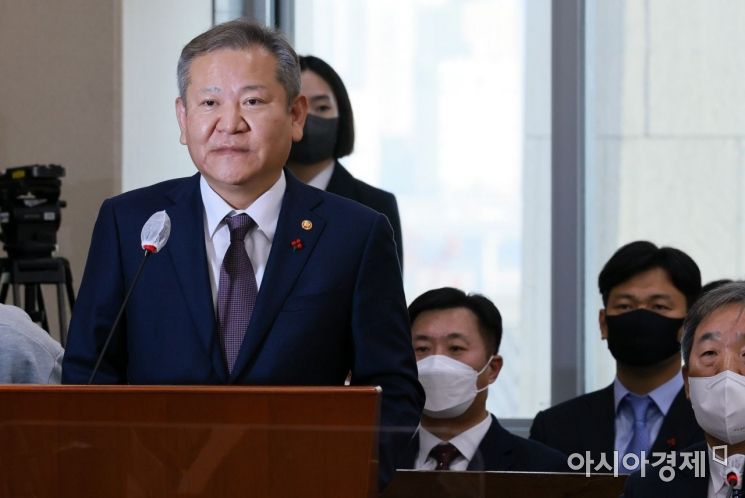 Minister of the Interior and Safety Lee Sang-min attended the plenary meeting of the Special Committee on the Itaewon Disaster State Audit held at the National Assembly on December 27, 2022, and provided an institutional report. Photo by Yoon Dong-joo doso7@
Both impeachments also share the similarity of being variables that changed the flow of the political situation.
Then, what are the differences between President Roh's impeachment and Minister Lee's impeachment? The biggest difference is that President Roh's impeachment was politically driven by issues surrounding the obligation of neutrality, which led to the National Assembly's impeachment. Minister Lee's impeachment proceeded on October 29 last year in the context of responsibility for the Itaewon tragedy. The core reasons for impeachment differ between a political issue and a social disaster.
Another difference is the timing of the impeachment. President Roh's impeachment was abruptly carried out in April 2004, one month before the 17th general election. The National Assembly vote was conducted under the leadership of the Grand National Party and the Democratic Party after effectively suppressing members of the Uri Party who opposed impeachment.
Minister Lee's impeachment took place one year and two months before the 22nd general election in 2024. The motion passed in the plenary session with participation from lawmakers of the People Power Party who opposed the impeachment.
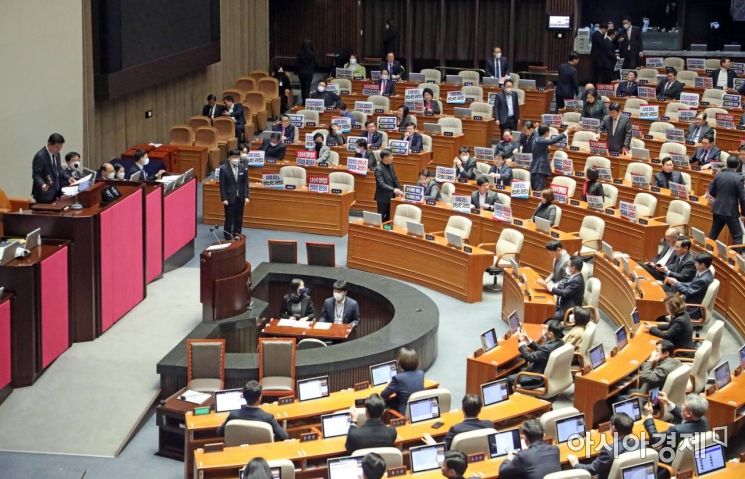 On the 8th, at the 4th plenary session of the 403rd National Assembly (extraordinary session) held at the National Assembly in Yeouido, Seoul, the impeachment motion against Lee Sang-min, Minister of the Ministry of the Interior and Safety, was passed with 293 members present, 179 in favor, 109 against, and 5 invalid votes. Photo by Hyunmin Kim kimhyun81@
The fact that President Roh's impeachment was carried out just before the general election was a decisive factor that triggered public backlash at the time. In President Roh's case, opposition to impeachment was overwhelmingly high. After the impeachment, public opinion sharply polarized, and the forces leading the impeachment suffered a severe defeat in the general election.
In Minister Lee's impeachment case, public opinion has not sharply swung to either side. Depending on the poll, results vary, but both support and opposition have significant proportions. This serves as a gauge for predicting the future political flow.
With the passage of the National Assembly's impeachment motion, Minister Lee's fate is now entrusted to the Constitutional Court's judgment. Opinions on the Constitutional Court's decision are divided. While political responsibility is unavoidable, there is disagreement over whether there is legal responsibility that would lead to impeachment.
Democratic Party lawmaker Yoon Geon-young said in an interview with MBC Radio's "Kim Jong-bae's Focus" on the 9th regarding concerns about a backlash in the general election, "We must take the right and proper path, and just because that path is rough and difficult doesn't mean we can avoid it or not take it. You can see it in that light."
© The Asia Business Daily(www.asiae.co.kr). All rights reserved.



















