[Asia Economy New York=Special Correspondent Joselgina] "Higher interest rates may be maintained for a longer period than expected."
Hawkish warnings are pouring out from senior Federal Reserve (Fed) officials who hold the reins of U.S. monetary policy. This is interpreted as a caution against Fed Chair Jerome Powell’s earlier diagnosis that 'disinflation (easing inflation)' has begun, which could potentially send the wrong message to the market and hinder the future monetary policy path.
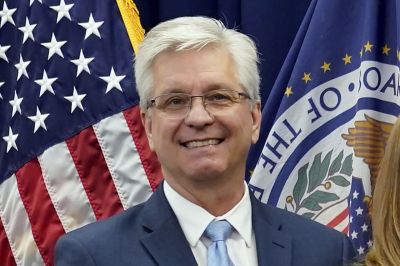
According to U.S. economic media CNBC and others, Fed Governor Christopher Waller said on the 8th (local time) at the Arkansas State University Agricultural Conference, "We are beginning to see the fruits of our efforts to lower inflation, but there is still a long way to go," adding, "It could be a long battle with higher interest rates for longer than some expect." Despite recent indicators confirming a slowdown in inflation, this signals that the Fed’s tightening will continue for a considerable period.
Waller, classified as hawkish, evaluated the January employment report released last week, which showed job gains far exceeding market expectations, as "demonstrating a strong labor market." He also expressed concern that these employment figures could fuel consumer spending, creating upward pressure on inflation. He said, "Some believe inflation will fall quickly this year, but I do not see signs of a sharp decline in the data," adding, "We are preparing for a long-term battle to bring inflation down to the target."
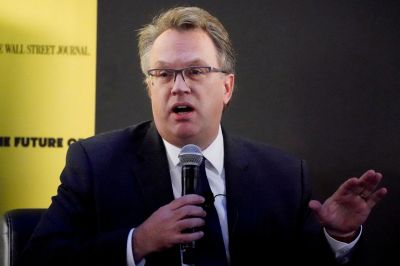
John Williams, president of the Federal Reserve Bank of New York and considered the third most influential Fed official, also argued that "interest rates need to remain restrictive for several years." He attended a Wall Street Journal (WSJ) event that day and supported the December dot plot’s interest rate outlook as a "reasonable view." The dot plot at that time projected year-end rates of 5.0?5.25%. Considering the current U.S. benchmark interest rate is 4.5?4.75%, this implies a 0.5 percentage point additional hike.
Neel Kashkari, president of the Federal Reserve Bank of Minneapolis, who previously suggested a higher terminal rate of 5.4% in an interview the day before, raised his voice again that day, saying, "We have more work to do." Attending the Boston Economic Club, Kashkari described the January employment report as "a reason to actively raise rates," and cited the overheated labor market as a concern, stating, "The tightening effects have not yet fully impacted the labor market." Fed Governor Lisa Cook also said, "Interest rates need to remain at sufficiently restrictive levels," adding, "Rate hikes are not over yet."
These hawkish remarks came following Fed Chair Powell’s reaffirmation the previous day that the U.S. is in the "early stages of disinflation." Although Powell signaled further rate hikes at the same event, these comments serve as a warning against the market focusing solely on the disinflation remarks. Currently, Fed officials are most wary of the continued rise in service prices, unlike goods prices, and the possibility that an overheated labor market will fuel wage increases, prolonging high inflation.
The New York stock market, which had rallied on the previous day’s disinflation remarks, closed lower across the board as Fed officials’ comments signaling higher interest rates poured in that day. The Nasdaq Composite, which is sensitive to interest rates and tech-heavy, fell 1.68% compared to the previous session. Edward Moya, senior analyst at OANDA, evaluated that "reminding Wall Street that higher rates may be necessary quickly dampened risk appetite in the stock market."
The market is now focusing on the Consumer Price Index (CPI) report to be released next week. Sam Gunter, head of foreign exchange trading at Britannia Global Markets, said, "It has become clear that the Fed actually depends on the data," adding, "All eyes will be on next Tuesday’s CPI report. Disinflation has started, but not yet in the services sector." Peter Garnry, head of equity strategy at Saxo Bank, also noted, "The risk lies in Powell’s remarks that the services sector will exert upward inflation pressure longer than expected."
© The Asia Business Daily(www.asiae.co.kr). All rights reserved.
![User Who Sold Erroneously Deposited Bitcoins to Repay Debt and Fund Entertainment... What Did the Supreme Court Decide in 2021? [Legal Issue Check]](https://cwcontent.asiae.co.kr/asiaresize/183/2026020910431234020_1770601391.png)
















