Judgment for 167 Million Won Compensation
Jury: "Closer to a Commodity than an Artwork"
[Asia Economy Reporter Jeong Hyunjin] French luxury brand Hermes won a trademark infringement lawsuit filed against digital artist Mason Rothschild, who created non-fungible tokens (NFTs) based on its core product, the Birkin bag. Given the ongoing legal disputes between famous brands and NFT creators, the outcome of this case is drawing attention for its potential impact on the fashion industry.
On the 8th (local time), according to Bloomberg and other sources, the U.S. District Court in Manhattan, New York, ruled in favor of Hermes in the trademark infringement and damages lawsuit against Rothschild. Following the jury's verdict, the court ordered Rothschild to pay $133,000 (approximately 167 million KRW) in damages.
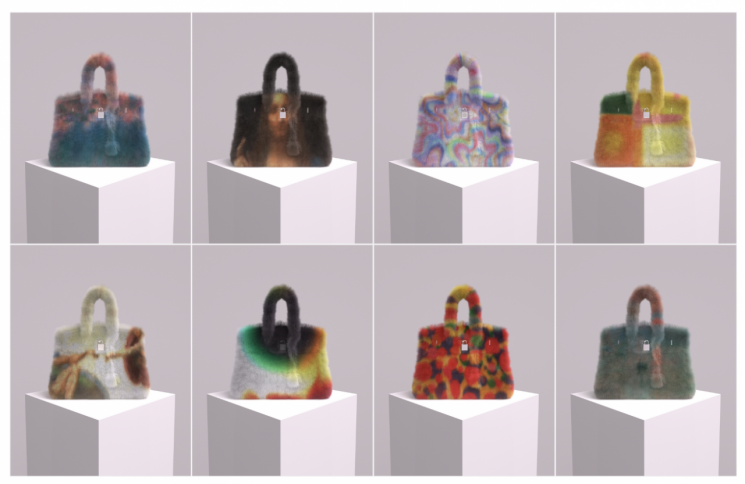
The conflict between Hermes and Rothschild began at the end of 2021. Rothschild unveiled an NFT artwork called "MetaBirkinNFT" at the world's largest art fair, Miami Art Basel, which featured designs nearly identical to Hermes' Birkin bag but altered by covering it with fur or combining it with Vincent van Gogh's painting "Starry Night."
The actual Birkin bag sells for between $12,000 and $200,000. Rothschild initially sold the MetaBirkinNFT for $450 each, but the price later soared to tens of thousands of dollars. A piece titled "Baby Birkin" was auctioned off for $23,500 in an NFT auction.
Hermes filed a lawsuit in January last year, claiming trademark infringement and seeking damages against Rothschild. Hermes argued that Rothschild's inclusion of "Birkin" in the NFT project name constituted improper trademark use and that by using the name on social media and in media coverage, consumers were misled into believing Hermes had created or approved the MetaBirkin.
Rothschild countered by asserting that MetaBirkinNFT was an artwork and therefore not problematic. He claimed it was protected under the First Amendment of the U.S. Constitution, which guarantees freedom of expression. Rothschild emphasized that MetaBirkinNFT was art, citing American pop artist Andy Warhol's iconic work "Campbell's Soup" as an example of art rather than a product.
The jury concluded that Rothschild's NFTs were closer to products than artworks.
After the loss, Rothschild's side expressed dissatisfaction with the jury's verdict. They stated, "What happened today is wrong. A major fashion company won, and it is a terrible day for artists and freedom of expression," adding, "This is not over yet."
Bloomberg described this as "the first case showing how NFTs are evaluated under intellectual property law." In recent years, famous fashion brands have expanded into NFTs and the metaverse. Some, like Nike, are also involved in NFT trademark disputes, drawing attention to the potential influence of this ruling on such conflicts.
Alfred Steiner, an intellectual property specialist lawyer, said Rothschild's loss could discourage NFT artists who wish to use trademarks. However, another intellectual property lawyer, Emily Poller, noted that despite this ruling, "there is still room for artworks to be protected under the First Amendment."
© The Asia Business Daily(www.asiae.co.kr). All rights reserved.

















