Rising Above the $80 Range Shows Unusual Momentum
Approaching Forecasts from Korea and Other Countries
US-China Economy, Production Cuts, and Ukraine War Variables
[Asia Economy Reporter Haeyoung Kwon] International oil prices have been fluctuating again since the beginning of the year, showing signs of surpassing the government's price forecasts. There are growing expectations that prices could break through $100 per barrel within the year due to factors such as the economic rebound timing of the US and China, production cuts by oil-producing countries, and the prolonged war in Ukraine. Concerns are also rising that inflation, which had just calmed down due to high-intensity tightening by major countries, could rise again because of soaring oil prices.
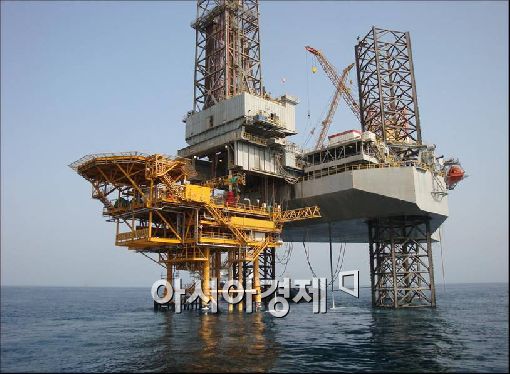
Volatile Oil Prices... Will Government Forecasts Miss Again?
Governments and affiliated agencies of major countries forecast that international oil prices will reach the $80 range this year. The US Energy Information Administration (EIA) recently projected in its short-term outlook that the average Brent crude price this year will be $83.63 per barrel, a 0.6% increase from the January forecast. Our government has set a slightly higher forecast. The Ministry of Economy and Finance presented an international oil price forecast of $88 per barrel based on Dubai crude in its '2023 Economic Policy Direction' announced in December last year.
As oil prices started rising from the beginning of the year, these forecasts are already under threat. Brent crude futures closed at $85.15 per barrel on the 8th (local time). Although the EIA expected the oil price trend this year to move in a 'high first, then low' pattern, the price has already exceeded the EIA's forecast less than two months into the year.
Dubai crude also closed at $81.93. While this is still below the Ministry of Economy and Finance's forecast, the market is watching oil prices with anxious eyes, wondering if the government's oil price predictions will miss again. One year ago, in February last year, the US EIA forecasted international oil prices at $82.87 (Brent crude), and the Ministry of Economy and Finance at $72 (Dubai crude). However, the average international oil price last year, as compiled by the Organization of the Petroleum Exporting Countries (OPEC), was much higher at $102.97 per barrel.
Contrary to government forecasts, the market has already raised the upper limit of oil prices. Global investment bank Goldman Sachs predicted that oil prices will surge this year and exceed $100 per barrel within the year.
Oil Prices Depend on US and China’s Economic Rebound
The background to the market's anxious view on oil prices lies in China's 'reopening' (resumption of economic activities). As the world's largest oil importer, China began easing COVID-19 lockdowns from December last year, leading to expectations of a virtuous cycle of demand increase due to economic normalization. The EIA projected that China's daily average oil consumption will expand from 15.12 million barrels last year to 15.85 million barrels this year and 16.22 million barrels next year, increasing by 100,000 barrels each for this year and next compared to previous forecasts. Although oil consumption in advanced countries such as the US, Europe, and Japan is expected to decline this year, global total oil consumption is anticipated to exceed last year's 99.36 million barrels per day, reaching 104.7 million barrels per day due to increased demand from China and emerging Asian countries.
The US and European economies are also key variables. There is a forecast that if advanced countries experience a mild recession contrary to concerns, oil demand could increase more than expected. US Federal Reserve Chair Jerome Powell began mentioning 'disinflation' at this month's Federal Open Market Committee (FOMC) meeting. The US labor market remains robust, but as inflation rates start to slow, expectations are growing that the peak of interest rate hikes is near. Christine Lagarde, President of the European Central Bank (ECB), also suggested last month that the European economy is more likely to experience a mild contraction rather than a recession, indicating that the recession tunnel will not be deep.
Some predict that the global oil demand will be influenced more by the sequential recovery of advanced economies than by China. Jinyoung Choi, a researcher at eBest Investment & Securities, pointed out, "China prefers lower-priced Russian Ural crude over Dubai crude," adding, "International oil prices do not fully reflect China's reopening expectations." He further analyzed, "China's economic recovery plays a role in supporting the lower bound of oil prices rather than pushing them up," and concluded, "Ultimately, what matters now is not only China but also the escape of major consumers, the advanced countries, from recession."
Production Cuts and Russia Sanctions... Supply Also a Variable
Supply-side uncertainties are scattered everywhere. The Organization of the Petroleum Exporting Countries Plus (OPEC+) decided at a ministerial meeting on the 1st to maintain the oil production cuts announced last year. At that time, member countries agreed to reduce daily oil production by 2 million barrels starting November. The reason for continuing the production cut policy this year is concerns over a global economic recession and ongoing geopolitical uncertainties involving China and Russia.
Particularly, uncertainties surrounding Russia are significant. The impact of the West's price cap on Russian crude oil, diesel, and other petroleum products remains shrouded in mystery. As the European Union (EU), the Group of Seven (G7), and Australia restrict trading Russian oil above a certain price, the possibility of future supply instability and price increases cannot be ruled out. There are concerns that geopolitical instability, including the possibility of a large-scale Russian airstrike at the end of this month marking one year since the invasion of Ukraine, will push oil prices up again. The suspension of oil pipeline operations due to the earthquake in T?rkiye also adds pressure on oil prices.
Jeff Currie, a Goldman Sachs analyst, predicted, "The oil market will shift to a supply shortage compared to demand in May," adding, "This will become problematic from the end of the year and will worsen starting next year."
Will High Oil Prices Rekindle Inflation?
As oil prices have been stirring since the beginning of the year, attention is focused on their potential impact on future inflation. Led by the Fed, major countries have all rapidly raised interest rates, barely curbing inflation. However, if oil prices rise and inflation surges again, the previous high-intensity tightening efforts will be in vain. According to the Hyundai Research Institute, if oil prices reach $100, the domestic consumer price index will rise by 1.1 percentage points. Other countries will also not be able to avoid inflation driven by high oil prices. In such a case, prolonged interest rate hikes could push the global economy into a deep recession.
Among US Fed officials, James Bullard, President of the Federal Reserve Bank of St. Louis and considered a hawk, recently expressed concern at an event hosted by The Wall Street Journal (WSJ), stating, "Inflation could be stimulated by China's accelerated reopening."
© The Asia Business Daily(www.asiae.co.kr). All rights reserved.
![Clutching a Stolen Dior Bag, Saying "I Hate Being Poor but Real"... The Grotesque Con of a "Human Knockoff" [Slate]](https://cwcontent.asiae.co.kr/asiaresize/183/2026021902243444107_1771435474.jpg)















