Ministry of Health and Welfare Public Hearing Held
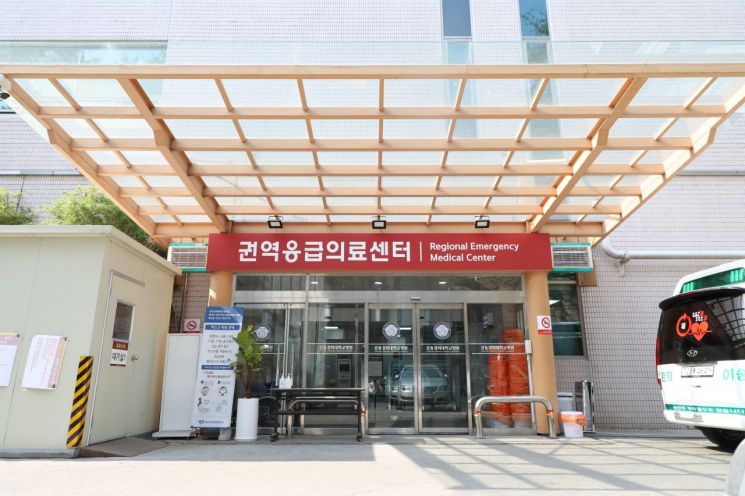 Exterior view of Gangdong Kyung Hee University Hospital Regional Emergency Medical Center. The photo is not related to the article.
[Asia Economy Reporter Lee Gwan-joo] The outline of the '4th Basic Plan for Emergency Medical Services,' which will serve as the fundamental framework for the emergency medical system from this year through 2027, has been revealed. This basic plan presents the vision of "emergency medical care responsible for final treatment anywhere nationwide," including the reorganization of the emergency medical delivery system incorporating final treatment functions such as surgery, strengthening cooperation and linkage between hospitals, and establishing an emergency transport system reflecting regional circumstances.
On the afternoon of the 8th, the Ministry of Health and Welfare held a public hearing on the 4th Basic Plan for Emergency Medical Services at the Korea Chamber of Commerce and Industry in Jung-gu, Seoul, and announced the plan. The plan includes a total of 16 tasks across four areas aimed at expanding emergency medical infrastructure and establishing a regionally self-sufficient emergency medical system: ▲on-site and transport stages ▲hospital stage ▲specialized field response ▲emergency medical foundation.
First, from the scene of an emergency to the transport stage to the hospital, the plan proposes measures to strengthen the general public's emergency response capabilities such as first aid and improve the quality of transport services provided by 119 paramedics and private transport companies. Tasks to enhance pre-hospital emergency care include expanding 'Doctor Helicopters,' increasing CPR (cardiopulmonary resuscitation) training and AED (automated external defibrillator) information provision, and preparing regionally customized transport guidelines.
At the hospital stage, the plan focuses on strengthening the treatment capabilities of emergency medical centers in connection with the 'Essential Medical Support Measures' announced last month and establishing a cooperative system among hospitals within regions. It includes measures to ensure that emergency patients can receive final treatment at the hospital after initial care, establish a 'rotating on-call system' among hospitals in the region, and expand related compensation through the introduction of public policy fees. Notably, the existing regional emergency medical centers (40 locations) will be reorganized into 'Severe Emergency Medical Centers (tentative name)' capable of providing final treatment for severe emergency diseases such as cerebral hemorrhage and severe trauma, and the number will be expanded to 50?60 locations to ensure treatment within one hour anywhere nationwide.
Specialized field response aims to strengthen the expertise of specialized treatment centers in areas such as severe trauma, cardiovascular and cerebrovascular diseases, psychiatric emergencies, and pediatric emergencies. At the same time, specialized centers will be designated only among the Severe Emergency Medical Centers to enhance linkage between emergency rooms and follow-up care. Improvements suggested during the response to the Itaewon disaster last October have also been reflected, including the formation of regional disaster medical councils, information sharing among related agencies for rapid initial response, strengthening joint training between Disaster Medical Assistance Teams (DMAT) and fire and public health centers, and improving conditions for DMAT activities.
Finally, the plan strengthens the foundation for emergency medical policy implementation at both regional and central government levels. It includes tasks to introduce regional-level emergency medical system evaluations, strengthen the functions of the Central Emergency Medical Center, and comprehensively revamp the emergency medical information system into an information provision platform tailored to users.
The Ministry of Health and Welfare plans to supplement the plan by reflecting opinions from the public hearing, finalize and announce the basic plan soon after consultations with related ministries and review by the Central Emergency Medical Committee. Park Hyang, Director of Public Health Policy at the Ministry of Health and Welfare, said, "The goal of this basic plan is to elevate the level of services by reflecting changes in the medical environment and the high public interest in essential medical care. We will establish and implement a solid plan to strengthen the emergency medical foundation over the next five years in line with the new government's national agenda and essential medical support measures."
© The Asia Business Daily(www.asiae.co.kr). All rights reserved.

















