Kim Do-eup, Chairman of the Legislation Committee, "Will Examine Whether There Is a Violation of the Constitution and Laws"
Possibility of Conflict from the Stage of Submission to the Constitutional Court after Passing the National Assembly
[Asia Economy Reporter Naju-seok] With the impeachment motion against Minister of the Interior and Safety Lee Sang-min likely to pass the plenary session on the 8th, the role of Kim Do-eup, chairman of the Legislation and Judiciary Committee from the People Power Party, is drawing attention. This is because, for the first time in constitutional history, a prosecution committee member who opposed the impeachment claim will participate in the Constitutional Court trial.
Chairman Kim said in a phone interview with this paper on the 8th, "The substantive issue is whether Minister Lee, as a Cabinet member, has violated the Constitution and laws to the extent of warranting impeachment or not," adding, "If the Democratic Party pushes the impeachment through by force, there is no way to stop it, but as a prosecution committee member, I will focus on this issue."
In constitutional history, there have been only three cases where an impeachment motion passed the plenary session of the National Assembly: former President Roh Moo-hyun, former President Park Geun-hye, and former Chief Judge Lim Seong-geun. At that time, the impeachment prosecution committee members were assigned according to the National Assembly Act, such as the chairman of the Legislation and Judiciary Committee, and all of them supported the impeachment. Former Chief Presidential Secretary Kim Ki-chun (then a member of the Grand National Party), who was an impeachment prosecution member during former President Roh’s impeachment, and Democratic Party member Yoon Ho-jung, who was an impeachment prosecution member during former Judge Lim’s impeachment, both participated as proposers of the impeachment motion, clearly expressing support. During former President Park’s impeachment, Kwon Seong-dong, then a Bareun Party member and chairman of the Legislation and Judiciary Committee, did not act as a proposer but stated in his final remarks at the Constitutional Court trial, "I hope you loudly declare that the people yearning for justice through the president’s dismissal have won."
On the other hand, Chairman Kim questions the legitimacy of Minister Lee’s impeachment. Therefore, it is highly likely that he will show a different attitude from previous impeachment prosecution members during the actual Constitutional Court trial. For this reason, the Democratic Party hopes that instead of the impeachment prosecution committee members who act on behalf of the National Assembly in the trial, the Constitutional Court will take a leading role in fact-finding. Park Joo-min, head of the Democratic Party’s Itaewon Disaster Countermeasures Headquarters, mentioned, "There is a possibility that the Constitutional Court will exercise its ex officio investigative function (where the court bears responsibility for collecting facts and evidence related to the lawsuit)."
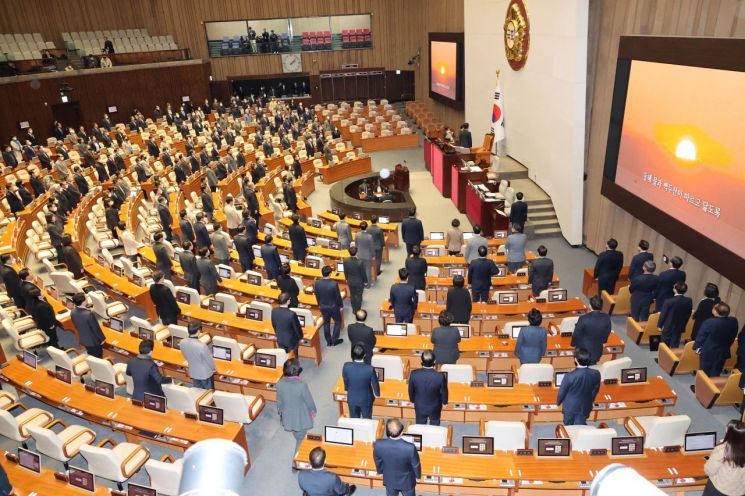
The process leading to the Constitutional Court trial is also problematic. According to the current National Assembly Act, "When an impeachment motion is passed, the Speaker shall promptly deliver the original copy of the impeachment resolution to the prosecution committee chairman, who is the chairman of the Legislation and Judiciary Committee, and deliver copies to the Constitutional Court, the impeached person, and the head of the affiliated institution." The Constitutional Court Act also states, "A petition for trial shall be submitted to the Constitutional Court in the form prescribed for each trial procedure," and "In impeachment trials, the original copy of the National Assembly’s impeachment resolution shall substitute for the petition." In other words, immediately after the impeachment resolution is passed, the original copy is delivered to the prosecution committee chairman, and the trial begins from the moment this original copy is submitted to the Constitutional Court.
Some members of the People Power Party point out that there is no explicit deadline regulation regarding the submission timing of the impeachment resolution. A People Power Party official said, "There is no legally set submission deadline," adding, "There will be an outline at the People Power Party’s members’ meeting." According to the leadership’s policy, they could delay the submission stage for reasons such as review. However, the Democratic Party believes that the submission itself will not be problematic. A Democratic Party official said, "It is something the People Power Party can do if they want, but submission is a mechanical task, so I don’t think they will go that far."
Meanwhile, Speaker of the National Assembly Kim Jin-pyo decided to proceed with the vote on Minister Lee’s impeachment motion after the government questioning session on the same day. Speaker Kim stated, "I have comprehensively considered past practices and sufficiently consulted with the floor leaders of both parties."
© The Asia Business Daily(www.asiae.co.kr). All rights reserved.

















