'Seoul's Top 3 Buffets' All Raise Prices from January to March
Even at 185,000 KRW Dinner Buffet, Reservations Open Run
Convenience Store 'Value-for-Money Meal' Lunchboxes Popular at 4,000 KRW Range
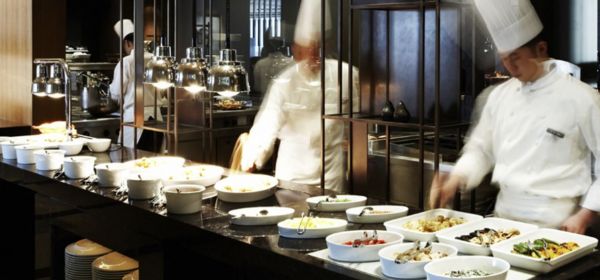
The "Top 3 Hotel Buffets in Seoul" have all raised their prices at the beginning of the year. Due to soaring food ingredient costs amid inflation, some places have increased prices by more than 40% within a year after multiple hikes last year. However, buffet reservations are quickly filled, especially during peak weekend hours. There is even a waiting list for cancellations known as "no-shows." Meanwhile, the popularity of convenience store lunch boxes, known for their cost-effectiveness (performance relative to price), is steadily rising as prices have surged so much that even a bowl of kalguksu (hand-cut noodle soup) approaches 10,000 won. The variety of lunch boxes is expanding, from warm soup-based options suitable for winter to those touted as the "godmother of cost-effectiveness."
Even at 180,000 Won per Meal, 'Reservation Open Run'
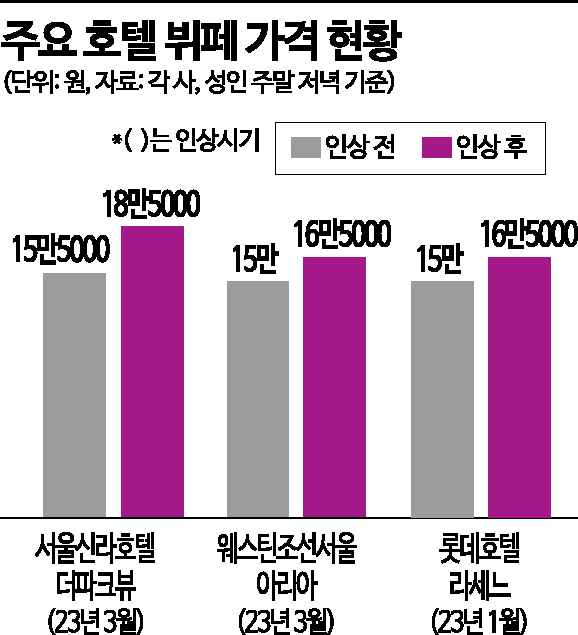
According to the hotel industry on the 8th, next month, the three major hotel buffets in Seoul?Seoul Shilla Hotel's "The Parkview" and Westin Chosun Seoul's "Aria"?will raise their prices. Lotte Hotel Seoul's "La Seine" already increased buffet prices in January. The Parkview will raise its dinner buffet price for adults from 155,000 won to 185,000 won. Weekday lunch will increase from 140,000 won to 168,000 won. Breakfast will go from 70,000 won to 80,000 won. Compared to the previous prices, the increase ranges from 19% to 21%. The Parkview's dinner buffet price in January last year was 129,000 won, marking a 43% increase in just over a year.
Aria will raise weekday lunch prices from 125,000 won to 145,000 won starting in March, weekday dinner from 135,000 won to 160,000 won, and Friday dinner as well as weekend and holiday prices from 150,000 won to 165,000 won. This is a 22% increase over the past year. La Seine raised prices on January 1st. Weekend and weekday dinner prices went from 150,000 won to 165,000 won, and lunch from 135,000 won to 145,000 won. A hotel official explained, "Because we use premium ingredients and require large quantities, the cost ratio of food ingredients is relatively more burdensome."
Despite the price hikes, to secure a buffet reservation on the desired date, customers must wait and swiftly act at the exact opening time in a process known as 'picketing.' Even though March is an off-season month when the new prices apply, weekend peak time reservations were already fully booked by early February when reservations opened. The Parkview, which raised its dinner price to 185,000 won, is already fully booked on weekends in March, and weekday reservations are filling rapidly. Other venues show similar trends.
Hotel buffets are recognized as the epitome of a "special meal," frequently chosen for personal gatherings or company dinners. Among the 20s and 30s age group, there is a growing mindset that "paying this price for an enjoyable meal is a small luxury," leading to relatively stable demand less affected by overall consumption levels. Although some places have seen prices surge over 40% in the past year, this shift in perception about dining and the overall rise in consumption levels mean that demand consistently exceeds the limited supply.
The Era of 10,000 Won Naengmyeon, Convenience Store Lunch Boxes Gain Popularity
Meanwhile, with soaring prices since last year, a new term "lunchflation" has emerged, referring to the sharp rise in lunch costs, prompting more people to cut back on everyday meal expenses. According to statistics from SikSin, a mobile meal voucher service company, the average per-person meal payment in the fourth quarter of last year was 9,633 won, up about 16% from 8,302 won in the same period the previous year. During this period, Seoul saw a sharp increase from 9,180 won to 12,285 won, a 33.8% jump. According to the Korea Consumer Agency's Price Information Portal, "True Price," the prices of eight major dining-out menu items nationwide in January this year (gimbap, kalguksu, jajangmyeon, samgyetang, samgyeopsal, kimchi stew set meal, bibimbap, naengmyeon) rose by an average of 0.5% compared to the previous month. Following a 10% increase last year, prices continue to rise this year, with steeper increases in some areas like Seoul.
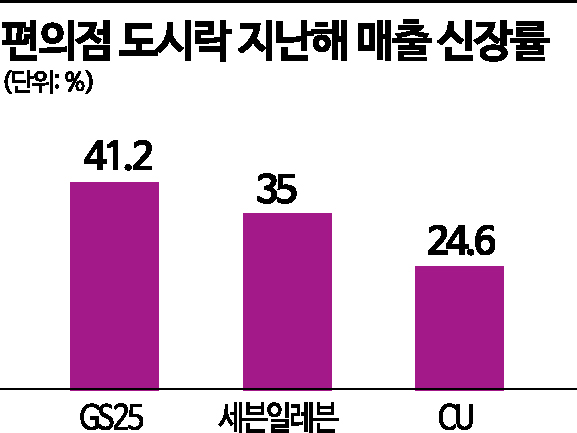
In this environment, the number of people using lunch boxes from convenience stores and supermarkets continues to grow. Especially due to the steep rise in dining-out prices, convenience store lunch boxes, easily accessible near homes, schools, and workplaces, have been reappraised. Last year, convenience store lunch box sales growth rates were high: GS25 at 41.2%, 7-Eleven at 35%, and CU at 24.6%. This year, the upward trend continues with increases of 16% to 30%.
Convenience store lunch boxes are diversifying with a focus on cost-effectiveness. From seasonal lunch boxes featuring warm soups suitable for cold winters to the revival of the "Kim Hyeja Lunch Box," which earned the nickname "generous" for its hearty portions. 7-Eleven is focusing on soup lunch boxes as more customers seek affordable and convenient soup-based meals. The sundae guk (Korean blood sausage soup) lunch box launched in December last year ranked among 7-Eleven's top 5 best-selling lunch boxes within a week, leading to the strengthening of their own soup meal lineup, including tteok-mandu guk (rice cake and dumpling soup) lunch boxes. GS25 plans to re-release the Kim Hyeja Lunch Box in mid-month. First launched in September 2010, the Kim Hyeja Lunch Box featured generous portions and was released in over 40 varieties during its 7-year sales period, accumulating approximately 1 trillion won in sales.
Industry insiders view this dual nature of meals not only as a reflection of wealth polarization but also as a complex phenomenon arising from diverse consumption patterns?people who usually save every penny but occasionally indulge in a small luxury meal. A distribution industry official said, "There is still demand from those seeking expensive meals, but there are also people who usually save money and deliberately make reservations at hotel buffets for 'small luxury.' Given the expected worsening economic downturn this year, these contrasting trends are likely to continue."
© The Asia Business Daily(www.asiae.co.kr). All rights reserved.
![Clutching a Stolen Dior Bag, Saying "I Hate Being Poor but Real"... The Grotesque Con of a "Human Knockoff" [Slate]](https://cwcontent.asiae.co.kr/asiaresize/183/2026021902243444107_1771435474.jpg)













