Group Annual Membership Additional 130,000 Won Request 'Special Clause'
Sales Guarantee Contract, Caddy Fee and Food & Beverage 'Increase'
"This is just too much."
This is the complaint of Mr. B, who joined the group annual membership at Golf Course A in Yongin, Gyeonggi Province. Mr. B expressed dissatisfaction, saying, "There are special clauses besides the green fee when joining the annual membership," and "Booking is not easy, so we have no choice but to comply with the golf course's demands." Mr. B leads a local friendship club consisting of 30 members. They hold monthly meetings at Golf Course A. Problems began to arise as the number of visitors to golf courses surged after COVID-19. Since it is near Seoul, the green fee, caddie fee, and cart usage fee add up significantly every time they play a round.
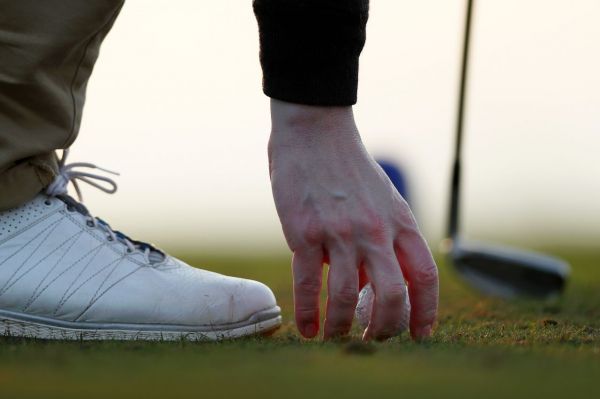 Weekend golfers are suffering from the 'gapjil' exploiting the COVID-19 boom at domestic golf courses.
"Pay More"
This is not the end. Besides the round costs, there are mandatory conditions. Mr. B agreed to a clause requiring a mandatory expenditure of 130,000 KRW per person in addition to the basic costs. This large sum can only be met by eating lunch and dinner at the golf course, using the shaded rest area, and purchasing gifts. The unreasonable demands of Golf Course A cannot be ignored. The higher the per-person spending during the annual membership re-evaluation, the higher the chance of rejoining. The golf course accepts annual membership applications in October and announces the 'successful teams' in December.
Mr. B sighed, saying, "The special clause costs have increased even more since COVID-19," and "I understand that the existing group teams pay 130,000 KRW, but newly joined clubs have to spend up to 150,000 KRW additionally." He revealed, "In provincial golf courses, such abusive practices do not exist, but most members want to play rounds in the metropolitan area," and "We have no choice but to comply with the golf course's unreasonable demands." Most metropolitan golf courses have special clauses for group teams. Golf Course B in Yongin requires an additional 100,000 KRW, and Golf Course C in Suwon requires 80,000 KRW as a 'shackle.'
Domestic golf courses significantly raised green fees during the COVID-19 boom. According to the Korea Leisure Industry Research Institute, as of November last year, the average weekday green fee at nationwide membership golf courses was 204,400 KRW, a 17% increase from 174,700 KRW in May 2020. During the same period, Saturday green fees rose 14%, from 223,500 KRW to 254,800 KRW. Public golf courses' weekday green fees increased 33.3%, from 134,200 KRW to 178,900 KRW, and Saturday green fees rose 24.5%, from 181,300 KRW to 225,700 KRW. During last year's peak season, green fees soared to 200,000?250,000 KRW on weekdays and 280,000?370,000 KRW on weekends. The operating profit margin of domestic membership and public golf courses in 2021 (excluding Jeju Island) was 31.8%.
The domestic golf population has surpassed 5 million. Booking golf courses has become a 'war,' and all costs have risen accordingly. The Ministry of Culture, Sports and Tourism restructured the golf course classification system from the previous membership and non-membership categories into a three-part system: membership, non-membership, and public types to curb green fee increases. Previously, individual consumption tax was only imposed on membership golf courses, but going forward, taxes will also be levied on non-membership golf courses charging high green fees. The total tax imposed is 21,120 KRW. Among non-membership golf courses, the usage fee cap is set at 188,000 KRW on weekdays and 247,000 KRW on weekends. Courses meeting these criteria will be designated as public golf courses eligible for tax benefits.
There are also unfair demands related to large-scale events at golf courses. Last year, a sporting goods company held a two-day event for customers at Golf Course D in Gangwon Province. The rental fee was 70 million KRW per day, totaling 140 million KRW. Previously, renting a golf course only required paying the usage fee and simple food and beverage costs. However, recently, for rental events, the daily sales amount is the starting point. For an 18-hole golf course running three sessions, the company must guarantee the sales generated to use the facility, a 'forced contract.' A representative from the sporting goods company responsible for the event said, "To use the golf course, all demands must be met," and "Compared to before, the costs seem to be about 30% higher."
"Please Respect Us"
Amateur golfers have high dissatisfaction with caddie management at golf courses. Although the number of golfers increased after COVID-19, caddie supply has not been smooth. Problems arise due to a shortage of properly trained caddies deployed on the field. The system to evaluate service satisfaction immediately after rounds was also abolished. Caddie fees soared from 120,000 KRW to 150,000 KRW before COVID-19. This is a burdensome amount for golfers. One weekend golfer pointed out, "Caddie fees have increased, but the quality of service has declined compared to before," and "Golf courses need to take more proactive measures." Cart usage fees at golf courses are also criticized. The cart fee rose from 90,000 KRW to 100,000 KRW per team.
There are also harsh criticisms that food and beverages sold at golf courses are excessively overpriced. During the COVID-19 era, external food was banned for quarantine reasons, but restaurant food prices have steadily increased. Meal costs rose from around 12,000 KRW to the 20,000 KRW range. Golf courses sell hangover soup and gukbap (rice soup) for over 20,000 KRW, Makgeolli for 12,000 KRW, and tteokbokki for 35,000 KRW. There have even been public petitions exposing the golf courses' tyranny.
Golf courses are using 'tricks' to collect more money from customers. For example, if a group of four players booked a round but one had to cancel on the day due to COVID-19 infection or testing, the golf course charges an additional 10,000 KRW green fee per remaining player. Recently, as COVID-19 has eased and golfers look overseas, provincial golf courses are struggling with bookings. After sending discount messages to customers, they charge extra if players want to play as a group of three.
Cost issues are not everything. One weekend golfer complained, "I don't mind price increases, but we should be treated fairly," and "Sometimes I feel bad after visiting a golf course." The tee-off interval at golf courses is seven minutes. If a group arrives early at the first hole, they may be sent off ahead of schedule. If the round gets delayed, marshals urge faster play. Another golfer honestly said, "Sometimes 2-3 holes get congested during play. No one apologizes," and "I suspect that other teams are inserted in the middle. I feel disrespected at the golf course."
© The Asia Business Daily(www.asiae.co.kr). All rights reserved.


















