[Asia Economy Reporter Kwon Haeyoung] Russia's fiscal deficit has surged as the one-year mark of its invasion of Ukraine approaches. This is due to a sharp decline in revenue following Western sanctions on Russian crude oil, coupled with soaring war expenses. Russia is covering its war funds by selling foreign currency and gold reserves stored in its treasury and borrowing money. As international criticism against Russia intensifies and its financial lifelines are cut off, the economic impact is becoming increasingly visible, drawing attention to the potential repercussions on the ongoing Ukraine war.
On the 6th (local time), the Russian Ministry of Finance announced that the fiscal deficit for January this year reached 1.76 trillion rubles (approximately 31.2 trillion KRW). This amount accounts for 60% of Russia's initially projected annual fiscal deficit for this year.
Oil and gas revenues fell sharply by 46% year-on-year to 426 billion rubles (about 7.5 trillion KRW). The price cap on Russian crude oil implemented by the European Union (EU) and the Group of Seven (G7) countries since early December last year, along with reduced natural gas exports, dealt a direct blow. Earlier, the International Energy Agency (IEA) estimated that following the introduction of the Western price cap on Russian crude oil, Russia's oil imports would decrease by 30% compared to a year ago, amounting to a reduction of 8 billion USD (approximately 10 trillion KRW). Revenues from other sources excluding energy also dropped by 28% during the same period, totaling 931 billion rubles (about 16.5 trillion KRW).
This data was disclosed for the first time since the West introduced the price cap on Russian crude oil, signifying confirmation of the economic effects of sanctions against Russia.
While sales of oil and gas, Russia's financial lifeline, have decreased, defense spending has surged due to the impact of the Ukraine war. Government expenditures in January alone rose by 59% year-on-year to 3.12 trillion rubles (approximately 55 trillion KRW). The Russian government plans to increase defense spending to 3.5 trillion rubles (about 62 trillion KRW) this year.
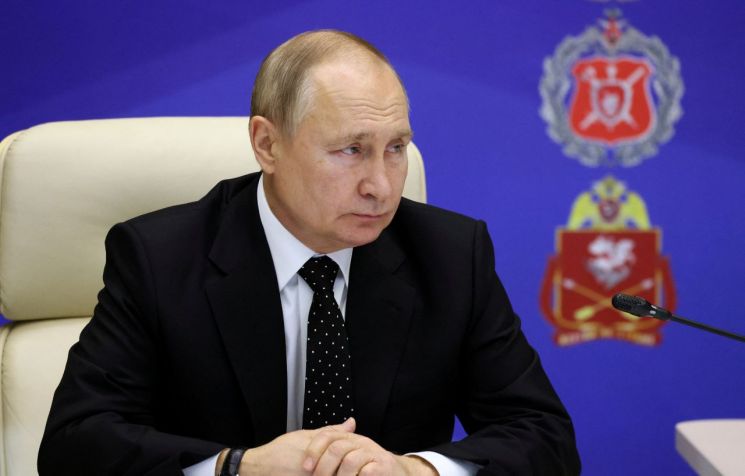
With its financial lifelines completely blocked, Russia is in a critical situation. Although it had been funding the war by selling oil and gas after the Ukraine invasion, the situation has worsened following Western sanctions. Last month, Russia withdrew and sold 385 billion rubles (about 6.8 trillion KRW) worth of yuan and gold from the National Welfare Fund, and plans to issue government bonds worth 800 billion rubles (approximately 14.2 trillion KRW) in the first quarter of this year. It is tapping into emergency reserves stored in its treasury and borrowing money to finance the war.
The future poses even greater challenges. From this month, the EU and G7 have expanded the price cap to cover all petroleum products, including Russian diesel. The core of the policy limits prices to below 100 USD per barrel (about 125,000 KRW) for high-value products like diesel, and below 45 USD per barrel (about 56,000 KRW) for low-value products such as heating oil. The EU estimates that the price cap on Russian crude oil already causes Russia to incur losses of approximately 160 million USD (about 200 billion KRW) daily.
As international sanctions against Russia expand, attention is focused on the impact Russia will face and potential changes in the war dynamics. Some speculate that with sharply rising war costs, Russia and Ukraine may enter ceasefire negotiations in the second half of the year. Byron Wien, vice chairman of Blackstone and known as a "Wall Street oracle," predicted, "In the first half of the year, bombing, destruction, and casualties will continue due to the war," adding, "In the second half, both sides, burdened by pain and costs, will increasingly feel the need for a ceasefire and begin negotiations on territorial division."
© The Asia Business Daily(www.asiae.co.kr). All rights reserved.
![Clutching a Stolen Dior Bag, Saying "I Hate Being Poor but Real"... The Grotesque Con of a "Human Knockoff" [Slate]](https://cwcontent.asiae.co.kr/asiaresize/183/2026021902243444107_1771435474.jpg)
















