Samsung Seoul Hospital, KAIST, and Pentamedix Joint Research
Improves Accuracy of T Cell-Induced Neoantigen Prediction
"Foundational Technology Leading to Personalized Cancer Immunotherapy"
[Asia Economy Reporter Lee Gwanju] Domestic researchers have succeeded in developing a core technology for selecting targets in anticancer vaccine development. This is the result of building a deep learning model that predicts neoantigens with immune responsiveness, which has been considered a major challenge in anticancer vaccine development.
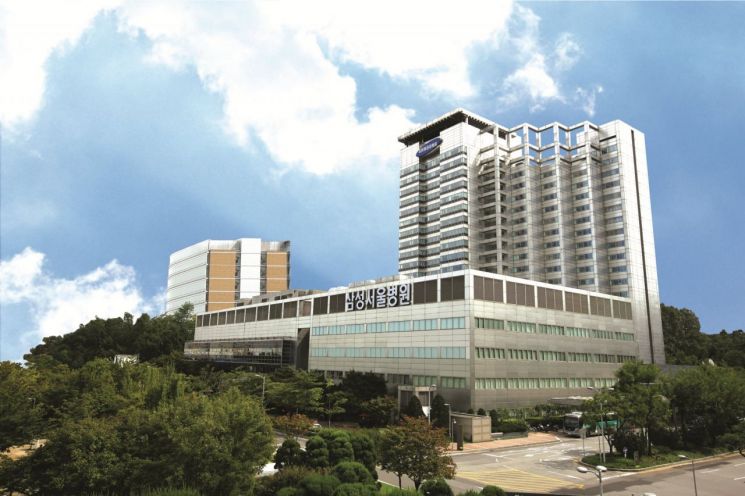
Samsung Seoul Hospital announced on the 7th that Professor Lee Sehoon of the Department of Hematology and Oncology, in collaboration with Professor Choi Junggyun of the Department of Bio and Brain Engineering at KAIST and Pentamedix Co., Ltd., has built a deep learning model that predicts effective neoantigens for personalized anticancer vaccines and elucidated anticancer responsiveness. The research paper was published in the recent issue of the international journal Nature Genetics.
The research team explained that they developed a method to discover vaccine targets that can induce T-cell immune responses using deep learning, and validated its effectiveness through large-scale cancer genome data, immunotherapy patient data, and animal experiments. This method is not only the first technology capable of predicting T-cell reactivity but also significantly improved the prediction accuracy for major histocompatibility complex class II (MHC class II), which has faced technical limitations until now.
MHC binds to protein fragments derived from mutations in cancer cells, creating antigens different from those of normal cells. Theoretically, hundreds of types of neoantigens are known to be produced this way. However, only a subset of these can properly function as antigens that enable immune cells, such as T cells, to recognize and attack cancer cells, making it crucial to accurately identify neoantigens that induce cancer attacks.
The research team solved this problem using a deep learning approach. They developed a deep learning model that learns the structural binding characteristics between mutated proteins and MHC protein amino acids to predict T-cell reactivity and confirmed its effectiveness. The focus on the reactivity of MHC class II has attracted significant attention. MHC is divided into class I, which is present in most cells, and class II, which is found in antigen-presenting cells such as B cells and macrophages. Until now, neoantigen discovery methods have mainly been based on class I. Due to technical limitations, it was not possible to accurately determine whether class II could bind to T-cell receptors and stimulate immune responses.
Professor Lee said, "Although the importance of MHC class II has recently been highlighted, it had not been utilized in treatment due to prediction difficulties. Our results demonstrate that the CD4 T-cell immune system via MHC class II can be applied to anticancer therapy." He added, "Since the mRNA vaccine platform was validated in COVID-19 vaccines, we hope this will also contribute to the 'commercialization of cancer vaccines'." Jo Daeyeon, CEO of Pentamedix, stated, "We will strive to apply the newly developed platform to anticancer vaccine development to derive efficient 'personalized anticancer treatment targets'."
© The Asia Business Daily(www.asiae.co.kr). All rights reserved.
![Clutching a Stolen Dior Bag, Saying "I Hate Being Poor but Real"... The Grotesque Con of a "Human Knockoff" [Slate]](https://cwcontent.asiae.co.kr/asiaresize/183/2026021902243444107_1771435474.jpg)
















