Yangcheon-gu provides an annual support of 200,000 KRW per household supporting parents aged 100 or older who are registered residents and actually living in the district.
The related ordinance was first enacted in 2011, and since 2012, over 40 million KRW has been paid to 202 recipients.
Applications are accepted at the community center in the month of the birthday in the first year the parent turns 100, followed by verification through the computer network and on-site investigation before payment.
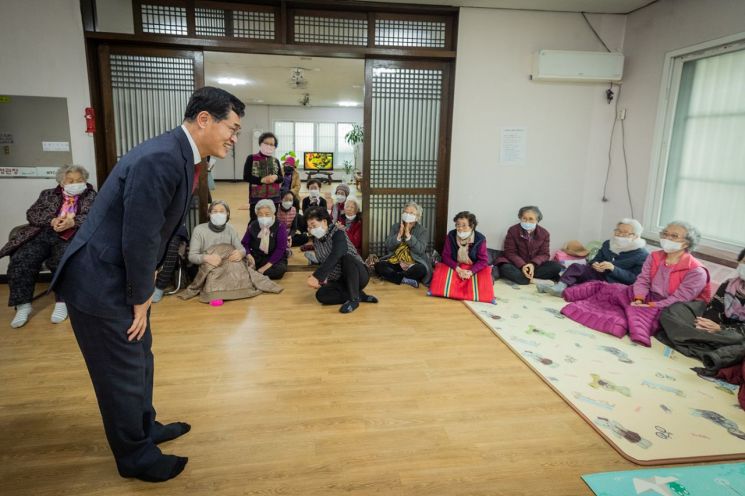
[Asia Economy Reporter Park Jong-il] Yangcheon-gu (Mayor Lee Gi-jae) is providing a filial piety allowance of 200,000 KRW to households supporting parents aged 100 or older, aiming to promote the beautiful culture of respect for the elderly and improve the quality of life for seniors in the aging era.
Since the enactment of the “Ordinance on Encouragement and Support of Filial Piety in Yangcheon-gu, Seoul” in May 2011, the district has paid a total of over 40 million KRW in filial piety allowances to 202 people from 2012 to the present.
The amount of the Yangcheon-gu filial piety allowance is 200,000 KRW per household, paid once a year (early February). Eligible recipients are household heads or family representatives who actually reside in Yangcheon-gu and have parents aged 100 or older (born on or before January 31, 1923) registered as residents and are supporting them. Those who live separately due to facility admission or are not registered at the same address are excluded.
Applications should be made in the first year the parent turns 100. New applicants must apply at the local community center by the 20th of the month of the birthday registered in the resident registration. After administrative computer network processing and on-site verification, the allowance is paid the following month. Existing recipients received the allowance on February 3 after an on-site verification conducted in January without a separate application process. There are about 80 seniors aged 100 or older in Yangcheon-gu.
Lee Gi-jae, Mayor of Yangcheon-gu, said, “As we have entered a super-aged society beyond aging, it is time to prepare a well-structured support system for the happy lives of seniors.” He added, “We will continue to develop various senior support projects that residents can feel in their daily lives to create a city where seniors are happy.”
Geumcheon-gu Pilot Operation of AI Speaker Project to Prevent Solitary Deaths and Establish 24-Hour Care System
Pilot operation targeting 100 high-risk single-person households for solitary death
24-hour emergency SOS service using AI speaker ‘NUGU’
Enhanced continuous care functions through emotional conversations, music playback, and psychological counseling
Geumcheon-gu (Mayor Yoo Seong-hoon) will pilot an AI speaker project from February targeting 100 high-risk single-person households to prevent solitary deaths and establish a 24-hour care system.
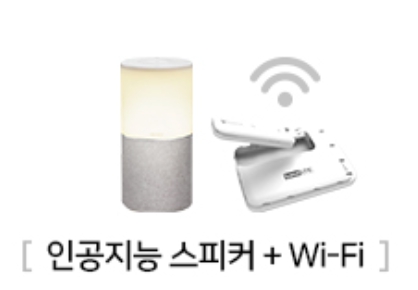
The AI speaker project distributes AI speakers called NUGU to single-person households in welfare blind spots, providing 24-hour emergency SOS service, emotional conversations (companionship), music playback, and other care services.
Following a survey, Geumcheon-gu signed a business agreement with the Happiness Connect Foundation in January to distribute AI speakers to 100 socially isolated single-person households identified as high-risk for solitary death.
If the user sends danger signals such as “Help me” or “Save me,” the 24-hour control center immediately connects to 119 for rescue.
In addition to the 24-hour emergency SOS service, the AI speaker offers emotional conversations, music playback, and psychological counseling when negative words are used. If the device is unused for more than 48 hours, the local community center can directly check on the user, strengthening continuous care functions.
Geumcheon-gu has also operated Hello Safety Mobile and AI phone check-in services, and since November last year, started smart plug monitoring for night and holiday emergencies.
With the addition of this AI speaker project, the district plans to build an even more robust safety net for single-person households.
Mayor Yoo Seong-hoon said, “Through the AI speaker project, we will establish a 24-hour emergency response system,” adding, “By discovering welfare blind spots, we want residents to feel that Geumcheon is a warm community where neighbors live together, not alone.”
Gangseo-gu Welfare Centers (10 locations) Open on Saturdays... Mayor Kim Tae-woo Fulfills Campaign Promise
All 10 centers (Deungchon 1, 4, 7, 9; Gayang 4, 5, 7; Banghwa 2, 6, 11) available on Saturdays and public holidays
Weekend spaces for residents’ communication and warm resting places for seniors
Seoul’s Gangseo-gu (Mayor Kim Tae-woo) is strengthening community welfare by expanding the opening of comprehensive social welfare centers.
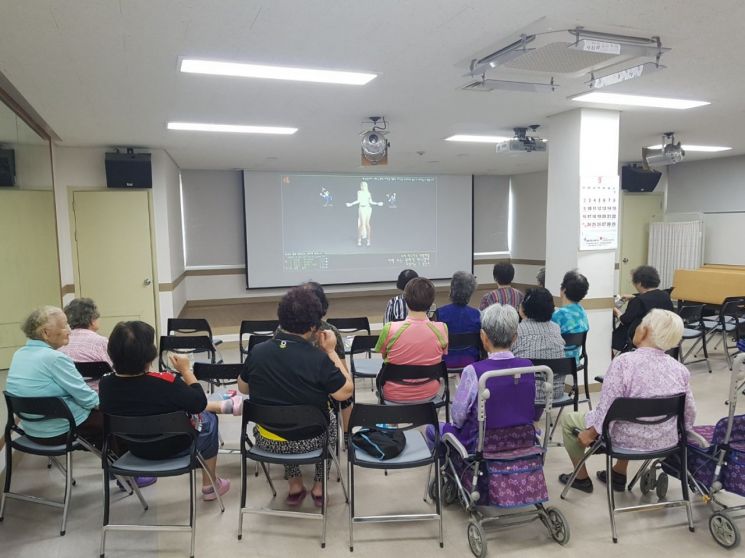
The district announced that all 10 comprehensive social welfare centers in the area will be fully open and operated on Saturdays and public holidays.
Currently, Gangseo-gu operates 10 centers located in Deungchon 1, 4, 7, 9; Gayang 4, 5, 7; and Banghwa 2, 6, 11.
All centers are located within rental apartment complexes where many seniors and low-income residents live, and many residents wished to enjoy hobbies or leisure activities at the centers on weekends without cost.
Mayor Kim Tae-woo, who took office last year, listened to these inconveniences and made expanding welfare center holiday openings a campaign pledge.
To support residents’ weekend leisure and hobbies and provide warm resting places for seniors, the district promptly expanded opening hours.
Opening hours are from 9 a.m. to 6 p.m., same as weekdays. Each center operates convenience facilities such as small libraries and fitness rooms, and rents spaces for self-help groups or organizations.
More detailed information on usage can be found on the Gangseo-gu website under ‘Notices/News’.
The district explained that through expanded operations, residents will be able to enjoy hobbies and leisure without burden on weekends and receive various welfare services.
Mayor Kim Tae-woo said, “Due to COVID-19 and cold waves, outdoor activities have been difficult for seniors and residents, so we decided to fully open on Saturdays to enable more activities at welfare centers.” He added, “We will continue to carefully address and improve residents’ daily inconveniences to make Gangseo-gu the best place to live.”
Gangdong-gu Attracts Attention as Seoul’s No. 1 District in Birth Rate
How did Gangdong-gu, ranked low five years ago, become Seoul’s top district in total fertility rate?
Differentiated support policies including special childbirth incentives, school enrollment congratulatory money, and multi-child WIN-WIN projects
Gangdong-gu (Mayor Lee Soo-hee), which ranked 14th among Seoul districts five years ago, attracted great attention last year by ranking first in the city’s total fertility rate.
The rise from 14th place in 2016 to first place in just five years is attributed not only to significantly improved residential conditions attracting many young people but also to the district’s multifaceted differentiated childbirth and child-rearing support policies.
Especially amid worsening low birth rates, the ‘special childbirth incentive’ and ‘school enrollment congratulatory money’ programs targeting families raising multiple children have helped reduce economic burdens and strengthen social responsibility for child-rearing.
The ‘special childbirth incentive’ provides 100,000 KRW monthly to families with three children and 200,000 KRW monthly to families with four or more children. The ‘school enrollment congratulatory money’ grants 500,000 KRW per child for the fourth and subsequent children upon entering elementary, middle, or high school.
For the ‘special childbirth incentive,’ families can receive support for up to six years per household, from the month following the application until the month before the youngest child turns six. Families raising a fourth child in Gangdong-gu can receive up to 14.3 million KRW. Applications require visiting the local community center with an ID and bankbook copy; newly moved-in households can apply immediately upon moving in.
For the ‘school enrollment congratulatory money,’ the fourth or later child must be enrolled in school and reside with the parent or guardian in the same household registered in Gangdong-gu. Applications must be submitted within one year of the enrollment date with an ID and enrollment notice at the community center.
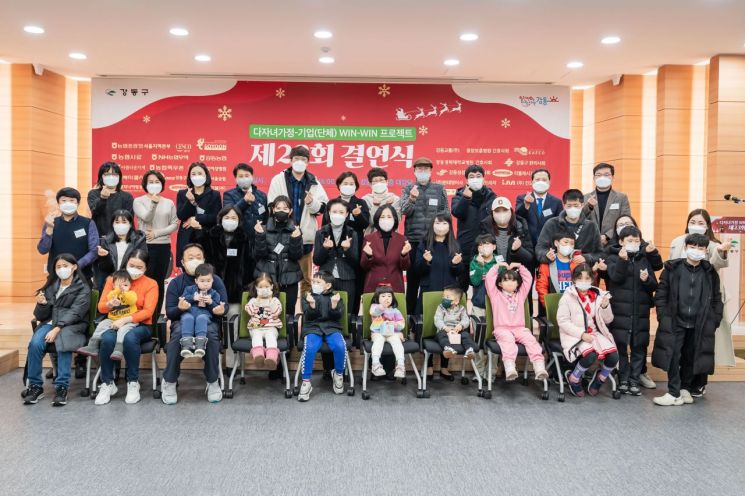
Additionally, the district has been running the ‘Multi-child Family-Enterprise (Organization) WIN-WIN Project’ for 13 years, where local companies and organizations regularly sponsor child-rearing expenses for partnered multi-child families. So far, 83 companies (organizations) have participated, supporting 251 families with 870 million KRW. The district also offers various support programs tailored to pregnancy and childbirth, such as first meeting vouchers, parental allowances, child allowances, and Seoul city transportation support for pregnant women, aiming to sustain the birth rate increase.
Mayor Lee Soo-hee said, “We will develop customized policies to reduce child-rearing burdens and foster a community mindset that supports having and raising children together,” adding, “Gangdong-gu will actively work to solve the low birth rate problem.”
© The Asia Business Daily(www.asiae.co.kr). All rights reserved.



















