Gas Stove Safety Controversy... Political Sphere Also Divided by Ideology
WSJ "Manufacturers and Consumers Should Decide... No Coercion Allowed"
[Asia Economy Reporter Kwon Haeyoung] Controversy over the harmfulness of gas ranges is spreading in the United States. Concerns have arisen that gas ranges cause asthma and lung cancer, leading to divided opinions on whether to phase them out. This issue has sparked controversy multiple times in South Korea as well. As the political sphere joins in and ideological conflicts escalate, the debate over the harmfulness of gas ranges is turning into a battle over the truth.
According to major U.S. foreign media on the 7th, American home appliance companies such as General Electric (GE) Appliances and Viking are recently focusing on product development to expand their induction model lineups. GE Appliances, owned by China's Haier, plans to equip induction technology in half of the 28 cooktop models scheduled for release this year. Viking has also been increasing related investments, acquiring three specialized induction companies since 2009.
As controversy over banning gas range sales intensifies, U.S. electronics companies are rushing to develop induction models. The controversy began when a recent study published in the academic journal "International Journal of Environmental Research and Public Health" reported that 13% of childhood asthma cases are caused by gas range use. The U.S. Consumer Product Safety Commission (CPSC) announced early this year that it was considering a complete ban on gas range sales, but after a strong backlash, the plan was completely scrapped. Currently, gas ranges account for 40% of the U.S. market, while electric ranges make up 60%. Although the induction market is growing, it only accounts for 2.7% of the electric range market.
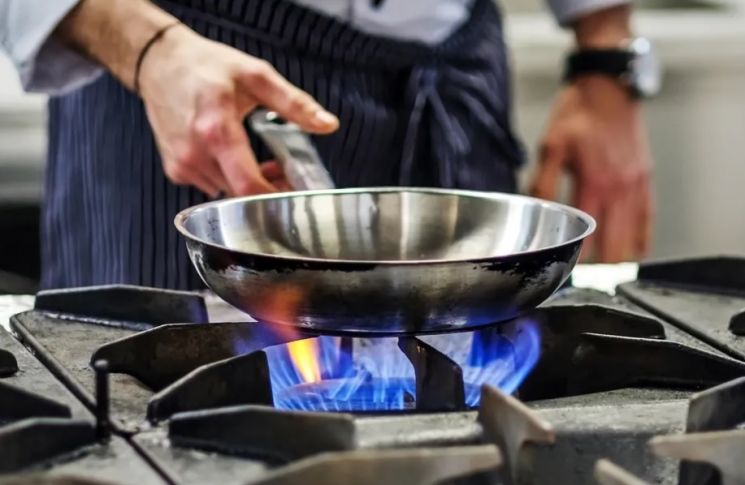
Those advocating for the phase-out of gas ranges argue that harmful substances such as carbon monoxide, nitrogen dioxide, and fine dust are generated, posing health risks. On the other hand, opponents claim that harmful substances are produced during the cooking process, not from gas range use itself, and that using induction cooktops diminishes the flavor of food because it cannot produce the 'fire taste.'
In fact, this controversy is not new. In the early 1980s, the harmfulness of gas ranges was also debated in the U.S. At that time, both the U.S. CPSC and the Environmental Protection Agency (EPA) investigated the effects of gas ranges, but regulations were not implemented due to opposition from companies. Similar controversies have occurred multiple times in South Korea. In 2016, the Korea Fair Trade Commission demanded corrective measures against electric range sellers who advertised gas ranges as causing lung cancer and dementia and being harmful to the human body, citing violations of false and exaggerated advertising laws due to lack of objective evidence.
The U.S. political arena is also divided. The Republican Party and conservative groups strongly oppose environmentalists, accusing them of exaggerating the harmfulness of gas ranges to promote energy transition. Numerous related bills are being introduced. In Washington D.C., a bill was proposed to support low-income households in replacing existing gas ranges with induction cooktops, and in Virginia, a bill was introduced to completely block restrictions on natural gas use. Specifically, the bill includes provisions that prohibit the creation of regulations limiting or banning natural gas use or disallowing construction related to it. As the controversy over the harmfulness of gas ranges expands beyond science into an ideological war, consumer confusion is also increasing.
Some voices criticize the Biden administration, claiming that the harmfulness controversy over gas ranges is being used as a card to accelerate energy transition.
The Wall Street Journal recently editorialized, "Manufacturers will have to spend hundreds of millions of dollars due to government harassment," pointing out that "this will increase product costs and reduce performance, directly harming consumers." It emphasized that "this is a matter for consumers and manufacturers to decide, not something to be forced upon them."
© The Asia Business Daily(www.asiae.co.kr). All rights reserved.

















