[Asia Economy Reporter Park Hyesook] Incheon City announced on the 6th that it will focus on creating lifestyle-oriented urban forests so that citizens can experience gardens in their daily lives.
This year, the city plans to create school forests with tree planting, wild gardens, and natural learning spaces at seven elementary, middle, and high schools in the region, and install small-scale indoor green spaces (Smart Gardens) at 32 industrial complexes where there are no suitable outdoor locations.
At the city hall main building, lifestyle-oriented forests will be created using walls and flower beds, and the Ae(ttul) Plaza will be designed to bloom flowers all year round, making it a popular place for citizens to visit.
Efforts will also be made to create premium tree-lined streets that suit the characteristics of the region. By managing distinctive tree shapes, the streetscape will be designed to become a tourism resource.
The five-year urban forest creation plan of Incheon City, which began in earnest in 2019, will bear fruit this year.
Once the ongoing creation of three urban wind path forests, the Dorongnyong Urban Ecological Park, the Second Gyeongin Expressway green space, and four other forests including Cheongna buffer green space and scenic green space are completed by this year, a total of 25 urban forests covering 42.05 hectares and 13 urban wind path forests covering 17.68 hectares will be completed.
The Child Safety Green Forest creation project, which started in 2021, will also be completed this year by adding four more school routes at Jung-gu Jungsan Elementary, Haneul Elementary, Seo-gu Gawon Elementary, and Gongchon Elementary, bringing the total to 10 locations covering 0.92 hectares.
An official from Incheon City stated, "We will continue to promote the expansion of urban forests in residential areas so that more citizens can frequently find comfort and rest in nearby large and small forests."
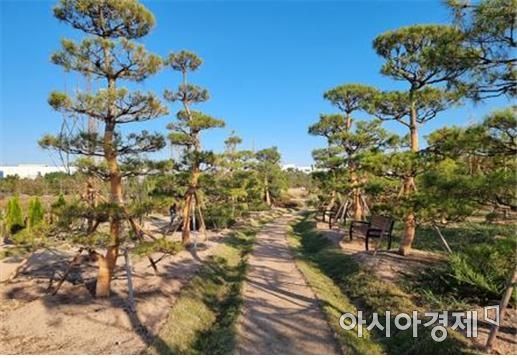
Meanwhile, urban forests created throughout Incheon have been found to have a positive impact on improving the urban environment.
According to a survey conducted by the Incheon City Health and Environment Research Institute from May to October last year at eight urban forests including Jayu Park, Subong Neighborhood Park, and Cheongnyangsan Forest Recreation Park, the average phytoncide concentration was 259 pptv, which is 3.1 times higher than the 84 pptv measured in urban control areas.
Phytoncides produced by plants are compounds with sterilizing effects that are absorbed into the human body through the respiratory system or skin, providing health benefits such as anti-inflammatory effects and immune enhancement.
The average temperature of these urban forests was 2.9 degrees Celsius lower than that of the urban control areas, indicating an improvement in the "heat island effect," where temperatures in city centers are higher than in the outskirts. Environmental noise levels in the urban forests were 8.5 dB lower than in the city, and the average humidity was 12.3% higher compared to urban areas.
© The Asia Business Daily(www.asiae.co.kr). All rights reserved.

















