[Asia Economy Reporter Yoo Byung-don] The government has unveiled a blueprint for the implementation plans of this year’s key social policies, including the integration of early childhood education and care systems and the operation of Neulbom Schools.
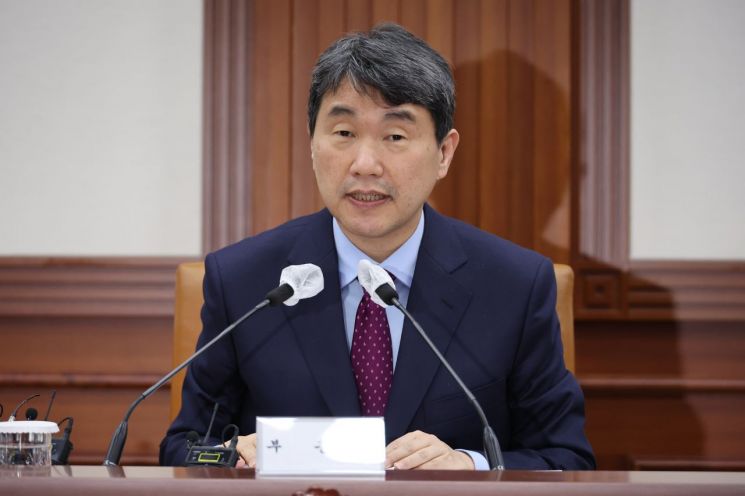
On the 6th, the Ministry of Education held the 1st Social Relations Ministers’ Meeting at the Government Seoul Office, chaired by Deputy Prime Minister for Social Affairs and Minister of Education Lee Ju-ho, to review the '2023 Key Social Policy Implementation Plan.'
First, to respond to demographic changes, the government will gradually promote the integration of early childhood education and care management systems (currently divided between the Ministry of Education and the Ministry of Health and Welfare) starting this year, and expand 540 public daycare centers.
By introducing parental allowances, parents of children aged 0 will receive 700,000 KRW per month, and parents of 1-year-old children will receive 350,000 KRW per month. The Neulbom Schools, which extend elementary after-school care classrooms until 8 p.m., will be piloted in 200 schools across five cities and provinces: Incheon, Daejeon, Gyeonggi, Jeonnam, and Gyeongbuk.
To reduce disparities in educational benefits, four new online high schools will be established to provide subjects that are difficult to offer at individual schools through online classes.
In the youth sector, a Youth Leap Account will be newly created to help young people accumulate lump sums, and 340,000 public housing units will be supplied to support their foundation for independence.
To strengthen support for socially vulnerable groups, an inter-ministerial task force (TF) for social crisis response, led by the Deputy Minister of Education, will be formed and operated.
The inter-ministerial TF will accurately identify crisis households and actively respond to new types of blind spots by preparing and announcing a comprehensive support plan for socially vulnerable groups by June.
Additionally, to prevent various disasters and minimize damage, an on-site crowd management system will be established in densely populated areas. By collecting data from base stations and public transportation, the system will monitor crowding risk levels in advance and issue disaster alert messages. Real-time monitoring of vulnerable roads prone to flooding will be strengthened to automatically block these areas in preparation for heavy rain and floods.
To enhance essential medical services such as severe emergency care, childbirth, and pediatric treatment, new construction and expansion of local medical centers will be undertaken. Support for wages of dispatched medical personnel and public health scholarship programs will also be promoted to improve regional public medical infrastructure.
Plans will be pursued to expand emergency medical centers and institutionalize telemedicine.
To strengthen protection for crime victims, two 'Integrated Solution Support Centers' will be established and piloted to provide integrated support for victims suffering from two or more of the five major types of violence.
The Stalking Punishment Act will be amended to abolish the crime of non-prosecution by victim’s consent, and approximately 60 emergency temporary shelters and 20 rental housing units will be secured for stalking victims.
Dedicated prosecutors for digital sex crimes will be appointed, real-time counseling for child and adolescent online sexual exploitation will be strengthened, and responses such as deletion of digital sex crime victim footage and blocking distribution of such videos will be enhanced.
In response to the increasingly serious drug problem, education on prevention of misuse will be intensified, and a 'one-stop' support system covering correction, treatment, and social rehabilitation will be established.
Furthermore, from the perspective of strengthening global national competitiveness, the government will operate a talent development strategy meeting chaired by the President to prepare policies for nurturing specialized talents in various fields.
To foster the K-content industry, plans include training 2,000 film and webtoon talents annually and 1,700 content production and field experts each year.
The regional innovation-centered university support system (RISE), which transfers university budget execution authority from the central government to local governments, will be piloted this year. A regional innovation mega project pilot, considering regional characteristics, research capabilities, and technology demand, will also be promoted to create an ecosystem for regional development.
Unused spaces within railway stations will be utilized to create daycare centers, and cultural, sports, and welfare facilities open to residents will be installed within schools.
Moreover, social insurance support will be expanded to low-income workers in small businesses and artists, and employment support subsidies for the elderly will increase the target from 6,000 people last year to 53,000 this year.
© The Asia Business Daily(www.asiae.co.kr). All rights reserved.
![Clutching a Stolen Dior Bag, Saying "I Hate Being Poor but Real"... The Grotesque Con of a "Human Knockoff" [Slate]](https://cwcontent.asiae.co.kr/asiaresize/183/2026021902243444107_1771435474.jpg)
















