Prosecutors: "Severe Punishment for Anyone Near Voice Phishing Crimes"
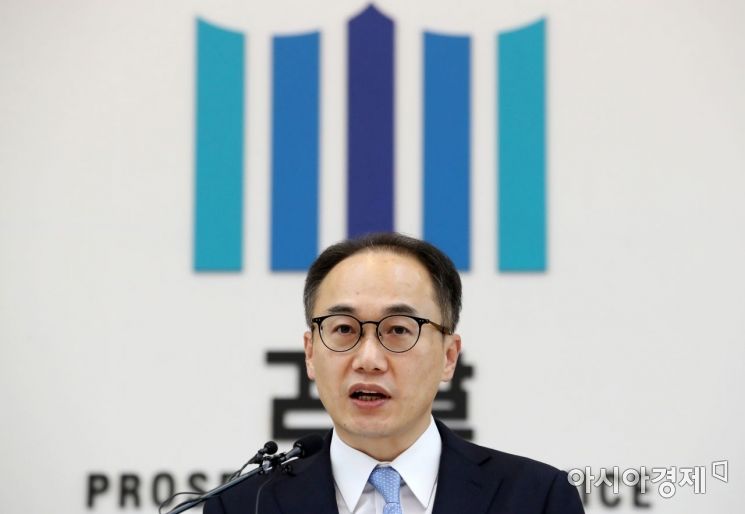
[Asia Economy Reporter Choi Seok-jin, Legal Affairs Specialist] As the prosecution strengthens its case handling standards for voice phishing offenders, the courts have increasingly handed down heavy sentences. In particular, there has been a rise in cases where not only the masterminds and middle managers but also simple participants receive heavy sentences.
According to the legal community on the 6th, recently, courts have been sentencing masterminds who run the organization to imprisonment of 10 years or more, and middle managers who manage and supervise members to heavy sentences of 5 to 8 years, depending on the degree of involvement in voice phishing.
Additionally, there has been an increase in cases where simple participants such as cash collectors receive heavy sentences of 3 years or more. Furthermore, even those who did not directly participate in voice phishing, such as distributors of burner phones and burner bank accounts or money exchangers involved in the overseas transfer of criminal proceeds, are increasingly being sentenced to actual imprisonment rather than suspended sentences.
In July last year, the Supreme Prosecutors' Office established the "Voice Phishing Crime Government Joint Investigation Team" at the Seoul Eastern District Prosecutors' Office, composed of 55 specialized personnel from the prosecution, police, National Tax Service, Customs Service, Financial Supervisory Service, and Korea Communications Commission. Also, from August 19 of the same year, the strengthened "Voice Phishing Case Handling Standards" have been implemented.
Accordingly, the prosecution applies the following standards to investigate and maintain prosecutions for voice phishing crimes: ▲for masterminds such as voice phishing ringleaders, applying fraud charges under the Act on the Aggravated Punishment of Specific Economic Crimes and seeking the maximum sentence of life imprisonment ▲actively applying charges of organizing, joining, and participating in criminal organizations against voice phishing groups ▲principally detaining even simple participants such as cash collectors ▲seeking imprisonment for distributors of burner phones and burner bank accounts and money exchangers who did not directly participate in voice phishing ▲actively submitting sentencing materials during trials and maintaining diligent prosecution.
Based on this strict handling by the prosecution, courts have also increasingly handed down heavy sentences to voice phishing offenders.
First, masterminds who operate voice phishing organizations and play a central role in executing crimes are being sentenced to heavy imprisonment of 10 years or more.
In February last year, the Jeonju District Court sentenced a mastermind of a voice phishing organization who set up an office and lodging in Manila, Philippines, from June 2015 to July 2016, and defrauded about 5.8 billion KRW in 526 instances, to 15 years in prison, a sentence that was finalized.
Also, in December last year, the Suwon District Court sentenced a mastermind who formed a voice phishing organization in Manila from August 2017 to October 2021 and defrauded about 2.3 billion KRW to 12 years in prison.
Both were charged with criminal organization offenses.
Middle managers who act as intermediaries between masterminds and low-level executors, such as call center employees who directly deceive victims and those who recruit and manage cash withdrawal agents and cash collectors, have also been sentenced to heavy imprisonment of 5 years or more.
In August last year, the Suwon District Court sentenced a middle manager who worked as a call center counselor in the Philippines from December 2018 to March 2020 and defrauded about 4.6 billion KRW from 229 victims to 8 years in prison.
In May last year, the Busan District Court sentenced a middle manager who acted as a team leader managing voice phishing members in Guangdong Province, China, from January 2015 to January 2019 and defrauded about 1.6 billion KRW from 214 victims to 7 years in prison, a sentence that was finalized.
Also, last month, the Suwon District Court sentenced a middle manager who managed voice phishing members in Manila from August 2014 to June 2016 and defrauded about 1.3 billion KRW from 267 victims to 6 years in prison.
They were also charged with criminal organization offenses.
Meanwhile, actual imprisonment sentences for simple participants and accomplices are also increasing.
In December last year, the Seoul Eastern District Court sentenced a Thai national who managed a relay device that altered overseas numbers sent by a voice phishing organization to domestic mobile phone numbers from June to September 2021 to 4 years in prison.
Also, in December last year, the Busan District Court Eastern Branch sentenced a cash collector who impersonated a financial institution employee and collected about 400 million KRW in voice phishing proceeds from 8 victims in September of the same year to 4 years in prison.
In 2020, the Cheongju District Court sentenced a burner bank account distributor who established ghost companies through acquaintances, acquired and lent 16 burner bank accounts, and sold them to voice phishing criminal organizations from November 2019 to December 2020 to 2 years in prison, a sentence that was finalized.
Also, in December 2021, the Suwon District Court sentenced a burner phone distributor who sold 3 USIM cards opened under others' names to voice phishing organizations in 2019 to 1 year in prison, a sentence that was finalized.
In January this year, the Seoul Eastern District Court sentenced a money exchanger who converted about 200 million KRW of voice phishing proceeds into Chinese yuan and remitted it to a Chinese account designated by the voice phishing organization from November to December 2020 to 4 years in prison.
Although voice phishing damage is gradually decreasing due to the strong response from the prosecution and courts, it remains a serious issue.
The Supreme Prosecutors' Office reported that voice phishing crime damages decreased by about 30% from 774.4 billion KRW in 2021 to 543.8 billion KRW last year, but the methods have become more sophisticated, still seriously threatening the daily lives of citizens.
In July last year, there was even a case where a doctor was defrauded of 4 billion KRW by a voice phishing organization using malicious apps.
Voice phishing is regarded as a vicious and antisocial crime to the extent that it is called a "crime that destroys the soul." In some cases, it drives victims to extreme choices, completely taking away their lives.
In fact, in April 2021, a 20-year-old aspiring actor who lost about 2 million KRW to voice phishing, in November of the same year, a 50-year-old self-employed person who lost 9 million KRW of their entire assets, and in February last year, a 40-year-old businessman who lost 160 million KRW to voice phishing each made extreme choices.
The prosecution plans to request the Supreme Court Sentencing Commission to raise sentencing guidelines for voice phishing offenders.
A prosecution official said, "From the perspective of victims whose lives were completely taken away by voice phishing and the general public, the sentences handed down by the courts are perceived as not commensurate with the crimes," adding, "The prosecution plans to request the Supreme Court Sentencing Commission to strengthen sentencing guidelines for voice phishing offenders."
He continued, "Through strict punishment of voice phishing, the prosecution will do its best to suppress and prevent voice phishing crimes by spreading a strong message and awareness that 'voice phishing crimes lead to heavy sentences even if you just get close,' so that citizens can be safe from voice phishing."
© The Asia Business Daily(www.asiae.co.kr). All rights reserved.












