[Asia Economy Reporter Choi Dae-yeol] The Ministry of Agriculture, Food and Rural Affairs announced on the 2nd that atypical bovine spongiform encephalopathy (BSE, mad cow disease) was confirmed at a dairy farm in the province of Zuid-Holland in the southwest of the Netherlands.
In accordance with related regulations, import quarantine of Dutch beef has been suspended from this day. Unlike classical BSE, which is transmitted through contaminated feed, atypical BSE occurs rarely and spontaneously mainly in cattle aged 8 years or older. It is not transmitted to other animals.
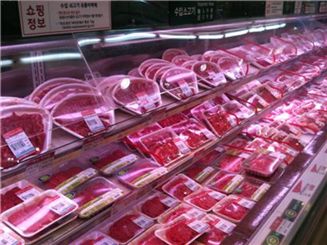 Imported beef section at a large supermarket in downtown Seoul. This is not related to the article.
Earlier, the Dutch Ministry of Agriculture revealed that a laboratory test conducted the previous day confirmed one aged dairy cow was infected with atypical BSE. The infected cow was disposed of and was not supplied to food companies. The Ministry of Agriculture, Food and Rural Affairs has requested epidemiological information from the Dutch government along with the suspension of quarantine. The decision on whether to resume quarantine will be made based on information received from the Netherlands in the future.
The Netherlands obtained the status of a negligible BSE risk country from the World Organisation for Animal Health in May 2013. The Ministry of Agriculture, Food and Rural Affairs reported that the amount of beef imported from the Netherlands last year was 79 tons, accounting for about 0.02% of South Korea’s total imports. No imports have been made this year. The World Organisation for Animal Health recommends that atypical BSE should not affect trade.
© The Asia Business Daily(www.asiae.co.kr). All rights reserved.
![Clutching a Stolen Dior Bag, Saying "I Hate Being Poor but Real"... The Grotesque Con of a "Human Knockoff" [Slate]](https://cwcontent.asiae.co.kr/asiaresize/183/2026021902243444107_1771435474.jpg)










