"Intentional Performance Degradation" Consumer Class Action Loss
"Apple Compensated Consumers in the US and Chile"
"Provided Grounds for Continued Unfair Trade Practices"
Apple faced allegations of deliberately degrading the performance of older iPhones, leading domestic consumers to file a class-action lawsuit, but they lost in the first trial. Consumer groups are strongly protesting, saying, "Domestic consumers are being discriminated against compared to overseas."
The Consumer Sovereignty Citizens' Meeting (Citizens' Meeting) issued a press release on the 2nd stating, "Apple has already been fined and penalized in countries such as Italy, France, the United States, and Chile, which use the same models, the same programs, and the same batteries as South Korea," adding, "Apple even posted an acknowledgment of their wrongdoing on their official websites in those countries."
They continued, "(The domestic) loss in court clearly shows that Korean consumers are not being protected," and pointed out, "The most concerning issue is that this sets a precedent where companies can avoid responsibility by simply apologizing and providing software upgrades when problems arise due to not clearly disclosing the performance of their products."
They further stated, "This provides a pretext for unfair trade practices where consumers are not protected even if there are functional issues after purchasing products," and emphasized, "As seen in the cases of the United States and Chile, Apple should now proceed with mediation to compensate domestic consumers."
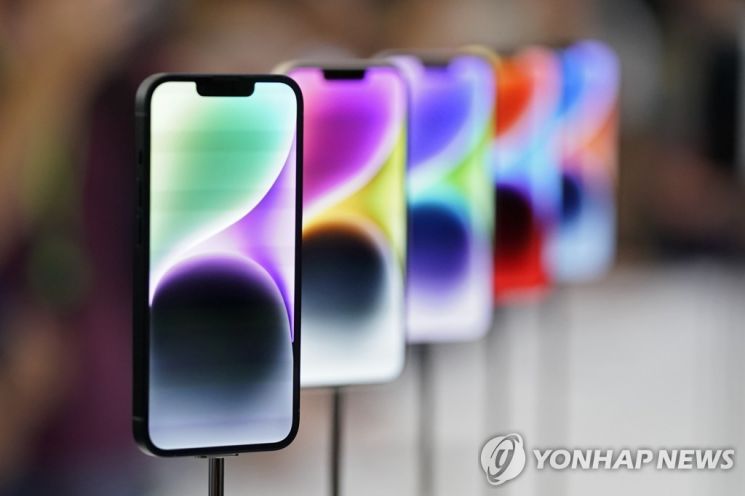
On the same day, the Seoul Central District Court Civil Division 31 (Presiding Judge Kim Ji-sook) ruled against approximately 9,800 consumers who filed a damages claim lawsuit against Apple Korea and others. All litigation costs were ordered to be borne by the consumers.
The court did not disclose specific reasons for the ruling in the courtroom that day.
Earlier, domestic consumers filed a lawsuit in March 2018, claiming that "the performance of iPhones deteriorated after installing an update."
At that time, the consumers argued that Apple, despite knowing that the iPhone's performance would degrade due to the iOS update in the second half of 2017, concealed the battery defect to prevent customer churn and promote sales of subsequent models, distributing the software update without informing customers. This is known as the so-called "Battery Gate."
As suspicions around Battery Gate grew, Apple explained that "when battery performance declines, smartphones may suddenly shut down, so they reduced power demand by slowing down the device," effectively admitting to the performance degradation. However, they denied that the update was intended as a measure to encourage new product purchases.
Meanwhile, class-action lawsuits against Apple related to Battery Gate are also ongoing overseas. Some lawsuits have been settled with Apple agreeing to pay compensation to consumers. In the United States, a class-action lawsuit was tentatively settled in March 2020, with Apple agreeing to pay $25 (about 30,000 KRW) per user, up to a maximum of $500 million (610 billion KRW). In the 2021 Chile class-action lawsuit, Apple also agreed to pay a total of 2.5 billion pesos (about 4 billion KRW).
© The Asia Business Daily(www.asiae.co.kr). All rights reserved.
![Clutching a Stolen Dior Bag, Saying "I Hate Being Poor but Real"... The Grotesque Con of a "Human Knockoff" [Slate]](https://cwcontent.asiae.co.kr/asiaresize/183/2026021902243444107_1771435474.jpg)
















