US Bans Import of Xinjiang Aluminum Made with Forced Labor
Sanctions Follow Cotton, Tomato, and Polysilicon
Strengthening Encirclement of China After Semiconductor Export Ban
[Asia Economy Reporter Haeyoung Kwon] The United States has imposed import bans on aluminum produced through forced labor in China's Xinjiang Uygur Autonomous Region. This follows sanctions on cotton, tomatoes, and polysilicon. Notably, the U.S. is expanding its semiconductor export control network to countries such as the Netherlands, Japan, and India, leading to assessments that the U.S. has escalated its 'China crackdown' to a new level.
According to local foreign media on the 2nd, the world's largest shipping company Maersk recently announced on its website that the U.S. Customs and Border Protection (CBP) has issued a notice to detain imports of aluminum produced in the Xinjiang region. Among aluminum products, aluminum used for automobile parts is reported to be a primary target. With aluminum added to the list of banned imports, global automobile companies such as BMW and Volkswagen will find it difficult to use Xinjiang-sourced aluminum in their products.
This measure makes aluminum the fourth Xinjiang-origin product designated by the U.S. as a banned import, following cotton, tomatoes, and polysilicon. The U.S. has prohibited imports of Xinjiang products since 2021. The Trump administration restricted imports of cotton and tomatoes produced in Xinjiang in January 2021, and the Biden administration blocked imports of polysilicon for solar panels and products made from it in June of the same year.
This action was somewhat anticipated. At the end of 2021, President Biden signed the 'Uyghur Forced Labor Prevention Act,' effectively banning imports of all Xinjiang-origin products. According to this law, all goods originating from Xinjiang are presumed to be produced by forced labor. Companies must prove that their products are not made with forced labor to export them to the U.S.
Maersk stated, "Companies importing aluminum or products containing aluminum must take preemptive measures to comply with U.S. prohibition laws," adding, "These measures should include significant caution regarding supply chains and the implementation of compliance programs."
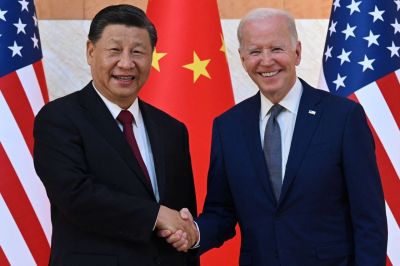
While raising the level of sanctions against China, the U.S. is simultaneously expanding its anti-China network. Last month, the U.S. persuaded Japan and the Netherlands to join in semiconductor export control measures against China. This follows the export controls implemented in October last year that banned the sale of advanced U.S. semiconductor equipment to Chinese semiconductor companies, aiming to maximize pressure on China by partnering with allied countries.
Bloomberg analyzed, "China denies forced labor in Xinjiang, but the U.S. and other countries raise suspicions about it," adding, "As the two global powers view each other as their greatest strategic competitors, tensions between the two countries are increasing."
As U.S. actions intensify, China is also taking a confrontational stance. The Wall Street Journal (WSJ) reported the day before that China is considering export control measures on key solar technology in response to the U.S.'s strengthened sanctions against China. It is reportedly discussing adding advanced technologies used in producing polysilicon ingots and wafers, key components of solar panels, to the list of export restrictions to the U.S. This appears to be an attempt to disrupt the U.S.'s solar supply chain as it expands renewable energy. However, experts predict that while this may somewhat delay the U.S.'s solar expansion, it will not cause significant impact as it is not advanced technology like semiconductors.
© The Asia Business Daily(www.asiae.co.kr). All rights reserved.

















