[Asia Economy New York=Special Correspondent Joselgina] As the U.S. central bank, the Federal Reserve (Fed), slowed the pace of tightening by raising the benchmark interest rate by 0.25 percentage points, a 'baby step,' on the 1st (local time) as expected, the market is rapidly spreading expectations of a 'dovish (preference for monetary easing)' stance. There is speculation that the U.S. interest rate hike cycle, which has put the whole world on edge, could end as early as March, and discussions on rate cuts could begin in earnest. The market no longer seems to believe even Fed Chair Jerome Powell's statement that "there will be no rate cuts within the year." Investors' attention is focused on the 'dot plot' to be updated in March.
◆Adjusting Speed with Baby Step
On the 1st (local time), after concluding the first Federal Open Market Committee (FOMC) regular meeting of the year, the Fed announced in a statement that it would raise the federal funds rate by 0.25 percentage points from the previous 4.25?4.5% to 4.5?4.75%. This follows the previous December FOMC meeting's reduction of the rate hike size to 0.5%, marking an additional pace adjustment. A 0.25 percentage point increase is the conventional rate hike size.
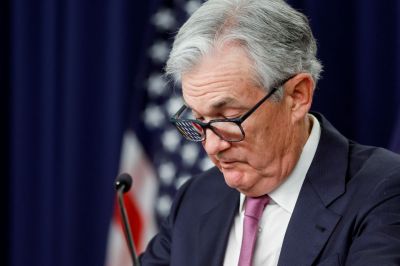
At the press conference immediately following the FOMC meeting, Chair Powell said, "Considering the lag with which monetary policy affects the economy, we raised the rate by 0.25 percentage points," but also warned the market against premature expectations of monetary easing by stating, "If the economy proceeds as expected, there will be no rate cuts within the year." He emphasized, "To reach a sufficiently restrictive level, a couple more additional hikes are necessary."
This is interpreted as remarks aimed at signaling the need to slow the pace while preventing the market's pivot expectations from interfering with the policy path. The policy statement released before the press conference retained the phrase 'ongoing increase' in interest rates, which the market had been closely watching.
◆Dovish Sentiment Gains Strength
However, Wall Street widely regards this FOMC and the press conference as dovish. First, the very act of slowing the tightening pace with a baby step is interpreted as dovish. This marks a return from an unusually intense tightening mode, including four consecutive giant steps (0.75 percentage point hikes), to a conventional mode.
Charlie Ripley, Chief Investment Strategist at Allianz Investment Management, said, "The 0.25 percentage point increase is a clear signal that the cumulative tightening effects are impacting the economy as the Fed intended." RBC pointed out that the change in the policy statement from 'pace' to 'extent' of rate hikes suggests that a 0.25 percentage point increase will be the default going forward.
Powell's inflation assessment also differed from before. Although his hawkish remarks such as "There is still much to do" and "It is too early to declare victory in the fight against inflation" were repeated, the market focused on his evaluation of disinflation. Powell defined the current situation as the "early stage of disinflation," stating, "We can say for the first time that the disinflation process has begun." During the press conference, disinflation was mentioned 13 times. He also said that core service prices excluding housing costs would soon decline.
Moreover, as the press conference progressed, Powell's 'ambiguous' remarks increasingly revealed dovish tones. This was reflected immediately in the market, with Treasury yields plunging and the dollar weakening. Major indices on the New York Stock Exchange closed higher that day, with the Nasdaq, which is sensitive to interest rates and tech stocks, rising by as much as 2%. Ripley said, "The press conference lacked clarity on future rate hikes, signaling that the tightening cycle is nearing its end."
When asked whether there were changes to the rate outlook presented in the December dot plot, Powell said, "The year-end rate forecast was 5.0?5.25%, and it will be updated in March," leaving room for adjustment depending on data. He also responded affirmatively when asked if rates could be kept below 5%. Regarding whether there was discussion about when to stop raising rates at this FOMC, he answered in principle, "We spent a lot of time discussing the future path." Wall Street interprets Powell's public expression of concern that there is "no intention of over-tightening" as further support for the dovish camp.
◆Wall Street Outlook
Wall Street speculates that the Fed may end the tightening cycle after the baby step in March. Bob Michele, Chief Investment Officer (CIO) at JP Morgan, predicted, "The rate hike cycle is almost over. I expect a 0.25 percentage point increase in March, which will be the last."
ING and RBC also expect the 0.25 percentage point hike in March to be the last. ING explained, "The real policy rate has turned positive for the first time since 2019, and the economy has lost momentum." RBC said, "March will be the last hike," adding, "A mild recession and inflation slowdown in the second half of the year could lead to a 0.5 percentage point cut." According to the Chicago Mercantile Exchange (CME) FedWatch, the federal funds (FF) futures market expects the final rate to be 4.75?5.0% in March, followed by cuts in November?December.
If the Fed takes a baby step in March, the U.S. benchmark interest rate will be 4.75?5.0%. This is below the 5.0?5.25% (median 5.1%) rate the Fed previously projected as the year-end median rate.
Therefore, the key is the dot plot to be released in March. Powell said on the day that he would present a new rate outlook in March regarding the additional hike path. He also indicated that they would review data between March and May, signaling that the future path will be discussed at the next FOMC. Not only the dot plot but also the Fed's Summary of Economic Projections (SEP) will be revised in March.
© The Asia Business Daily(www.asiae.co.kr). All rights reserved.
![Clutching a Stolen Dior Bag, Saying "I Hate Being Poor but Real"... The Grotesque Con of a "Human Knockoff" [Slate]](https://cwcontent.asiae.co.kr/asiaresize/183/2026021902243444107_1771435474.jpg)











