January Consumer Prices Up 5.2%... Impact of Electricity Rate Increase
[Asia Economy Sejong=Reporter Dongwoo Lee, Sejong=Reporter Junhyung Lee] Consumer prices rose 5.2% last month compared to a year earlier. The sharp increase in electricity and gas rates due to the surge in international energy prices had a significant impact.
According to the 'January 2023 Consumer Price Trends' released by Statistics Korea on the 2nd, consumer prices last month increased by 5.2% compared to the same month last year. Compared to the December 2022 increase rate (5.0%), the rise expanded by 0.2 percentage points. Compared to the previous month, it rose by 0.8%, marking the largest increase since September 2018 (0.8%). The monthly consumer price increase rate has remained in the 5% range for nine consecutive months since May, when it recorded 5.4%.
The price increase was driven by public utility charges such as electricity fees. Electricity, gas, and water prices rose 28.3% compared to the same month last year. This is the highest rate since Statistics Korea began separately tracking electricity, gas, and water price increases in January 2010. In particular, electricity and gas fees surged by 29.5% and 36.2%, respectively. Kim Bokyung, Economic Trend Statistics Commissioner, explained, "Last month's inflation rate was largely influenced by the rise in electricity fees," adding, "The contribution of electricity, gas, and water to overall inflation increased by 0.17 percentage points compared to the previous month."
The price increases for items closely related to daily living were also significant. Fresh and processed foods rose by 2.4% and 10.3%, respectively, compared to the same month last year. The living cost index, which mainly consists of frequently purchased items and closely reflects perceived inflation, increased by 6.1%.
The industrial products inflation rate recorded 6.0%. Specifically, petroleum products such as diesel (15.6%) and kerosene (37.7%) showed notable increases. However, the petroleum product inflation rate slowed to 5.0% from 6.8% the previous month.
Agricultural, livestock, and fishery products rose by 1.1%. Among these, agricultural products fell by 0.2% compared to the same month last year, continuing the decline seen in December 2022 (-1.6%). However, vegetables increased by 5.5%. Livestock and fishery products rose by 0.6% and 7.8%, respectively.
The core inflation rate, which excludes agricultural products and petroleum, recorded a 5.0% increase. This rise was larger than the previous month's 4.8%. Another core inflation indicator, the index excluding food and energy, rose by 4.1%.
Commissioner Kim stated, "Electricity and gas fees are influenced by international raw material prices, so it is difficult to consider them as trend factors in inflation," adding, "While they affect the rise in inflation rates, they should be seen as distant from the fundamental trend."
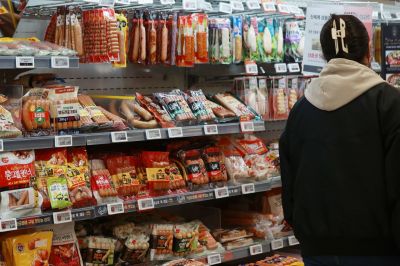 Food Prices Emergency
 (Seoul=Yonhap News) Reporter Jin Yeonsu = Food and franchise companies are announcing product price increases one after another immediately after the Lunar New Year holiday. Following last year's soaring food prices, the burden on grocery bills is expected to increase this year as well. According to the food industry, Lotte Confectionery will raise prices of some frozen products such as dumplings and pork cutlets by 5-11% starting next month on the 1st. Prices of refrigerated products such as Uiseong garlic frankfurters will also increase by 7-14%. The photo shows the refrigerated product sales corner at a large supermarket in downtown Seoul on January 27, 2023.
Photo by Jin Yeonsu
jin90@yna.co.kr
(End)
<Copyright (c) Yonhap News Agency, unauthorized reproduction and redistribution prohibited>
© The Asia Business Daily(www.asiae.co.kr). All rights reserved.
![Clutching a Stolen Dior Bag, Saying "I Hate Being Poor but Real"... The Grotesque Con of a "Human Knockoff" [Slate]](https://cwcontent.asiae.co.kr/asiaresize/183/2026021902243444107_1771435474.jpg)
















