Oh Se-hoon "Annual Deficit of 1 Trillion Won... 30% Free Riders"
Political Debate on Free Riding "Fuels Generational Conflict"
[Asia Economy Reporter Yoon Seul-gi] Following recent sharp increases in heating and taxi fares, the Seoul Metropolitan Government's push to raise subway and city bus fares is adding to citizens' inflation burdens. As fare hikes are being considered, attention is turning to the 'free rides for seniors' issue, which has long been cited as a cause of deficits in Seoul's public transportation system.
Seoul City announced plans to raise public transportation fares by 300 or 400 won as early as April this year. This would be the first fare increase in about eight years since June 2015. The problem is that citizens' burdens are growing amid high inflation. If fares increase by 400 won, the hike rate would reach 32% for the subway and 33.3% for buses.
Seoul's decision to raise public transportation fares stems from chronic deficits. According to Seoul City, over the past five years (2018?2022), the subway has incurred an average annual deficit of 920 billion won, and buses an average annual deficit of 540 billion won. Despite rising prices and labor costs, fares have remained frozen, causing deficits to grow.
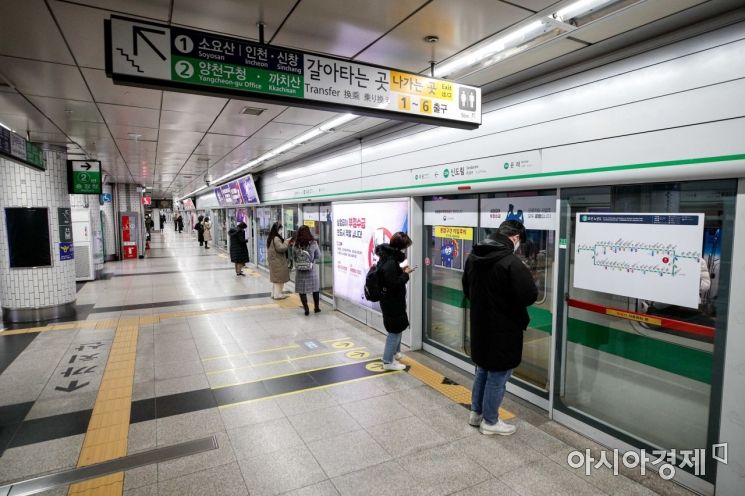 The photo is not related to the specific content of the article. Photo by Jang Jin-hyeong aymsdream@
The subway deficit increased from 587.8 billion won in 2019 to 1.1448 trillion won in 2020, 995.7 billion won in 2021, and is projected to reach 1.26 trillion won in 2022. Bus deficits also grew from 353.8 billion won in 2019 to 678.4 billion won in 2020, 735 billion won in 2021, and an estimated 658.2 billion won in 2022.
Seoul Mayor Oh Se-hoon described the fare hike as a 'last resort' during a New Year's press conference held at Seoul City Hall on the 30th of last month. He explained that due to financial difficulties faced by Seoul's subway and buses, raising public transportation fares is inevitable.
He particularly emphasized the need for government support regarding the issue of free rides for seniors on the Seoul subway. Mayor Oh said, "There has been no fare increase for eight years, and even if fares rise by 300 to 400 won, it falls far short of the operating costs. If the Ministry of Economy and Finance provides support for free rides on the subway, we can adjust the extent of the fare increase."
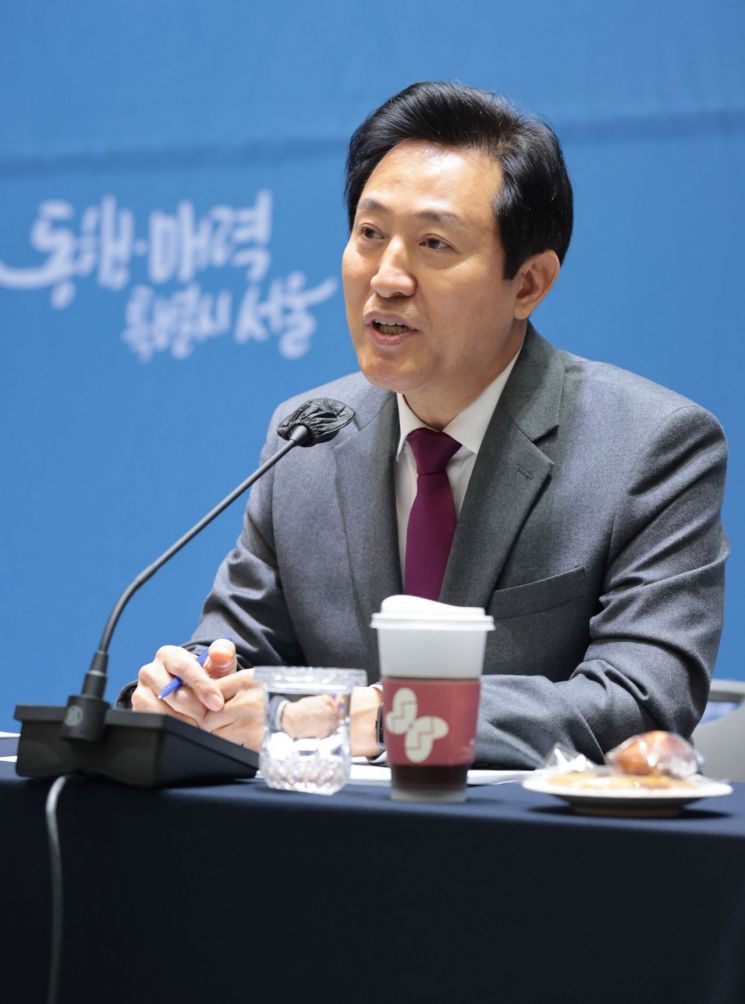 Seoul Mayor Oh Se-hoon is holding a New Year's press conference at Seoul City Hall on the morning of the 30th. Photo by Yonhap News
On the 31st of last month, Mayor Oh reiterated the free ride issue on Facebook. He stated, "Since COVID-19, the deficit has been around 1 trillion won annually, with about 30% attributed to free rides. Seoul Metro has been sustaining itself by issuing corporate bonds, but it has now reached its limit. If it were a private company, Seoul's subway would have already gone bankrupt."
The political sphere has also raised the issue of Seoul subway deficits caused by free rides. On the 31st of last month, Joo Ho-young, floor leader of the People Power Party, pointed out at a party strategy meeting in the National Assembly, "It seems that such deficits have arisen due to free rides and similar factors. We need to discuss fundamental solutions."
However, since the free ride system is the only universal welfare benefit provided by the government to seniors aged 65 and over, careful consideration is needed regarding any age limit or abolition.
Ko Hyun-jong, Secretary-General of the Senior Union, appeared on MBC Radio's 'Kim Jong-bae's Focus' on the 1st and said, "It seems the discussion arose as a protest against the Ministry of Economy and Finance's budget cuts for free rides in the 2023 budget. Even with the basic pension, the central government supports 70% to 90% based on the elderly ratio and financial conditions of local governments. Similarly, regarding free rides for seniors on the subway, the central government should consult with local governments, assess the situation, and increase support."
Secretary-General Ko expressed concern that the free ride debate could fuel generational conflict or ageism. He said, "The national pension contribution rate has been raised by 15%, heating costs have skyrocketed, and young people are struggling to live, so they blame the cost of supporting the elderly. As a result, views toward seniors are not favorable."
He continued, "Regarding generational conflict, when looking at media comments about free rides, there are remarks like 'Why should seniors get free rides?', 'Seniors also earn a lot of money,' and 'They receive basic pensions.' Political circles and Seoul City's comments on free rides ultimately exacerbate generational conflict," he pointed out.
© The Asia Business Daily(www.asiae.co.kr). All rights reserved.


















