Bregret Airflow Diffusion
Projected 4% GDP Increase if Remaining in UK-EU
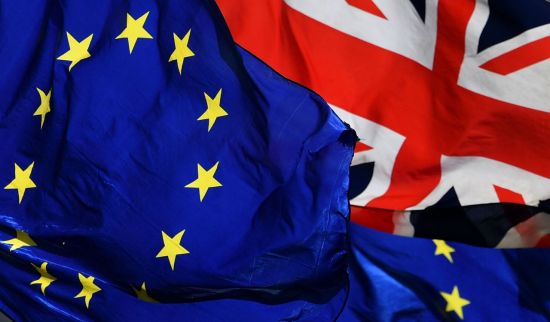
[Asia Economy Reporter Lee Ji-eun] An analysis has suggested that if the United Kingdom had not carried out Brexit, the withdrawal from the European Union (EU), its gross domestic product (GDP) could have been 4% larger than it is currently. Recently, in the UK, a so-called ‘Bregret’ atmosphere?regret over Brexit?seems to be spreading as social and economic costs increase due to labor shortages and declining productivity.
On the 30th (local time), Bloomberg reported through its statistics that the GDP loss the UK has suffered since the second quarter of 2016, when the decision to leave the EU was finalized, amounts to ?100 billion annually (approximately 152.3 trillion KRW). Conversely, it estimated that if the UK had remained in the EU, the GDP would be 4% higher than it is now.
First, corporate investment decreased. As of the second quarter of 2016, by the third quarter of last year, the scale of corporate investment in the UK had dropped by 6.4%. In contrast, investment in the Group of Seven (G7) countries increased by 15.8%. The proportion of corporate investment in the UK’s total GDP (9%) also lagged behind that of G7 countries (13%).
Labor shortages have deepened across industries. Currently, the number of workers from the 27 EU member countries residing in the UK is 2,371,000. This is 370,000 fewer than expected if the UK had remained in the EU. The European think tank Centre for European Reform (CER) also released a report on the 17th stating that since Brexit, foreign labor in low-skilled sectors has decreased by 330,000. The impact was particularly severe in transportation, wholesale and retail, and manufacturing sectors. In the transport and garage management sector, European-origin workers decreased by 128,000 (8.45%). In wholesale and retail and manufacturing, the numbers fell by 103,000 (2.79%) and 47,000 (1.73%), respectively.
Labor shortages have led to wage increases, which in turn exert inflationary pressure. Due to the continuous decline in the labor force, workloads have excessively concentrated on existing workers, and since the end of last year, the UK has been suffering from large-scale strikes by public sector workers demanding real wage increases.
As inflation and economic difficulties continue, a regretful sentiment toward Brexit is forming within the UK. The Guardian cited polling experts reporting that 57% of Britons are willing to support rejoining the EU. The Guardian stated, "As economic prospects darken and living hardships persist, skepticism among UK voters toward Brexit is growing."
© The Asia Business Daily(www.asiae.co.kr). All rights reserved.
![Clutching a Stolen Dior Bag, Saying "I Hate Being Poor but Real"... The Grotesque Con of a "Human Knockoff" [Slate]](https://cwcontent.asiae.co.kr/asiaresize/183/2026021902243444107_1771435474.jpg)
















