[Asia Economy Yang Nak-gyu, Military Specialist Reporter] Patriot Hwang Gi-hwan, who passed away in New York, USA, is being buried in his homeland 100 years after his death. His life was also adapted into the protagonist 'Eugene Choi' in the 2018 TV drama "Mr. Sunshine."
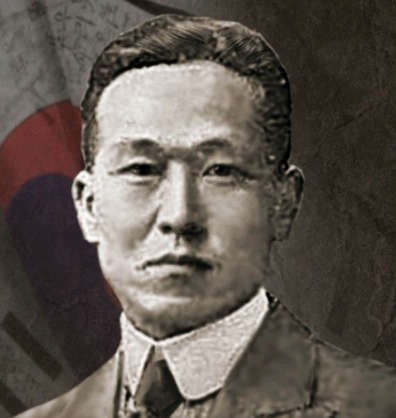
According to the Ministry of Patriots and Veterans Affairs on the 1st, efforts to repatriate his remains have been underway since 2013, but the Mount Olivet Cemetery in New York argued that a court decision was necessary for exhumation without the consent of the bereaved family, causing difficulties. The government filed lawsuits for repatriation at the local court in 2019 and last year, but has not yet received court approval due to the lack of public records confirming that the patriot has no surviving family.
On the 100th Anniversary of His Martyrdom, Persuading the U.S... Scheduled to be Interred at Daejeon National Cemetery after Repatriation Ceremony
However, together with the New York Consulate General, this year marking the 100th anniversary of his martyrdom, the government persuaded the cemetery to respond to the wishes of Koreans by repatriating the remains, and recently reached a sudden agreement. Once repatriated, the remains will be interred at the National Daejeon Cemetery following a government-hosted repatriation ceremony. This marks the first time in 100 years since Hwang’s martyrdom that he will rest in peace on Korean soil.
Hwang volunteered for the U.S. military while studying in America and participated in World War I. In June 1919, he moved to France and assisted Kim Kyu-sik, who came to Paris to attend the Versailles Peace Conference, helping the delegation’s affairs. He was appointed secretary-general of the Paris branch of the Provisional Government and engaged in independence promotion activities.
In October of the same year, to prevent about 200 workers in Murmansk, Russia, from being forcibly repatriated by Japan, he made desperate diplomatic efforts against the British and French governments, dramatically rescuing 35 people including Hong Jae-ha and moving them to France. In January of the following year, as the head of the Korean Propaganda Corps stationed in Paris, he launched a French-language magazine and held lectures to raise awareness of Japanese oppression, appealing for Korean independence to the international community.
In April 1921, he was appointed as the London commissioner of the Ministry of Foreign Affairs of the Provisional Government of the Republic of Korea and edited a book titled "The Anglo-Japanese Alliance and Korea," criticizing that Korea’s fall into Japanese colonial rule was due to the imperialist powers’ colonial partition policy. As part of the Provisional Government’s communications department, he organized the Korean Friendship Association to support diplomatic efforts and was active as a diplomatic commissioner in London and in the Western Committee of the Provisional Government. He died of heart disease in New York on April 17, 1923, and was buried in a local cemetery.
His grave was discovered and publicized in 2008 by Pastor Jang Cheol-woo of a Korean church in New York, 85 years after his death. To honor his achievements, the government posthumously awarded him the Order of Merit for National Foundation, Patriotic Medal in 1995.
© The Asia Business Daily(www.asiae.co.kr). All rights reserved.

















