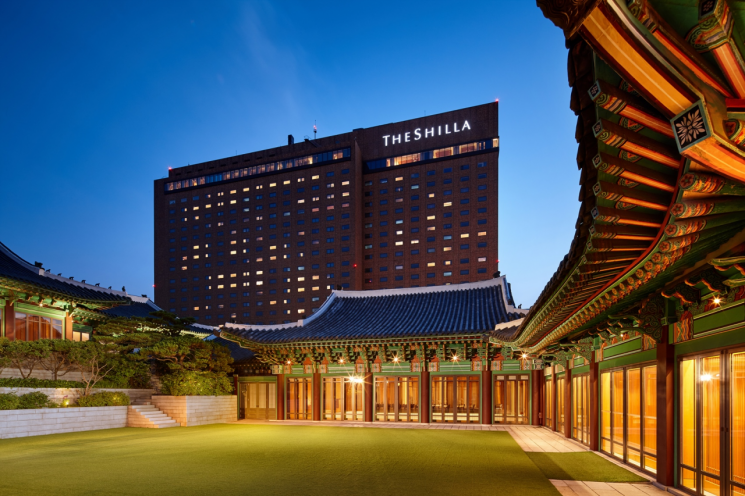
Hotel Shilla experienced a decline last year as its hotel and leisure businesses performed well, but its duty-free segment faltered. However, with China's zero-COVID policy nearing its end, the influx of foreign tourists is expected to accelerate from this year, raising more optimism than concern.
According to the Financial Supervisory Service's electronic disclosure system (DART) on the 30th, Hotel Shilla's consolidated operating profit for last year was 78.3 billion KRW, a 34.1% decrease compared to the previous year. Although sales increased by 30.2% to 4.922 trillion KRW compared to 2021, the company posted a net loss of 50.2 billion KRW, returning to the red.
Poor performance in the fourth quarter dragged down the overall results. While Hotel Shilla recorded an operating profit of 25 billion KRW in Q4 2021, it turned to an operating loss of 6.7 billion KRW in Q4 last year. During the same period, sales and net loss were 1.2999 trillion KRW and 81 billion KRW, respectively. The duty-free segment's slump was particularly painful. By business segment, the duty-free (TR·Travel Retail) division saw domestic downtown duty-free and airport duty-free sales increase by 3% and 122%, respectively, resulting in sales of 1.14 trillion KRW, a 13% increase from the previous year, but operating loss turned to 19.6 billion KRW, a deficit compared to the prior year.
Lee Jin-hyeop, a researcher at Hanwha Investment & Securities, explained, "The fourth quarter is traditionally a period when margins decline due to inventory clearance, and at the same time, the competitive intensity at duty-free stores remains at the level of the third quarter." The company also stated, "The reason for the operating loss in Q4 was that the exchange rate dropped from the 1,400 KRW range to the 1,200 KRW range, increasing the duty-free cost ratio. From this year, the exchange rate is expected to stabilize, minimizing the impact on cost ratio."
On the other hand, the hotel and leisure segment saw a significant profit improvement in Q4 compared to the previous year, driven by increased year-end food and banquet demand following the lifting of social distancing, achieving record-high annual results. The hotel and leisure segment's sales rose 31% to 159.9 billion KRW, and operating profit surged 579% to 12.9 billion KRW compared to the previous year.
Despite the profitability deterioration caused by the duty-free segment's poor performance last year, the approaching reopening of China is positive for Hotel Shilla. As reopening improves Chinese consumption, the purchasing power of 'ttaigong' (Chinese proxy buyers) will expand, inevitably leading to improved sales and profitability in the duty-free business. Kim Myung-joo, a researcher at Korea Investment & Securities, predicted, "With the end of China's zero-COVID policy and the recovery of ttaigong, the competitive intensity in the Korean duty-free market is expected to ease, and Hotel Shilla's duty-free segment profitability will improve."
According to financial information provider FnGuide, Hotel Shilla is expected to return to profitability this year with an operating profit of 233.9 billion KRW. Sales during the same period are also projected to increase by 21.0% from last year to 5.9556 trillion KRW, approaching 6 trillion KRW.
© The Asia Business Daily(www.asiae.co.kr). All rights reserved.

















