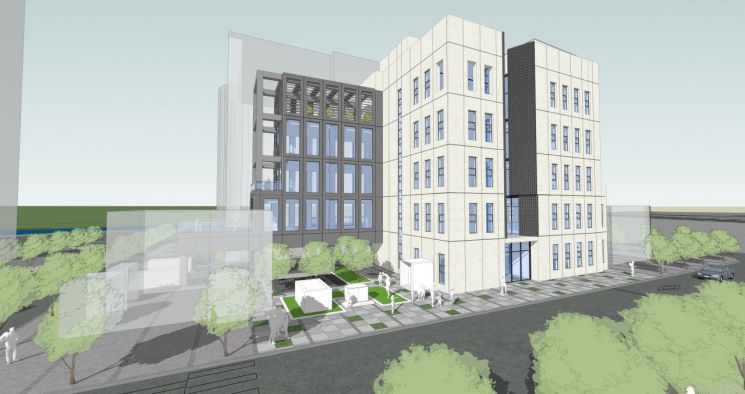
Gangnam-gu, All Three Dong Offices Over 30 Years Old and Aging
Currently in Detailed Design Phase, Construction to Start in August This Year and Completion Scheduled for 2025
Aging Office Buildings' Underground Parking Lots to Be Transformed into Spaces with Cultural and Convenience Facilities
[Asia Economy Reporter Park Jong-il] Gangnam-gu (District Mayor Jo Seong-myeong) is pushing for the reconstruction of the dong offices in Ilwon 1-dong, Gaepo 3-dong, and Suseo-dong, all over 30 years old, to be reborn as complex cultural centers by 2025.
Built in 1992, these office buildings are standalone structures without underground parking, consisting of basement level 1 to the 3rd floor above ground. The district plans to reconstruct these aging buildings into complex cultural centers equipped with resident convenience facilities, libraries, cultural centers, and parking lots, which have been insufficient until now, to enhance the cultural and leisure life of local residents.
To build the complex cultural centers, a design competition was held in July last year, and the winning design was selected. Currently, basic and detailed designs are underway. Construction is planned to start in August with the goal of completion in 2025.
The Ilwon 1-dong office will be built with a total floor area of 4,550.56㎡, consisting of basement levels 2 to the 5th floor above ground. The first floor will preserve a pedestrian path as an open space. This path will connect a small library, civil service office, cultural center, and playground, creating a space where residents can hold various events.
The Gaepo 3-dong office will have a total floor area of 3,632.67㎡, with basement levels 2 to the 4th floor above ground, designed as a community hub space encompassing nearby public facilities such as the Gangnam Disabled Welfare Center. An event yard will be created at the building entrance for activities like bazaars, and a secondary entrance will be built at the rear to provide an open space for apartment residents and pedestrians behind the office to move comfortably. Additionally, a separately installed staircase inside the first-floor civil service office will connect to a meeting space on the second floor. This staircase will be designed as a book step where anyone can freely sit and read, creating a relaxed cultural space.
The Suseo-dong office will be constructed with a total floor area of 3,700.17㎡, consisting of basement levels 2 to the 5th floor above ground. Each floor will have an open small library or meeting space to facilitate various encounters. The underground parking space will be planned using a circular skip floor system to maximize utilization, and a two-way ramp system will be applied for convenient vehicle entry and exit.
Jo Seong-myeong, Mayor of Gangnam-gu, said, "By reconstructing the aging dong offices into complex cultural centers, I hope they will become places for welfare, administration, culture, convenience functions, as well as venues for residents to meet and communicate." He added, "We will also successfully complete the remodeling of the Samsung 2 Cultural Center scheduled for completion in February so that residents can use more comfortable and convenient facilities."
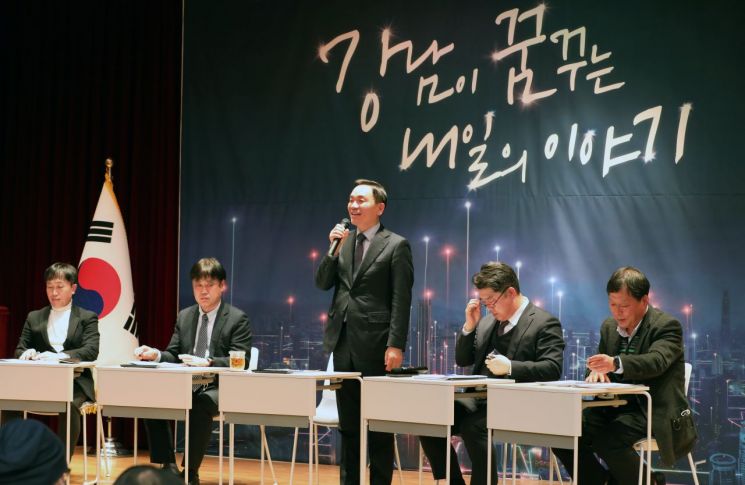
Gangnam-gu Holds 2023 Vision Report Meeting
Gangnam-gu (District Mayor Jo Seong-myeong) held the ‘2023 Gangnam-gu Vision Report Meeting’ on the 30th at the auditorium on the 5th floor of Nonhyeon 1 Cultural Center, where the district mayor directly explained major projects to residents and listened to their suggestions.
The district plans to hold a total of nine vision report meetings by grouping 22 dong offices into 2 to 3 dong units, starting today with Sinsa and Nonhyeon 1-dong, continuing until the 13th of next month.
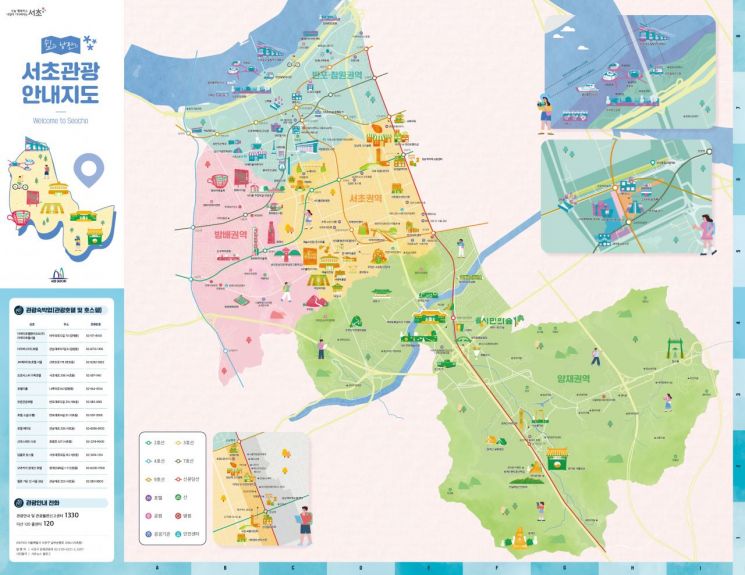
Seocho-gu Produces ‘Rest and Romance Seocho-gu Tourist Guide Map’ Introducing Attractions for Tourists Visiting the Area
Two Versions: 8,000 Korean Copies and 5,000 English Copies, Portable 12-Fold Design... Easy to Use for Both Domestic and Foreign Visitors
'Rest&Romance'
Seocho-gu (District Mayor Jeon Seong-su) has published a map that captures the local atmosphere and famous restaurants in one sheet. Named ‘Rest and Romance Seocho-gu Tourist Guide Map,’ it is a pocket-sized map designed to help both domestic and international tourists as well as residents easily find attractions and dining information.
The district stated that the map was created to widely promote its rich cultural infrastructure, including the nation’s only music culture district, to stimulate local tourism and to promote Seocho as a representative cultural and arts city in South Korea both domestically and internationally.
The tourist guide map is a 12-fold design, produced in two versions: 8,000 Korean copies and 5,000 English copies, making it easy for both domestic and foreign tourists to use.
The front and back of the map contain information on seven categories with over 120 items, including specialized streets, cultural heritage, landmarks, and cultural facilities that have become popular attractions for domestic and international tourists.
Looking closely at the map, the front side shows locations of tourist accommodations, attractions, shopping, restaurants, and transportation in clipart format. Especially, three areas that have become popular tourist spots?Gangnam Station, Banpo Hangang Park, and the Express Bus Terminal area?are shown in enlarged maps for convenience.
The back side provides detailed information on the front side’s content. It includes 20 ‘Seocho’s Best Restaurants’ selected by Michelin and Blue Ribbon, a ‘Shopping Course’ from Line Friends Shop near Gangnam Station to Costco in Yangjae-dong, ‘Festival Information’ enjoyed seasonally by residents and tourists such as the Seoripul Festival and Banpo Serae Korean-French Music Festival, and ‘Seocho’s Attractions’ introduced by four zones with photos and descriptions.
Notably, the ‘Seocho’s Attractions’ section introduces the charms of specialized streets to revitalize local commercial districts. The Seoripul Instrument Street, including the Seoul Arts Center, is a representative example. It is a classical music cultural street designated as the nation’s only music culture district, with about 200 performance halls, instrument workshops, and music practice rooms concentrated there.
Additionally, the map features the ‘Meat Alley’ near Gangnam Station, a hot place for the MZ generation, the Wind Tower ‘Seocho Wind Hill,’ the ‘Bangbae Cafe Alley’ evoking nostalgia for the 5060 generation who frequented it in the 80s and 90s, and the ‘Serae Village Cafe Street,’ a small France in Seoul.
The map also includes various cultural heritage sites and memorial halls such as the UNESCO World Cultural Heritage ‘Heoninreung,’ the Seoul City Tangible Cultural Property No. 12 Cheonggwon Temple where Prince Hyoryeong is buried, and the Maehun Yun Bong-gil Memorial Hall with historical significance.
The district will distribute the maps starting February at major local tourist spots, cultural facilities, accommodations, and public institutions. Visitors can receive a free paper map or download it from the district office website.
Jeon Seong-su, Mayor of Seocho-gu, said, “As the map’s name suggests, I hope tourists and residents visit Seocho’s attractions to enjoy ‘rest and romance.’ I also hope this map production helps many tourists feel ‘Seocho where culture flows’ and contributes to revitalizing the local economy.”
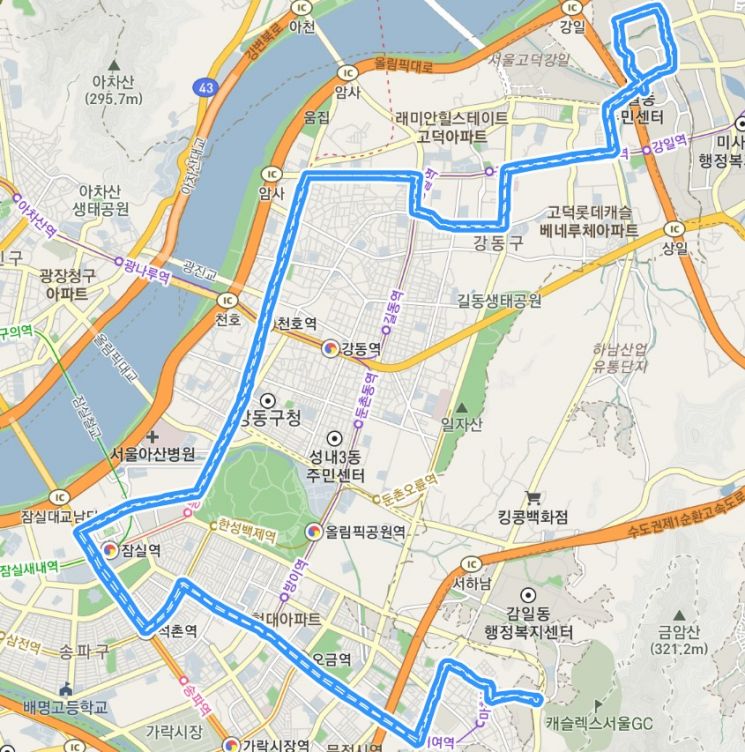
Gangdong-gu City Bus No. 3318 to Increase Service Starting February 1
Two Additional Buses Added on Route from Gangil-dong to Songpa-gu Macheon-dong to Improve Congestion
Plan to Expand Public Transportation Infrastructure through Gradual Bus Route Reorganization in Response to Population Growth
Gangdong-gu (District Mayor Lee Soo-hee) announced plans to add two buses to city bus route No. 3318, which operates from Gangil-dong to Macheon-dong in Songpa-gu, starting February 1.
The No. 3318 bus departing from Gangil-dong runs via Godeok Gangil 2 District, passing through Central Veterans Hospital Station and Cheonho Station, and continues to Macheon-dong in Songpa-gu. It has the highest congestion among buses in the district during weekday morning rush hours, and passenger numbers have steadily increased, making urgent countermeasures necessary.
In response, Gangdong-gu has continuously requested bus increases from Seoul City. As a result of these efforts, the number of trips for bus No. 3318 has increased from 85 to 94, reducing intervals during peak commuting hours and expected to significantly improve traffic congestion.
Going forward, the district plans to systematically build public transportation infrastructure by adding more bus trips, adjusting routes, and creating new routes according to the bus route system improvement plan to enhance residents’ transportation convenience.
Currently, large-scale development projects such as Godeok Biz Valley and Gangdong General Industrial Complex, along with station area revitalization projects, are progressing rapidly. With the move-in of the massive reconstruction complex Dunchon Jugong Apartments, which has about 12,000 households, the population is expected to exceed 500,000, leading to a sharp increase in transportation demand.
To respond to this, the district reorganized its organization on the 10th, launching a dedicated task force team for transportation measures and recruiting transportation experts to fully focus on improving transportation issues.
© The Asia Business Daily(www.asiae.co.kr). All rights reserved.
![Clutching a Stolen Dior Bag, Saying "I Hate Being Poor but Real"... The Grotesque Con of a "Human Knockoff" [Slate]](https://cwcontent.asiae.co.kr/asiaresize/183/2026021902243444107_1771435474.jpg)


















