FKI '2023 Major Companies Raw Materials and Supply Chain Outlook Survey'
Survey of 150 Top 1000 Revenue Companies... "Domestic Return" 13.3%
[Asia Economy Reporter Moon Chaeseok] It has been revealed that eight out of ten companies stated they would not return to domestic operations even if supply chain instability persists long-term.
On the 29th, the Federation of Korean Industries (FKI) announced the results of the "2023 Major Companies Raw Materials and Supply Chain Outlook Survey." The survey covered 150 companies among the top 1,000 by sales.
First, 42.7% of respondent companies expected global raw material prices to rise this year compared to last year. This was higher than those expecting prices to remain steady (29.3%) or fall (28%). Reasons cited for the expected increase included "prolonged geopolitical risks such as the Russia-Ukraine war" and "expanded demand due to reduced pandemic risks" (28.1%). The most urgent measure for stabilizing raw material supply was identified as "financial and tax support (28.8%)."
The supply chain conditions in the first half of this year were forecasted to be similar to previous years (62.7%). However, more companies expected conditions to worsen (19.3%) than to improve (18%). The top supply chain risk factor was "raw material price fluctuations due to cost increases from inflation" (29.2%). The FKI analyzed that "supply chain instability will continue for a considerable period."
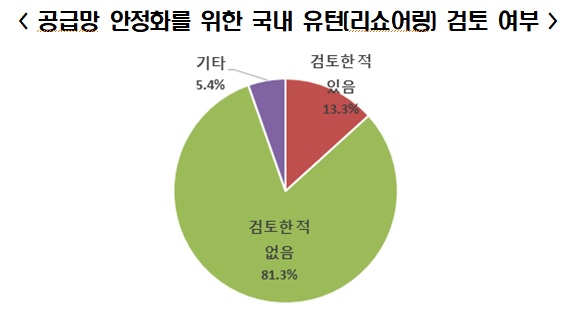
Notably, even if supply chain instability prolongs, eight out of ten companies stated they have no intention of returning operations domestically. 81.3% of companies responded that they have never considered domestic return (reshoring). Only 13.3% said they had considered it.
Among internal supply chain measures, companies were most proactive about "diversifying suppliers to procure materials and components (37.7%)." The most needed policy was identified as "support for easing logistics difficulties and stabilizing freight rates (28.2%)."
Yoo Hwan-ik, Head of the Industry Division at FKI, said, "Companies cite raw material price fluctuations as the biggest supply chain risk this year," adding, "It is necessary to carefully monitor and provide policy support to prevent raw material price increases from causing supply chain shocks."
© The Asia Business Daily(www.asiae.co.kr). All rights reserved.
![Clutching a Stolen Dior Bag, Saying "I Hate Being Poor but Real"... The Grotesque Con of a "Human Knockoff" [Slate]](https://cwcontent.asiae.co.kr/asiaresize/183/2026021902243444107_1771435474.jpg)

















