Criticism of Moon Administration for Delaying Gas Price Adjustment
Yoon Government Provides Special Heating Cost Support for Vulnerable Groups
Urgent Need for Measures Considering Gangwon Region Characteristics
[Asia Economy Reporter Ra Young-cheol] Recently, there has been widespread criticism across the country directed at the previous government regarding the sharp rise in heating costs. In particular, the increase in liquefied natural gas (LNG) import prices is cited as the main reason behind the heating cost surge.
According to the Ministry of Trade, Industry and Energy, last year the price of LNG was $34.24 per MM BTU (unit of heat), a 128% increase from the previous year ($15.04). At the end of last year, the Korea Electric Power Corporation's wholesale electricity price (SMP) purchased from power producers was 267.63 KRW, marking the highest price since the establishment of the electricity wholesale market.
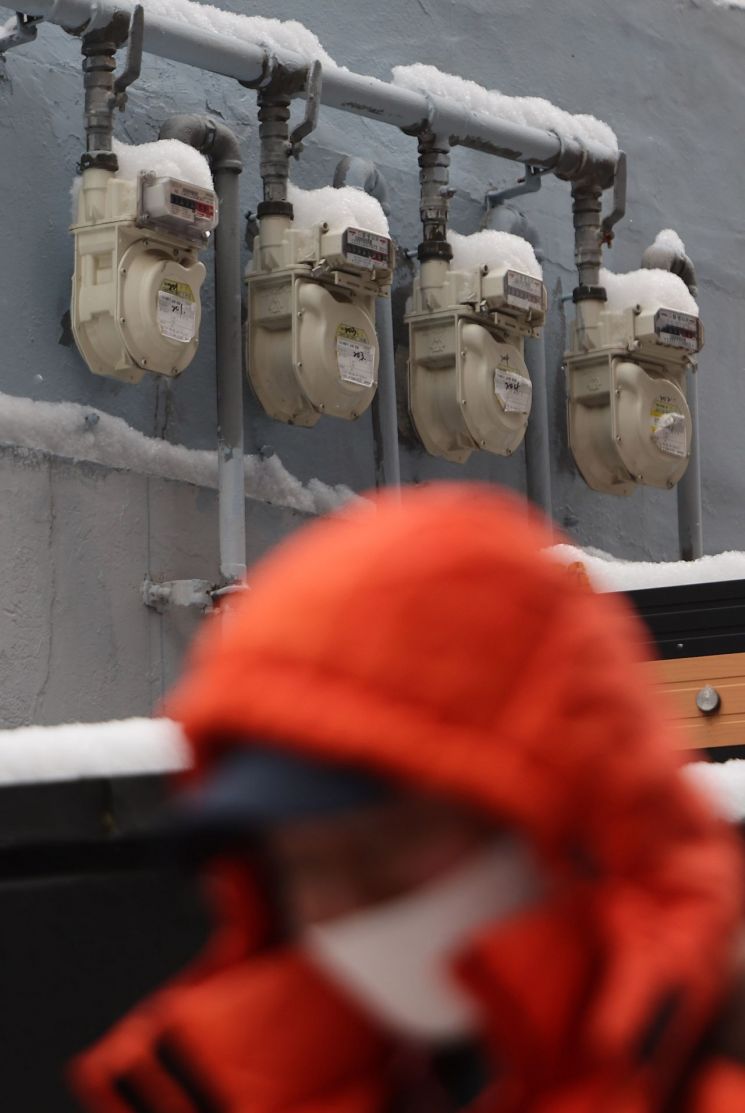
Industry insiders point out that the Moon Jae-in administration’s 'populism' in delaying gas price hikes has resulted in a price shock for ordinary citizens. This is interpreted as identifying the previous government as the origin of the 'heating cost bomb' provocation.
The Moon Jae-in government lowered residential gas rates to 12.9284 KRW per megajoule (MJ, unit of gas heat usage) in July 2020 and kept them frozen for 1 year and 8 months until March last year, before the presidential election.
Although there were seven opportunities to adjust rates until March last year, the government did not reflect the increased international prices in gas rates, citing price stability as the reason.
Failing to properly adjust rates when increases were necessary and ignoring the issue is seen as a policy failure of the Moon administration, resulting in a greater financial burden on many citizens.
Earlier last year, the Ministry of Health and Welfare, Ministry of Trade, Industry and Energy, and Ministry of Gender Equality and Family jointly announced a 'Special Winter Heating Cost Support Plan' for vulnerable groups.
Minister Cho Gyu-hong of the Ministry of Health and Welfare stated regarding the special heating cost support plan, "We will implement it without delay so that vulnerable groups can receive more substantial support," adding, "We will promote a warm winter alongside the disadvantaged through more detailed and meticulous policies."
The special heating cost support plan was prepared following a special directive from President Yoon Suk-yeol to establish and implement measures for energy-disadvantaged groups struggling during the cold wave.
Gangwon Province recently responded to the government's plan to expand energy voucher support for low-income households amid the heating cost surge, aiming to eliminate energy blind spots for vulnerable groups, but efforts remain insufficient.
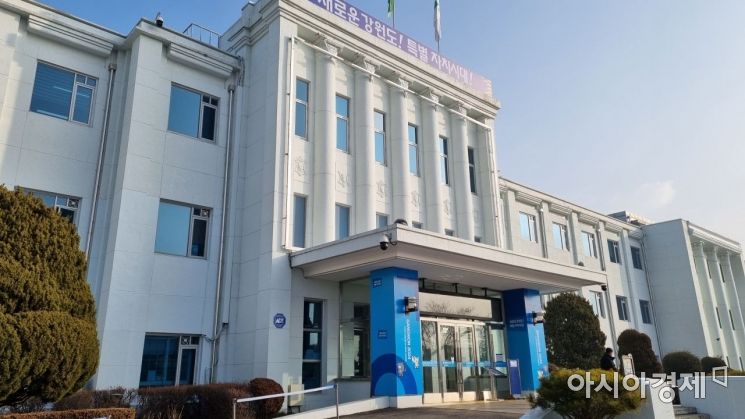
According to Gangwon Province on the 28th, the actual issuance rate of energy vouchers is somewhat low this year (88.7% as of January 4) due to expanded eligibility from supplementary budgets and system errors in the Ministry of Health and Welfare.
Moreover, in the Gangwon region, where severe cold waves around minus 20 degrees Celsius have been prevailing, heavy snowfall and icy roads have made winter survival even more difficult for residents.
The total scale of Gangwon Province’s energy voucher support is 87,000 households, amounting to 29.4 billion KRW (100% national funding), supporting all types of fuel costs for disadvantaged groups. However, overlapping support is not allowed, and detailed conditions vary by program, so beneficiaries must carefully consider the fuel type to select appropriate benefits.
For 566 social welfare facilities in Gangwon Province, additional heating cost support for January and February is planned as follows: for residential facilities, 300,000 KRW for those with up to 50 residents, 500,000 KRW for 51 to 100 residents, and 1,000,000 KRW for over 100 residents; for usage facilities, 300,000 KRW regardless of size.
The necessary budget will first be allocated from the already provided operating budget for heating costs, with plans to reflect it in a supplementary budget later.
Accordingly, energy vouchers will support 36,964 households among livelihood and medical benefit recipients who meet household member criteria (such as elderly or disabled) with 11.2 billion KRW for electricity, city gas, kerosene, LPG, and briquette purchase costs (304,000 KRW per household).
Kerosene voucher support is provided to 324 households (using heating kerosene) among basic livelihood recipients, including single-parent families and child-headed households (including foster care children), with 100 million KRW (310,000 KRW per household).
Briquette coupons are provided to 11,571 households among basic livelihood recipients and lower-income or disadvantaged groups (such as elderly living alone, disabled, child-headed households) using briquette boilers, totaling 6.3 billion KRW (546,000 KRW per household).
City gas fee reduction targets 38,000 households among basic livelihood recipients and lower-income or disadvantaged groups (including disabled and multi-child families). Support amounts, based on last year’s increase rates, total 11.5 billion KRW (18,000 to 72,000 KRW per household).
Kim Jin-tae, Governor of Gangwon Province, instructed related departments at the provincial office to "closely assess the scale of damage to vulnerable groups in the province and review plans to strengthen energy support."
He added, "Energy vouchers require beneficiaries to visit government offices in person to apply, but some do not apply because they are unaware of the program," emphasizing, "We must prevent such cases."
In the 18 cities and counties within the province, considering urgency and priority processing, he ordered active administrative support to ensure all vulnerable groups receive energy vouchers, kerosene vouchers, and briquette coupons.
However, there are calls to consider differentiated benefits for Gangwon, a mountainous region with lower average winter temperatures and longer cold seasons than other areas.
Na Cheol-seong, director of the Gangwon Peace Economy Research Institute, told this publication, "Gangwon has many farming areas and many regions without city gas supply, where gas delivery for individual heating is also unavailable," adding, "Residents face greater hardships during severe cold, so separate support measures tailored to local realities are necessary."
He especially urged the central government, saying, "During difficult times, support should not be limited to vulnerable groups but should be broader and more substantial," emphasizing, "Gangwon requires extensive and significant national-level support, including urban areas without city gas supply beyond rural and fishing villages."
© The Asia Business Daily(www.asiae.co.kr). All rights reserved.



















