Janggi Eupseong, Beopgwangsa Temple Site, Bunokjeong, Yonggyejeong: Gathering Opinions on Preservation and Maintenance
Haewol Choi Sihyung, Seokgok Lee Gyujun, Heukgu Han Segwang... Promotion of Commemoration Projects
[Asia Economy Yeongnam Reporting Headquarters Reporter Dongguk Lee] Pohang City is accelerating its leap toward becoming a global cultural city where the past and future coexist by refurbishing major cultural heritages throughout the year, preserving local cultural assets, and developing regional cultural contents to pass them on to future generations.
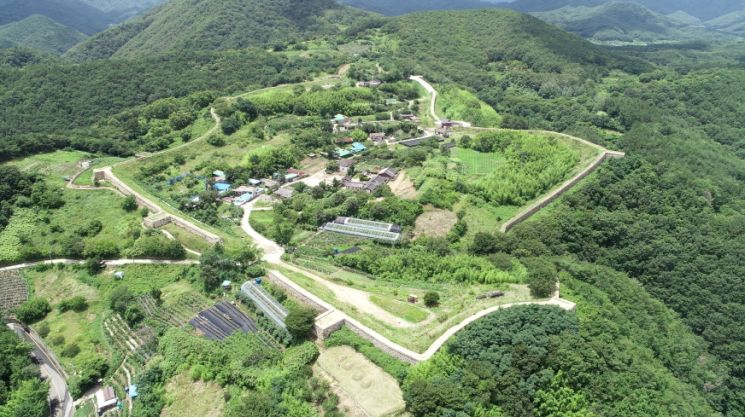
Through the restoration and maintenance project of Janggi Eupseong Fortress, the city plans to improve the previously neglected landscape within the fortress and promote projects that allow experiencing and utilizing cultural properties, such as night tours. To this end, the city plans to carry out restoration of the eastern gate site of Janggi Eupseong, restoration of the Sugooji water outlet, and construction of an information center and restrooms within the year.
The eastern gate site of Janggi Eupseong, corresponding to the east gate, is a major gateway leading from downtown Pohang through the Janggi-myeon Administrative Welfare Center into the fortress, but it has not been maintained.
Also, Sugooji, located in the northeast of Janggi Eupseong, is a fortress structure that discharges accumulated rainwater inside the fortress through a valley. Although its form is depicted on old maps from the Joseon Dynasty, no traces remain today, causing a break in the fortress wall.
Accordingly, the city plans to refurbish the neglected fortress walls at the eastern gate site of Janggi Eupseong, plant grass and trees, and complete the work in the first half of this year. The restoration of Sugooji to reconnect the broken fortress walls began construction in January and is scheduled to be completed within the year.
Along with this, the city aims to complete the construction of an information center and restrooms by the end of the year to improve convenience for tourists visiting Janggi Eupseong.
Based on accumulated academic achievements so far, the city plans to hold a comprehensive academic conference on Beopgwangsa Temple Site, inviting domestic and international cultural heritage experts to gather diverse opinions necessary for the preservation and maintenance of the historic site.
Beopgwangsa Temple Site, known as a royal temple of the Unified Silla period, underwent nine excavation surveys from 2010 to 2022, discovering the main hall site proving the construction techniques at the time of establishment, green-glazed roof tiles laid on the floor, and a stone Buddha statue about 4 meters tall.
Also, the three-story stone pagoda located at the temple site shows a clear date of construction (828 AD) on the stone stele enshrined inside the pagoda, giving it outstanding academic value.
In addition, the city plans to select potential cultural assets with high academic and historical value among the distributed cultural properties and designate them as national cultural heritage.
The cultural properties targeted for designation this year include the Joseon Dynasty pavilions ‘Bunokjeong’ and ‘Yonggyejeong’.
‘Bunokjeong’ is a pavilion built in 1820, known as the place where the renowned scholar Kim Jeonghui (Chusa) visited and personally wrote the signboard inscription.
‘Yonggyejeong’ is a pavilion completed in 1677 belonging to the Yeogang Lee clan, which was also used as a seowon (Confucian academy) for educating village students.
Both ‘Bunokjeong’ and ‘Yonggyejeong’ have completed academic investigations for designation as national treasures, and the city plans to request designation from the Cultural Heritage Administration in the first half of this year to have their academic and historical values reviewed.
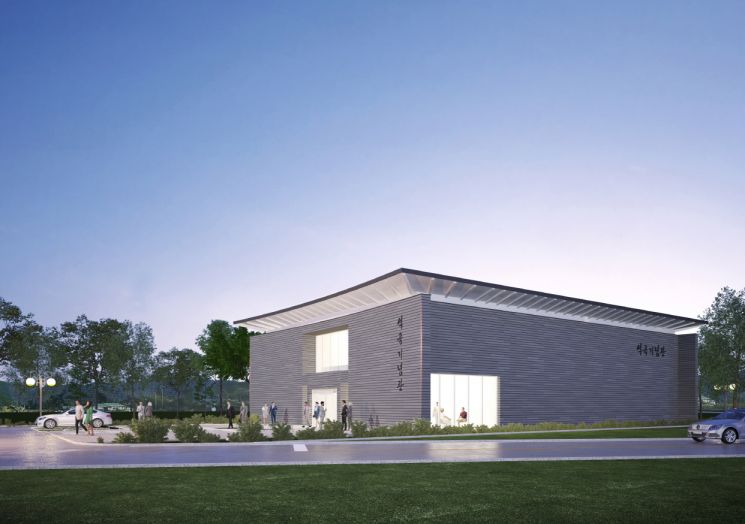
The city is promoting commemorative projects for three notable figures from Pohang: Seokgok Lee Gyujun, a pioneer of modern Korean medicine; Heukgu Han Segwang, a writer who never wrote a single pro-Japanese piece; and Haewol Choi Si-hyung, the second leader of the Donghak movement and a pioneer of modern democracy.
Coinciding with the opening of the Seokgok Memorial Hall scheduled for completion this year, the city plans to hold the ‘Seokgok Humanities Festival’ equipped with various programs such as academic forums, Korean medicine lectures, cultural performances, and experiential events. Additionally, the ‘2nd Heukgu Literary Academic Seminar’ will be held to open a new horizon for Han Heukgu’s literature and build public consensus for the establishment of the Han Heukgu Literature Museum.
The city will also actively promote the ‘Haewol Choi Si-hyung Commemorative Project’ for Choi Si-hyung, who was not well known as a figure from Pohang.
With the ultimate goal of building the Haewol Choi Si-hyung Memorial Hall, the project will include invited lectures, academic seminars, nationwide surveys and collection of related historical materials, production of commemorative videos, and more. Additionally, a feasibility study for the memorial hall construction is planned.
Mayor Kang-deok Lee said, “Preserving and properly managing Pohang’s unique local cultural heritage to pass it on to future generations is a greater asset than any economic value. We will work with a sense of mission to discover cultural heritage that reflects the identity of the region and develop it into historical and cultural tourism resources loved by citizens.”
© The Asia Business Daily(www.asiae.co.kr). All rights reserved.

















