[Asia Economy Reporter Byun Seon-jin] The government will extend the restriction on issuing short-term visas for travelers from China to Korea, which was originally scheduled to end at the end of this month, until the end of next month.
The Central Disaster and Safety Countermeasures Headquarters (CDSCH) announced on the 27th the quarantine measures for entrants from China. Due to the spread of COVID-19 in China, the government has restricted the issuance of short-term visas in China since the 2nd, except for purposes such as diplomatic and official duties, essential business operations, and humanitarian reasons. This measure was originally scheduled to be applied until the 31st of this month.
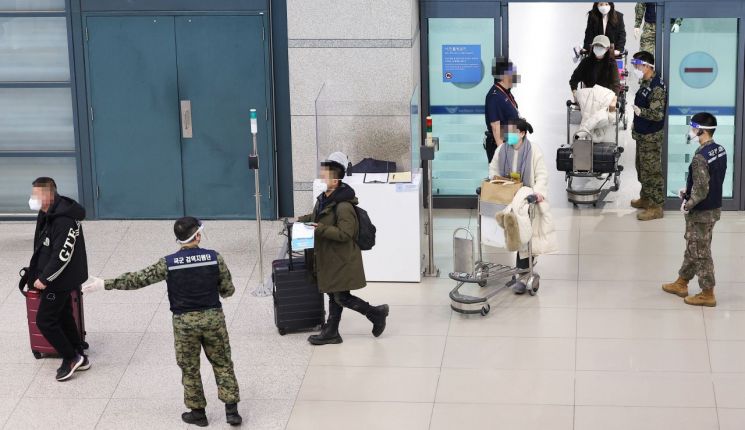
The government's decision to extend the short-term visa issuance restriction appears to be based on the judgment that although the positive rate of entrants from China has been decreasing recently, the possibility of re-spread due to increased infections after the Chinese New Year cannot be ruled out.
However, the government plans to resume visa issuance if the situation improves earlier. The CDSCH stated, "We will continue to closely monitor the situation and do our best to manage domestic quarantine conditions stably."
Additionally, the government announced that it will reduce the number of designated COVID-19 hospital beds starting from the second week of next month, following the decline in COVID-19 cases. The weekly number of confirmed COVID-19 cases decreased from 67,000 in the third week of December to 30,000 in the third week of January, allowing hospital beds to be used for treating general patients.
Currently, 5,843 beds are planned to be adjusted to about 3,900 beds. Severe and moderate-severe beds will be operated mainly in tertiary and large hospitals with high intensive care capabilities. Moderate-severity hospitalization demand will be handled mainly through general hospitals and clinics, while designated beds will be operated focusing on special beds such as pediatric, maternity, dialysis, and elderly or bedridden patients.
© The Asia Business Daily(www.asiae.co.kr). All rights reserved.
![Clutching a Stolen Dior Bag, Saying "I Hate Being Poor but Real"... The Grotesque Con of a "Human Knockoff" [Slate]](https://cwcontent.asiae.co.kr/asiaresize/183/2026021902243444107_1771435474.jpg)
















