Full-Scale Business Launch This Year in China Direct Investment Zones
[Asia Economy Reporter Yujin Jo] The European Union (EU) is expected to mark the inaugural year of the 'Global Gateway' project this year, which aims to invest up to 300 billion euros (approximately 403 trillion KRW) in global infrastructure development by 2027 to counter China's massive economic initiative, the 'Belt and Road Initiative' (BRI). The plan is to start with Southeast Asia and intensify efforts to curb China's influence in its so-called "front yard," as China’s BRI has been burdening participating countries with massive debt bombs.
According to documents obtained by the U.S. political media outlet Politico on the 25th (local time), the EU has selected about 70 projects as priority initiatives to concretize the ongoing Global Gateway. The projects chosen by the EU include the Black Sea submarine digital cable as part of 탈(Russian) energy efforts, the laying of submarine optical cables connecting the Mediterranean and North Africa, and the construction of dams and hydroelectric power plants in Cameroon, Africa.
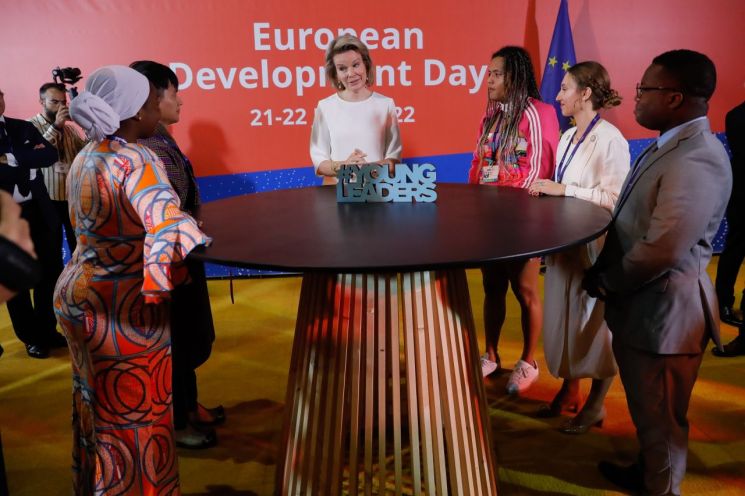
A senior EU official stated, "We plan to finalize the selection of priority projects at the EU Foreign Ministers' meeting on the 6th of next month." To this end, projects expected to yield early results such as early groundbreaking, signing of memorandums of understanding (MOUs), and financing will be identified, and preparatory work for projects to be carried out after next year will also begin.
Plans are also being considered to promote projects in Southeast Asia, which China regards as the front yard of its BRI, including Indonesia’s energy transition, the Philippines’ digital transformation projects, the construction of a massive national hydrogen complex in Kazakhstan, and hydroelectric power plant projects in Tajikistan.
The Global Gateway is the EU’s version of the Belt and Road Initiative, established to stabilize supply chains connected between the EU and countries worldwide and to promote trade. It was first announced in December 2021. This move was a response to China’s BRI, which extends its massive economic influence across the Eurasian continent into the EU’s internal regions.
According to this plan, financial institutions, EU member state governments, and the private sector aim to invest up to 300 billion euros in infrastructure construction outside Europe by 2027. Since early last year, the EU has been actively discussing the Global Gateway with countries influenced by China’s BRI, starting with a summit with African nations.
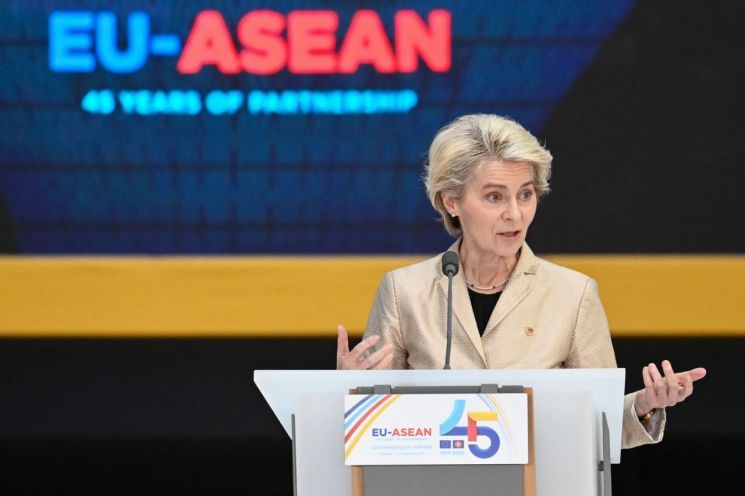
China has been criticized for entrapping participating countries in debt through its massive economic initiative, the Belt and Road Initiative, which connects the Eurasian continent. By providing loans for infrastructure projects in Africa and other regions, China pursues a diplomatic policy that subordinates these countries to itself. According to World Bank statistics, Chinese debt accounts for 40% of the external debt of the poorest countries.
Earlier, the G7, led by the United States, has rolled up its sleeves to invest in infrastructure to counter the BRI, starting with Africa. In a joint declaration last year, the G7 emphasized global partnerships as a key agenda and declared the 'Build Back Better World' initiative to construct infrastructure in regions where China is expanding its influence, including Africa.
The 'Build Back Better World' initiative aims to invest 40 trillion dollars (approximately 47,000 trillion KRW) in developing countries such as those in Africa by 2035. The United States is already conducting 10 investment projects in African countries including Ghana and Senegal.
© The Asia Business Daily(www.asiae.co.kr). All rights reserved.


















