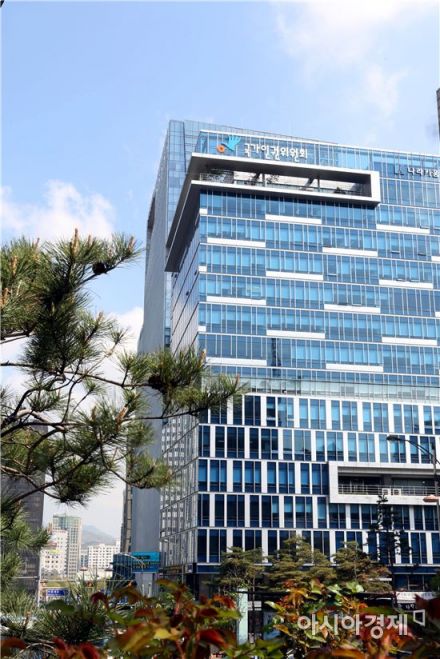
[Asia Economy Reporter Seongpil Cho] Recently, regarding the movement to introduce facial recognition technology into access systems at public institutions, the National Human Rights Commission pointed out concerns about privacy infringement.
On the 25th, the Human Rights Commission expressed its opinion to the Speaker of the National Assembly and the Prime Minister, urging them to promote legislation to ensure that fundamental rights are not violated when using facial recognition technology. In particular, it recommended the Prime Minister to impose a complete moratorium on the introduction and use of this technology in public institutions and public places until a law preventing the human rights risks of 'real-time remote facial recognition technology' is established.
The Human Rights Commission stated, "If the state collects, retains, and utilizes citizens' facial information extensively without proper control, it could track and monitor specific individuals, infringing on the secrecy and freedom of privacy." It further pointed out, "This could lead to a 'chilling effect,' where people, feeling increased suspicion, hesitate to exercise their lawful rights to assembly and association in public places."
Additionally, the Human Rights Commission said that when the state introduces and utilizes facial recognition technology, it must reflect the principle of respecting human rights, restrict indiscriminate introduction and use, and set standards allowing exceptions only when public interest necessity is recognized. It also emphasized that before developing or utilizing facial recognition technology, a human rights impact assessment must be conducted by an institution with expertise and independence in human rights.
© The Asia Business Daily(www.asiae.co.kr). All rights reserved.
![Clutching a Stolen Dior Bag, Saying "I Hate Being Poor but Real"... The Grotesque Con of a "Human Knockoff" [Slate]](https://cwcontent.asiae.co.kr/asiaresize/183/2026021902243444107_1771435474.jpg)
















