Prospects for the End of Mediation Procedure and Resumption of Compensation Lawsuit
[Asia Economy Reporter Kiho Sung] Seoul Metro announced on the 26th that it has filed an objection to the court's second mediation proposal regarding the civil lawsuit demanding damages from the National Solidarity for the Elimination of Discrimination against Persons with Disabilities (Jeonjangyeon), which has been engaging in illegal activities such as intentional train delays for over two years. Jeonjangyeon also filed an objection to the second mediation proposal on the same day.
In the court's second mediation proposal, the problematic "within 5 minutes" clause from the first mediation proposal was removed. However, Seoul Metro stated that it decided not to accept the mediation proposal for three reasons: first, there is no mention of protests other than those obstructing door operation with wheelchairs; second, the criteria for delay acts are unclear; and third, the clause regarding the non-existence of claims and debts is ambiguous.
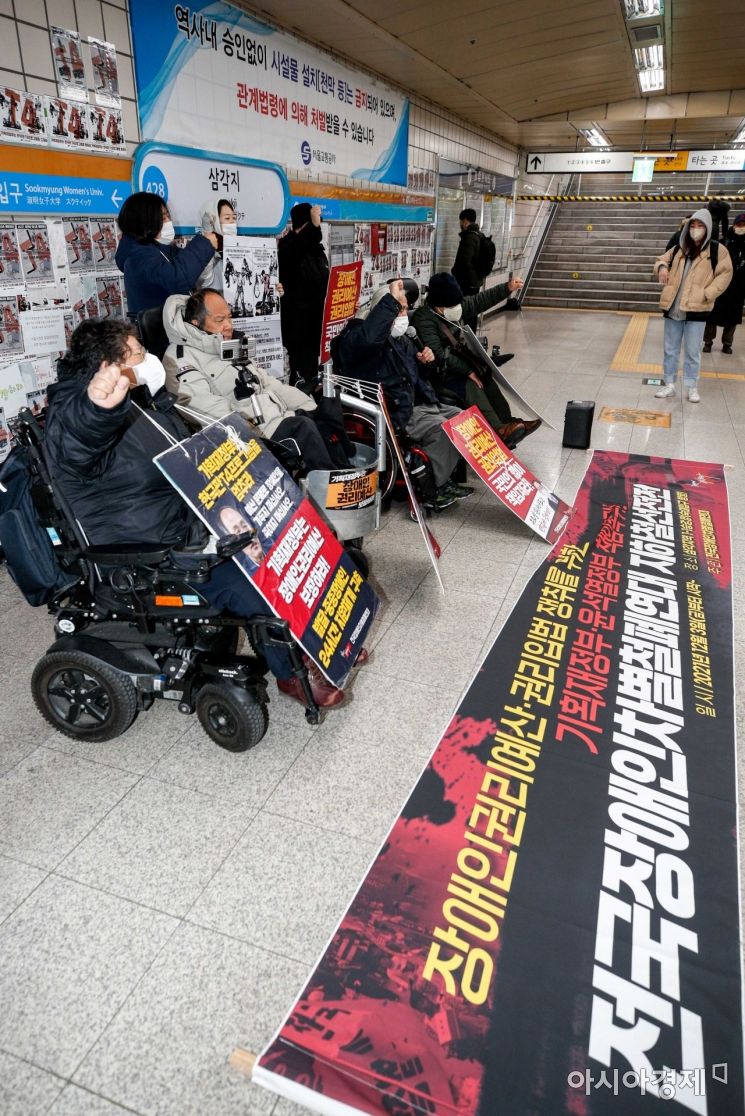
Unlike the first mediation proposal, the second mediation proposal is interpreted as prohibiting only protests that obstruct door operation by positioning wheelchairs or similar objects. Therefore, there is disagreement regarding other protests that intentionally cause train delays. However, Jeonjangyeon has cases where they delayed trains by abnormal methods such as getting off wheelchairs and crawling or repeatedly boarding and alighting with dozens of wheelchairs at each station. Seoul Metro finds it difficult to accept the mediation proposal because such protests could be allowed despite causing intentional delays.
Seoul Metro also expressed concerns about the clause requiring a payment of 5 million won for delay acts, citing the unclear criteria for what constitutes a delay act. For example, if Jeonjangyeon members intentionally delay trains by boarding three different trains during a protest, there is a high possibility of dispute over whether this counts as three separate delay acts or just one during the entire protest. If interpreted as the latter, it could be exploited to obstruct train operations for a long time while only paying 5 million won.
The ambiguity of the scope of the clause regarding the non-existence of claims and debts is another issue. Even if an individual employee who was assaulted during a protest, such as being bitten, wants to claim damages, they may not be able to demand compensation due to the clause stating "both parties confirm that there are no claims or debts between them."
With both Seoul Metro and Jeonjangyeon filing objections to the second mediation proposal, the mediation process is expected to end, and the civil lawsuit for damages will likely resume. A Seoul Metro official said, "It is only natural to compensate an appropriate amount if illegal acts cause damage to others, regardless of whether they are disabled or non-disabled," adding, "We will respond sincerely to the lawsuit and strive to prevent such precedents from occurring."
Lee Taerim, Head of the Sales Planning Department at Seoul Metro, stated, "Rejecting the mediation proposal and taking legal action are defensive measures to prevent illegal protests and inconvenience to citizens," and added, "We will do everything possible to prevent inconvenience and damage to citizens, and we will also do our best to ensure safety and order at the site."
© The Asia Business Daily(www.asiae.co.kr). All rights reserved.
![Clutching a Stolen Dior Bag, Saying "I Hate Being Poor but Real"... The Grotesque Con of a "Human Knockoff" [Slate]](https://cwcontent.asiae.co.kr/asiaresize/183/2026021902243444107_1771435474.jpg)
















