"Sharing the Burden of Ordinary Citizens" vs "Concerns Over Double Taxation"
Windfall Taxes Already Imposed in the UK, Italy, and Others
[Asia Economy Reporter Hyunju Park] Following the rise in gas and fuel prices, the so-called 'heating cost shock' has brought the windfall tax into the spotlight. This proposal suggests levying taxes on energy companies that have earned excess profits as a way to share the burden with low-income households, and to use the revenue to support vulnerable groups or small business owners in their energy consumption. Windfall taxes have already been introduced in various forms in countries such as the United Kingdom and Italy.
On the 25th, Lee Jae-myung, leader of the Democratic Party of Korea, proposed the introduction of a windfall tax in relation to the recent surge in heating costs. Lee stated, "Recently, oil companies' operating profits have increased tremendously, and it is said that employees received bonuses so large that the public finds them hard to accept."
Lee added, "While it is commendable to pay employees their wages, I hope that the excessive operating profits of oil companies can be somewhat offset for the public's hardship through levies or other means, if not to the extent of the windfall taxes adopted in Europe."
A windfall tax, as the name suggests, is a tax imposed on excess profits gained by chance due to sudden changes in government policies or external environments. It is an additional income tax levied on profits exceeding a certain threshold beyond the regular income tax.
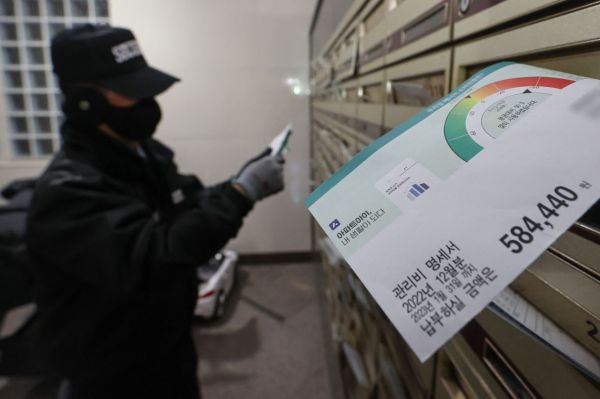
In particular, as the energy crisis emerged due to the COVID-19 pandemic and the Russia-Ukraine war, there has been a movement to impose windfall taxes on energy companies that have made huge profits from this situation. News of oil companies' year-end and early-year bonuses has further fueled discussions on the introduction of windfall taxes.
Already, European countries such as the UK and Italy impose windfall taxes on energy companies. At the EU level, a windfall tax called the 'solidarity contribution' was introduced in September last year.
Ant?nio Guterres, Secretary-General of the United Nations (UN), has also called for the introduction of windfall taxes. On September 20th last year, Guterres said, "While our planet is burning and household budgets are shrinking, the fossil fuel industry is sitting on billions of dollars in subsidies and windfall profits," urging "all developed countries to impose taxes on the windfall profits of fossil fuel companies," officially requesting the imposition of windfall taxes.
In South Korea, discussions on the introduction of windfall taxes have taken place mainly in the political sphere. The aim is to recover excess profits from energy companies to use as funds to alleviate the burden on low-income households suffering from high inflation and high oil prices.
In September last year, Yong Hye-in, a lawmaker from the Basic Income Party, introduced a 'Korean-style windfall tax law' that imposes a 50% tax on excess profits of four domestic oil companies and 16 banks. Then, last month, Lee Sung-man and nine other Democratic Party lawmakers proposed a bill to levy windfall taxes on oil and gas companies, with part of the tax revenue to be used to stabilize energy use for small business owners.
However, the possibility of this discussion leading to the actual introduction of a windfall tax remains uncertain. Energy companies oppose the windfall tax, arguing that it imposes taxes only on excess profits without compensating for losses, and that imposing a windfall tax on companies already paying corporate tax could constitute double taxation.
There are also predictions that if the burden increases due to the introduction of a windfall tax, it could not only reduce the export competitiveness of Korean companies but also cause energy prices to rise further, resulting in adverse effects.
The government has also previously expressed a negative stance on the introduction of a windfall tax. In July last year, when strong performance was expected in the oil refining industry, Deputy Prime Minister and Minister of Economy and Finance Choo Kyung-ho responded to a related question during a parliamentary session by saying, "We need to be cautious about approaching this as a windfall tax just because companies' balance sheets and income statements have improved," adding, "I believe companies should properly pay corporate tax, and I do not agree with the windfall tax."
© The Asia Business Daily(www.asiae.co.kr). All rights reserved.
![Clutching a Stolen Dior Bag, Saying "I Hate Being Poor but Real"... The Grotesque Con of a "Human Knockoff" [Slate]](https://cwcontent.asiae.co.kr/asiaresize/183/2026021902243444107_1771435474.jpg)
















