"Everything except salaries is rising... Raising prices by over 30% at once is wrong"
[Asia Economy Reporter Kim Jong-hwa] "Everything has gone up except my salary."
With heating bills skyrocketing and subway, bus, and taxi fares set to increase one after another, the worries of ordinary people are deepening.
The Seoul Metropolitan Government is planning to raise subway and bus fares by 300 to 400 won starting this April. To this end, the city will hold a public hearing next month and present two fare increase options of 300 won and 400 won. For the subway, a 300 won increase means a 24% hike, and a 400 won increase means a 32% hike at once. Based on transportation cards, subway fares will rise from the current 1,250 won to 1,550?1,650 won, and bus fares from 1,200 won to 1,500?1,600 won.
Subway and bus fare hikes are just the beginning. All public utility fees, including taxis, electricity, gas, and water/sewer charges, have already increased or are expected to increase. Starting next month, the basic taxi fare in Seoul will rise from 3,800 won to 4,800 won, an increase of 1,000 won. The distance covered by the basic fare will also be reduced from the current 2 km to 1.6 km, and per-distance, per-time, and surcharge fares will all increase. Starting with Seoul, local governments nationwide are preparing similar fare hikes.
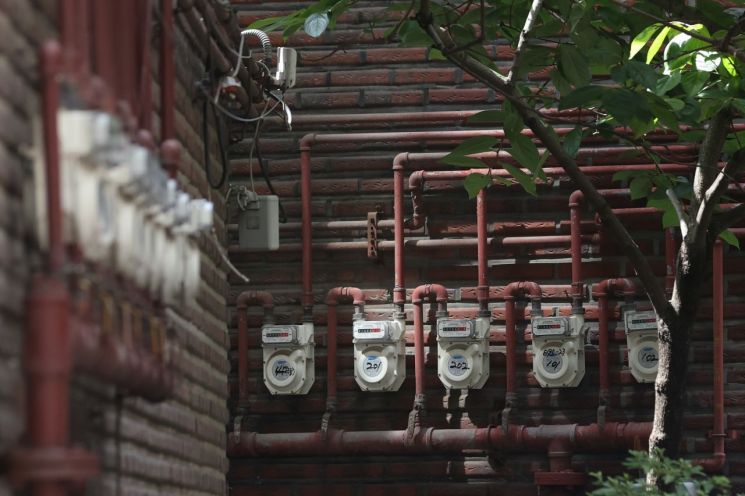
Electricity rates have increased three times last year (in April, July, and October) by 19.3 won per kWh (kilowatt-hour), and an additional 13.1 won increase took effect this month, marking the largest hike in 42 years since the second oil shock period in 1981. A four-person household will have to pay an additional 4,022 won per month. The government plans to raise electricity rates further in the second quarter.
Gas prices, which rose 38% over four times last year, are expected to increase 1.5 to 1.9 times more after the second quarter compared to last year. According to Korea District Heating Corporation, the residential heat usage fee per 1 Mcal (megacalorie) ? charged based on metered heating and hot water usage ? rose from 65.23 won at the end of March last year to 66.98 won in April, 74.49 won in July, and 89.88 won in October.
The prices of bottled water, soju, and beer are also rising. Jeju Special Self-Governing Province Development Corporation will raise the ex-factory price of Samdasoo water by an average of 9.8% starting next month. At large supermarkets, the price per bottle will increase to 1,080 won for 2 liters and 480 won for 500 ml.
Heineken, the top imported beer brand, plans to raise prices of all products by 7?10% starting April 10, and HiteJinro is also considering price increases for some imported beers. Following last year's rise in the key raw material price of soju (ethyl alcohol) and bottle cap prices, and this year's increase in the price of empty bottles, soju prices are also on the verge of rising. The Ministry of Economy and Finance will raise taxes on beer and takju (traditional Korean rice wine) from April, to 885.7 won and 44.4 won per liter, respectively. Since the liquor industry has raised ex-factory prices whenever liquor taxes increased, it is highly likely that ex-factory prices will also rise in line with the tax hike.
Last year, the consumer price inflation rate reached 5.1%, the highest in 24 years, increasing the burden on ordinary people. The problem is that public utility fee hikes stimulate other price increases, and the damage is mainly concentrated on ordinary citizens. In particular, although the government has cut corporate tax and comprehensive real estate tax under the pretext of economic revitalization, it has raised public utility fees and pressured wage restraint, drawing criticism for causing social conflicts due to this double standard.
Kim Hyun-jung (42), who has been working for 15 years and lives in Mapo-gu, Seoul, said, "These days, I really feel like everything has gone up except my salary," adding, "I tend to use a lot of heating because I can't stand the cold, so it's like being hit by a bomb. While I understand that public utility fee hikes are inevitable, I think raising them by more than 30% all at once is wrong."
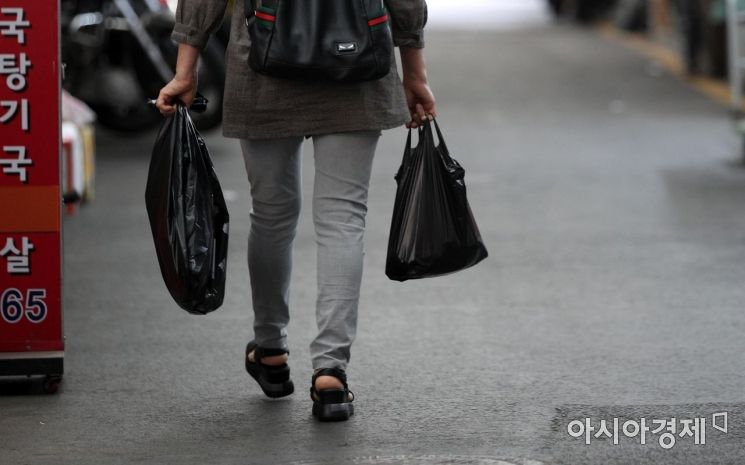 Last year, the consumer price inflation rate recorded 5.1%, the highest in 24 years. The back view of a citizen returning from shopping at a traditional market in Seoul looks lonely. Photo by Kim Hyun-min kimhyun81@
The government also appears to be aware of the problems caused by public utility fee hikes. A government official said, "We recognize that public utility fee increases are likely to fuel other price rises," adding, "We will strive to maintain this year's inflation target of around 3% so that the public does not lose trust in the government's economic policy direction."
© The Asia Business Daily(www.asiae.co.kr). All rights reserved.


















