Minimum Wage Raised to $14-$19
21% Wage Increase for All Employees
Concerns Over Wage Growth in Healthcare and Service Sectors
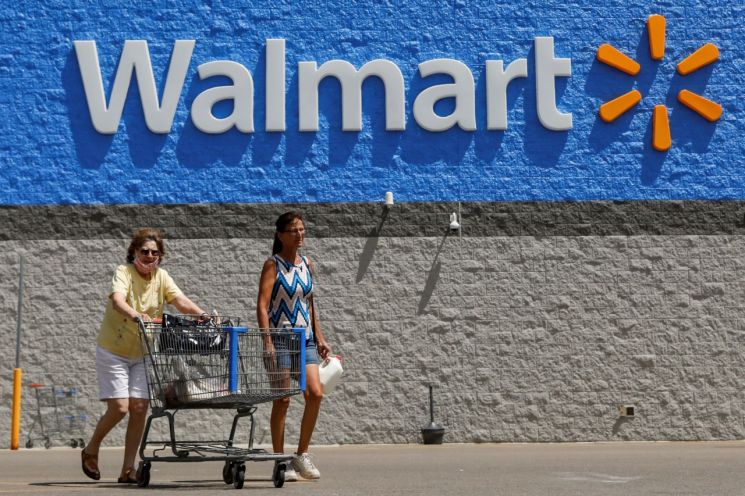
[Asia Economy Reporter Lee Ji-eun] Walmart in the United States is raising the minimum wage for its 340,000 store employees to $14 per hour. As Walmart is the largest private employer in the U.S. and holds a significant share in the retail sector, this wage increase is expected to have a ripple effect on wage hikes in other industries as well.
According to the U.S. economic media CNBC, on the 22nd (local time), Walmart CEO John Furner sent a message to all employees stating, "Starting early March, store employees will receive between $14 and $19 per hour." Previously, Walmart store employees earned between $12 and $18 per hour. The wage increase will benefit 340,000 employees, accounting for 21% of the total 1.6 million employees. With this wage hike, the average hourly wage for all employees will rise from $17 to at least $17.5.
Walmart's decision has drawn market attention as it was announced during a period when U.S. companies are conducting large-scale restructuring. Recently, the U.S. labor market has cooled sharply, with an increasing number of companies reducing temporary workers. According to the U.S. Department of Labor, 35,000 temporary workers were laid off in December last year, the highest number since early 2021. In addition, big tech companies like Amazon and financial firms such as Goldman Sachs are also experiencing widespread layoffs.
Mark Zandi, chief economist at Moody's Analytics, said, "Walmart's wage increase is a very surprising decision," adding, "It seems Walmart expects the recession to be short-term and mild."
The background to Walmart's minimum wage increase lies in the need to secure manpower. The New York Times (NYT) reported that retailers, including Walmart, are struggling to find workers as the baby boomer generation ages and the labor force shrinks. Moreover, the retail industry experiences higher turnover rates compared to other sectors, so retail companies have tried to minimize workforce reductions even after COVID-19.
Gregory Daco, chief economist at global accounting firm Ernst & Young, stated, "The retail industry has been making greater efforts to retain workers since the spread of COVID-19," adding, "If many employees quit, hiring and training new workers incurs significant costs."
To retain employees, Walmart also plans to improve welfare quality, including support for college tuition. Through the education benefit program "Live Better U" offered to employees, Walmart will cover college tuition, degree, and certification costs for both full-time and part-time workers. Additionally, Walmart plans to hire truck drivers who can earn up to $110,000 in their first year of employment.
However, some express concerns that Walmart's wage increase could drive up inflation in the U.S. Economist Mark Zandi warned, "Walmart's decision could trigger wage increases in labor-intensive industries such as healthcare, hospitality, and personal services," adding, "This could confuse the Federal Reserve's efforts to curb wage growth and the resulting inflation."
© The Asia Business Daily(www.asiae.co.kr). All rights reserved.
![Clutching a Stolen Dior Bag, Saying "I Hate Being Poor but Real"... The Grotesque Con of a "Human Knockoff" [Slate]](https://cwcontent.asiae.co.kr/asiaresize/183/2026021902243444107_1771435474.jpg)
















