Jung-gu, Seoul, Held Kick-off Meeting on June 19 for 'Review of Namsan Height Restriction Relaxation Measures and Basic Planning Service'
Reexamining Uniform Height Regulations, Seeking to Minimize Resident Damage While Maintaining Landscape
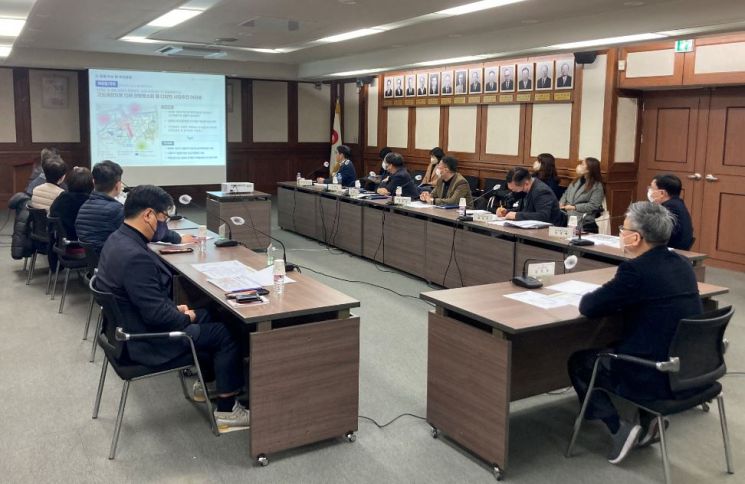 Report Meeting on the Review of Namsan Height Restriction Relaxation Measures and Basic Plan Initiation Held on the 19th
[Asia Economy Reporter Park Jong-il] Jung-gu, Seoul (Mayor Kim Gil-seong) has officially started efforts to ease the long-standing height restrictions around Namsan, a key resident demand.
As the first step, on the morning of the 19th, the district held a kick-off meeting for the 'Review of Namsan Height Restriction Relaxation Measures and Basic Planning Service' at the district office’s planning situation room, beginning preparations for concrete relaxation plans. The research service will continue until August this year.
The Namsan Maximum Height District was first designated by Seoul City in 1995 to protect the Namsan landscape. The total district area is 2.42 million square meters, of which 1.11 million square meters belong to Jung-gu. It spans five neighborhoods among Jung-gu’s 15 neighborhoods: Hoehyeon-dong, Myeong-dong, Pildong, Jangchung-dong, and Dasan-dong. Height restrictions vary by zone, ranging from 12 meters to 20 meters.
The Namsan height restriction has lasted for nearly 30 years, causing severe aging of residential areas on the slopes of Namsan. The building height limits, set far lower than surrounding areas, have completely blocked even minimal development aimed at improving residential environments. As a result, most buildings within the height district are over 20 years old (89%), and 60% are over 30 years old.
Moreover, despite being on the same road or intersection, the height differences between buildings in the height district and adjacent zones can be as much as six times, and public projects aimed at improving aging housing have excluded these areas without consideration, causing regional imbalance and deep resident frustration.
While the height restrictions have contributed to preserving the Namsan landscape, they have also imposed indefinite sacrifices on residents.
Jung-gu plans to prepare reasonable relaxation measures through this basic planning service that maintain the Namsan landscape while reducing damage to residents’ property rights. Based on domestic and international case studies, detailed landscape analysis and simulations by zone will be conducted to derive appropriate heights and flexibly improve the currently uniform height restrictions.
In particular, the district will identify and adjust excessive regulations that do not reflect reality, such as using already demolished overpasses as grounds for height restrictions or overlapping designations like historical-cultural specialized landscape districts and natural landscape districts two to three times. A pilot zone within the height district will be selected to review various resident support measures.
Currently, Seoul City is preparing to reorganize use districts, including height districts. The district has high expectations as the city’s perspective on height restrictions shifts from purely regulatory to efficient management.
Jung-gu will request the easing of unreasonable regulations and continue to promote phased relaxation depending on the reorganization results.
Separately from the research service, Jung-gu will conduct extensive resident opinion gathering and public discussions through surveys, resident forums, and support for resident consultative bodies. By clearly communicating that the relaxation is a reasonable partial easing tailored to terrain characteristics rather than a full relaxation, unnecessary misunderstandings will be reduced, and social persuasion and consensus will be achieved. The district believes that, more than ever, the possibility of relaxation is high and intends to properly reflect residents’ voices within the height district as a catalyst for easing.
Kim Gil-seong, Mayor of Jung-gu, said, “If the area around Namsan becomes a slum, the value of Namsan itself will decline. Since overall relaxation of height restrictions is realistically difficult, we will identify areas with high potential for relaxation as much as possible and create effective and widely supported relaxation plans to resolve long-standing resident inconveniences and build a Jung-gu that harmonizes better with Namsan.”
Yangcheon-gu Expands Dog Rest Areas to 10 Locations, Promotes ‘Special District for Companion Animals’
Expanding Dog Playgrounds by Zone to Create Safe and Happy Play and Education Spaces
Added ‘Play Functions’ to Existing Yongwangsan and Anyangcheon Neighborhood Park Dog Rest Areas to Enhance Exercise Ability
Plans to Open 3 New Dog Rest Areas in June After Pilot Operation and Monitoring of ‘Mobile’ Dog Rest Areas
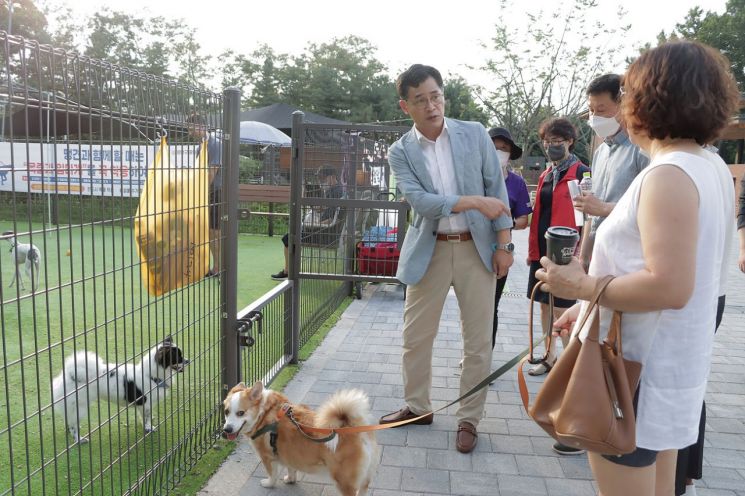
Yangcheon-gu (Mayor Lee Gi-jae) announced plans to expand the number of ‘dog rest areas’ by five within this year and increase the total to 10 by 2025, aiming to create a ‘special district for companion animals’ that fosters a mature culture of harmonious coexistence between animals and people in the era of 15 million companion animals.
The district will sequentially carry out four projects to create dedicated rest areas where dogs and citizens can safely and enjoyably engage: ▲Enhancing existing dog rest areas by adding play functions ▲Pilot installation and monitoring of mobile dog rest areas ▲Establishment of new dog rest areas ▲Running companion animal culture classes in parallel.
First, the district added play facilities to the two existing dog rest areas at Yongwangsan Neighborhood Park (199-51 Mok-dong) and Anyangcheon Park (871-7 Sinjeong-dong, near Ogeumgyo Bridge) to enhance dogs’ exercise abilities. Moving away from the previously monotonous flat rest areas, the new play facilities include slopes dogs can climb and holes they can pass through, encouraging dynamic activities expected to improve dogs’ physical abilities.
Additionally, to overcome the limitation under the Urban Parks Act that dog playgrounds can only be installed in parks larger than 100,000 square meters, the district plans to introduce ‘mobile (non-fixed) dog rest areas’ in parks smaller than 100,000 square meters, making it easier for dog owners to access nearby facilities.
Considering residents’ usage and suitability, a ‘mobile dog rest area’ will be pilot-installed in one local park in February. This rest area will have wheels under the fence for easy installation and removal. It will be about 100 square meters, exclusively for small dogs, with connected fences to prevent escapes, and seating inside for dog owners to rest.
After operating and monitoring the pilot site, the district will comprehensively review user satisfaction and usage status, then select three final sites for new dog rest areas to open in June. The new rest areas will separate movement paths and spaces to minimize contact with the general public and will maximize use of existing park infrastructure such as drinking fountains and restrooms. They will also be linked with the public health center’s ‘Companion Animal Culture Classes’ to serve as educational spaces for dogs.
Lee Gi-jae, Mayor of Yangcheon-gu, said, “With the companion animal population nearing 15 million, harmonious coexistence between animals and people has become an unavoidable social issue. We hope this expansion of dog rest areas will help ease social conflicts between pet owners and non-pet owners, establish a mature companion animal culture, and transform Yangcheon into a ‘special district for companion animals.’”
© The Asia Business Daily(www.asiae.co.kr). All rights reserved.
![Clutching a Stolen Dior Bag, Saying "I Hate Being Poor but Real"... The Grotesque Con of a "Human Knockoff" [Slate]](https://cwcontent.asiae.co.kr/asiaresize/183/2026021902243444107_1771435474.jpg)

















