Apartment Price Decline Narrows but Unsold Units Continue to Rise
Focus on Whether Land Transaction Permission Zones Will Be Lifted
[Asia Economy Reporter Cha Wanyong] Despite the government's large-scale regulatory easing measures aimed at a soft landing of the real estate market, no significant effects have appeared. Although the rate of price decline has somewhat slowed, house prices continue to fall, and the transaction freeze remains.
The cold wave in the pre-sale market is worsening, with unsold houses accumulating not only in the Seoul metropolitan area, including Seoul, but also nationwide. As a result, market attention is focused on whether and when additional deregulation of the remaining restrictions will occur.
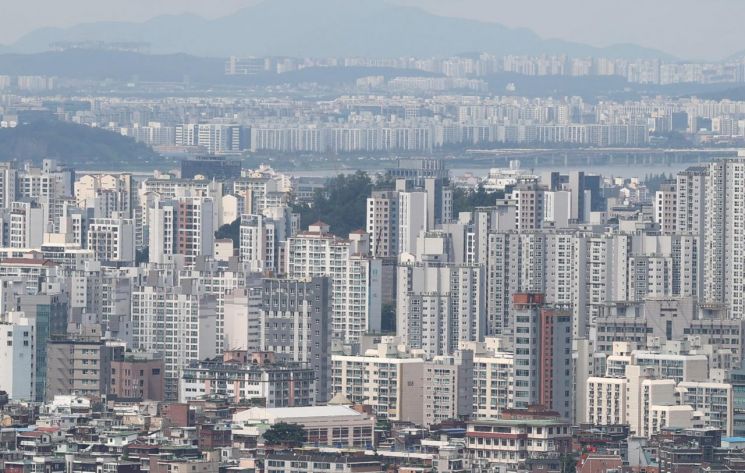
According to the Korea Real Estate Board on the 24th, the weekly nationwide apartment price decline has narrowed for three consecutive weeks. After a 0.76% drop in apartment prices nationwide in the last week of December (as of the 26th), the decline rates were -0.65% in the first week of January, -0.52% in the second week of January, and -0.49% in the third week of January, showing a decreasing trend in the rate of decline.
However, compared to the comprehensive regulatory easing measures the government has implemented since last year, the results are very minimal. Last year, the government announced various real estate measures focused on easing regulations, such as relaxing residency obligations, shortening resale restriction periods, lifting regulatory area designations, allowing mortgage loans for houses exceeding 1.5 billion KRW, and raising the loan-to-value (LTV) ratio, continuously until the end of the year.
Nevertheless, as the decline in house prices and transaction stagnation continued, on the 3rd of this month, the government lifted regulatory area designations for all of Seoul except for the Gangnam 3 districts and Yongsan. Additionally, measures were taken to revitalize the sluggish pre-sale market, including abolishing the residency obligation, completely removing restrictions on interim payment loans, and reducing resale restrictions.
However, the real estate slump persists. According to the Korea Real Estate Board's subscription home, three nationwide complexes that launched subscriptions this year?‘Iksan Busong Desiang’ in Iksan, Jeonbuk; ‘Songdo Station Gyeongnam Honorsville’ in Incheon; and ‘Hoecheon 2nd Daekwang Rosebiang Central’ in Yangju, Gyeonggi?have all failed to fill their recruitment quotas, resulting in unsold units.
The Dunchon Jugong reconstruction complex (Olympic Park Foreon) in Gangdong-gu, Seoul, fell short of market expectations with a general sale contract rate of only 70%. In the real estate and securities industries, despite the government's bold regulatory easing announcements, the prevailing view is that it failed because it did not achieve the contract rate of 80%, which is the level at which project financing (PF) can be repaid at once.
Accordingly, some speculate cautiously that the government will lift the regulatory area designation for the last remaining Gangnam 3 districts and Yongsan-gu, while Seoul City may take out the card of lifting the land transaction permission zone. Without revitalizing these key areas of Seoul, it is difficult to resolve the transaction barriers that pervade the overall market.
In particular, market interest is high regarding whether the land transaction permission zone will be lifted. The land transaction permission system requires obtaining permission from the mayor, county governor, or district office chief when concluding contracts for land within the designated permission zones. Since a two-year residency is required, ‘gap investment’ involving renting and then selling is impossible.
Areas in Seoul designated under the land transaction permission system include Cheongdam, Samsung, and Daechi-dong in Gangnam-gu, and Jamsil-dong in Songpa-gu, which are regions where there are concerns about rising house prices.
Among the land transaction permission zones in Seoul, all neighborhoods except four (Banghwa, Ssangmun, Sinwol, Changsin) will have their designation periods expire this year. Since the decision on re-designation is made by the metropolitan government or the Ministry of Land, Infrastructure and Transport, expectations for lifting the designation are high.
The first area where the re-designation period expires is a major reconstruction complex including Mok-dong, with the designation expiring on April 26 this year. The international exchange complex district and nearby areas, including Samsung, Cheongdam, Daechi, and Jamsil-dong, will have their designation expire on June 22 this year, and the natural green zone designation in Gangnam-gu and Seocho-gu will expire on May 30, 2024. These areas have had their land transaction permission zone designations extended annually.
Some expect that, given the government's comprehensive regulatory easing stance for a soft landing of the real estate market, the land transaction permission zones will also be lifted when their expiration dates arrive this year.
© The Asia Business Daily(www.asiae.co.kr). All rights reserved.
![Clutching a Stolen Dior Bag, Saying "I Hate Being Poor but Real"... The Grotesque Con of a "Human Knockoff" [Slate]](https://cwcontent.asiae.co.kr/asiaresize/183/2026021902243444107_1771435474.jpg)











