Targeting 27 Schools... May Be Less Than 11 Billion Won
No Retroactive Application Plan for Unpaid Amounts Over the Past 9 Years
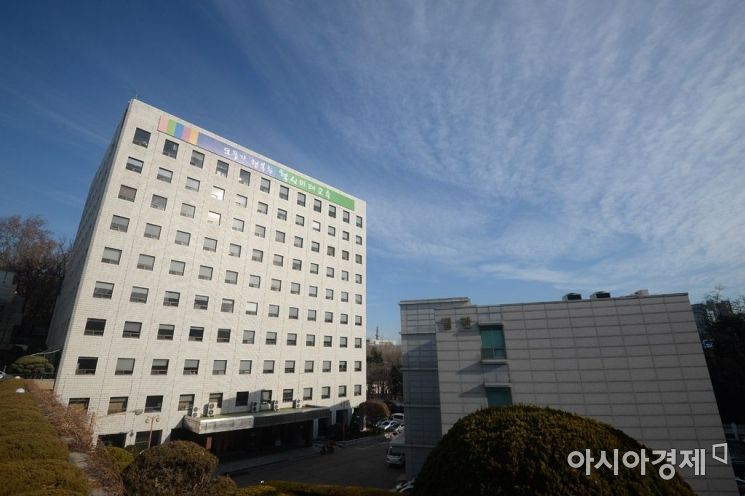
[Asia Economy Reporter Yoo Byung-don] The Seoul Metropolitan Office of Education announced on the 21st that starting this year, it will provide compensation funds for unfilled quotas in the social integration admission category of autonomous private high schools (Jasago) and foreign language high schools (Oego).
Since the 2013 academic year, Jasago and Oego have been required by law to select at least 20% of their admission quotas from students who need national protection (social integration admission). In this regard, the government can provide financial support in the form of compensation funds if the quota is not filled. This is because schools may face financial pressure due to the lack of tuition and fees from the missing students.
The funding comes from the general grants under the Local Education Finance Grants Act, revised in 2014. The Ministry of Education annually calculates the financial deficit compensation related to the social integration admission of Jasago and Oego and allocates it to each metropolitan office of education.
There had been differences in opinion between the Seoul Metropolitan Office of Education and Jasago regarding whether the compensation funds must be paid mandatorily, but the situation changed recently following the proactive review directive by Seoul Superintendent of Education Cho Hee-yeon.
Until now, the Seoul Metropolitan Office of Education did not provide compensation funds, arguing that support for unfilled quotas in Jasago was not mandatory according to relevant laws. The previous administration’s policy to convert all Jasago and Oego into general high schools by 2025 also influenced this decision.
The Seoul Metropolitan Office of Education explained, "Considering the recent decision to maintain Jasago and Oego and the increasing financial difficulties caused by unfilled social integration admission quotas, we decided to provide support starting from the 2023 academic year."
Meanwhile, Seoul has 21 Jasago and 6 Oego. The compensation funds to be provided to these 27 schools are expected to be similar to or slightly less than the 11 billion KRW calculated by the Ministry of Education last year. This year, the competition rate for Jasago is expected to rise, resulting in a lower unfilled quota rate compared to the previous year.
The Seoul Metropolitan Office of Education plans to determine the specific support amount and compensation ratio after the general grants from the Ministry of Education are finalized at the end of February. The budget will be included in the supplementary budget proposal in June, and after review by the Seoul Metropolitan Council, the compensation payments will be completed during the second semester.
However, the Seoul Metropolitan Office of Education decided not to apply the compensation funds retroactively. It explained, "Unlike special grants, general grants do not separate funds by category. The education office can flexibly allocate expenditures considering educational realities. According to the Enforcement Decree of the Elementary and Secondary Education Act, the education office can decide whether to provide support, so there is no obligation for retroactive payment."
In response, Jasago representatives are demanding retroactive application of compensation funds for the past nine years (2014?2022) when no compensation was provided. The Seoul Jasago Principals Association has also stated plans to file a complaint with the Anti-Corruption and Civil Rights Commission if retroactive compensation is excluded.
Additionally, Jasago representatives are requesting support not only for compensation funds but also for facility project costs. They argue that while personnel expenses and school curriculum operation costs can be covered by tuition, it is difficult to cover other facility project costs.
Regarding this, the Seoul Metropolitan Office of Education stated that 100% support is difficult according to private school facility guidelines, but for disaster or hazardous facility projects costing over 100 million KRW, if the school foundation invests 20%, the education office can cover 80% of the costs.
© The Asia Business Daily(www.asiae.co.kr). All rights reserved.
![Clutching a Stolen Dior Bag, Saying "I Hate Being Poor but Real"... The Grotesque Con of a "Human Knockoff" [Slate]](https://cwcontent.asiae.co.kr/asiaresize/183/2026021902243444107_1771435474.jpg)
















